


News
Explore what’s going on around the industry and get the latest from the world of heavy equipment and earth-moving.
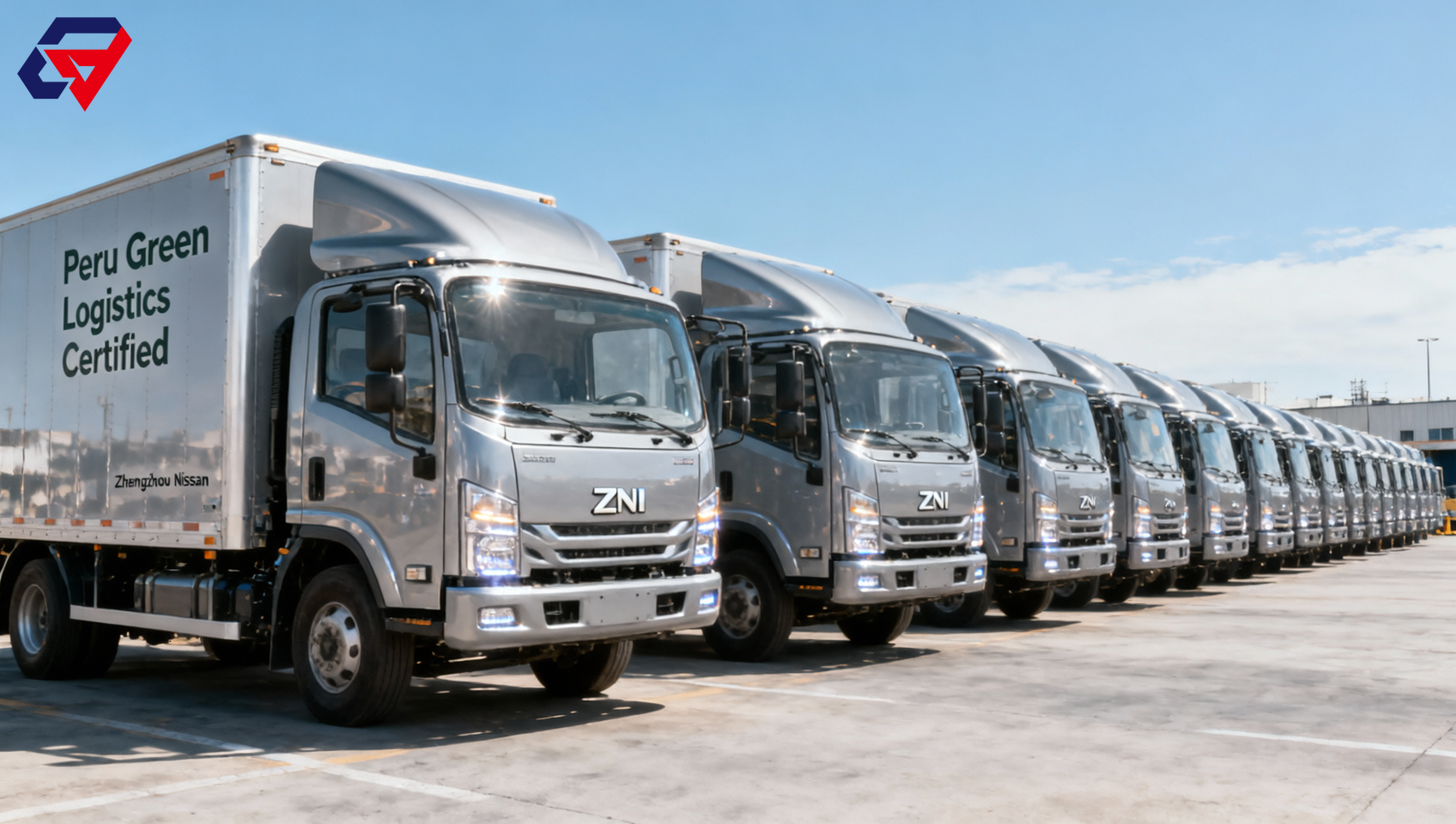
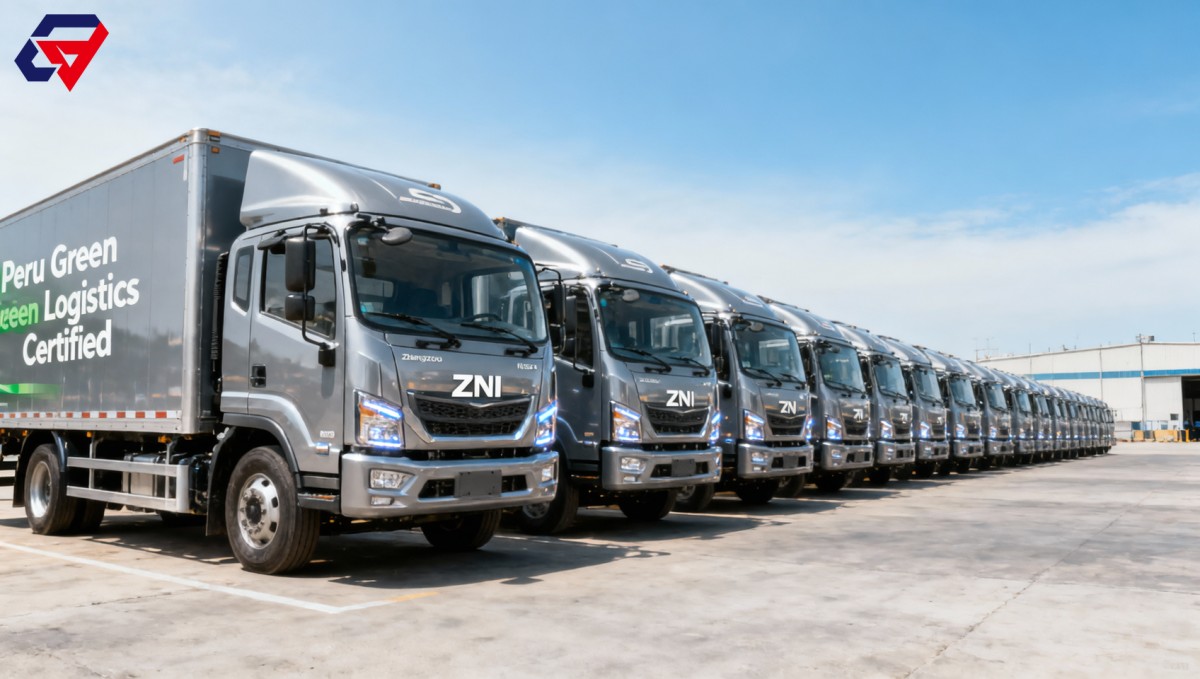
On May 9, 2026, Zhengzhou Nissan delivered 50 battery-electric light-duty trucks to Peru — the first large-scale import of Chinese new-energy commercial vehicles into the South American market. This milestone is relevant for international trade firms, logistics service providers, government procurement agencies, and cross-border transport operators active in Latin America, as it signals formal regulatory recognition of Chinese EV light trucks in a major regional jurisdiction.
Event Overview
On May 9, 2026, Zhengzhou Nissan completed the batch delivery of 50 pure-electric light trucks to Peru. The vehicles have obtained certification under Resolution No. 024-2026-MTC/DSV issued by Peru’s Ministry of Transport and Communications (MTC) and have been included in the national Green Logistics Procurement White List.
Industries Affected
Direct Importers and Distributors
Importers handling Chinese-made new-energy commercial vehicles now face reduced regulatory uncertainty in Peru and potentially other Andean Community or Pacific Alliance markets. The MTC certification establishes a precedent for type-approval pathways — meaning future imports of similar models may follow streamlined evaluation timelines, rather than requiring full re-certification from scratch.
Government Procurement and Public Sector Logistics Providers
Entities participating in Peruvian public tenders — especially those under green logistics or decarbonization initiatives — can now legally specify or select these certified Zhengzhou Nissan EV light trucks. Inclusion in the national Green Logistics Procurement White List enables direct eligibility for budgeted fleet upgrades without additional compliance vetting at the tender stage.
TIR Cross-Border Transport Operators
The approval opens a pathway for using these vehicles in TIR (Transports Internationaux Routiers) pilot programs across land borders in the region. As the model is now recognized as compliant with Peruvian roadworthiness and environmental standards, operators planning multi-country EV freight routes (e.g., Peru–Chile–Colombia) may reference this certification when coordinating with customs and transport authorities.
Key Considerations and Recommended Actions
Monitor Follow-Up Regulatory Guidance from Peruvian Authorities
While Resolution 024-2026-MTC/DSV confirms vehicle-level approval, subsequent administrative guidelines — such as maintenance protocols, charging infrastructure interoperability requirements, or driver training mandates — may be issued. Importers and fleet operators should subscribe to official MTC bulletins and track updates via Peru’s National Institute for the Defense of Competition and Protection of Intellectual Property (INDECOPI) notifications.
Assess Applicability to Other Andean and Pacific Alliance Markets
This certification does not automatically extend to neighboring countries. However, analysis shows that Peru’s DSV (Dirección de Supervisión Vial) often coordinates technical assessments with Colombia’s Ministry of Transport and Chile’s Subsecretaría de Transportes. Companies should map parallel homologation timelines and prioritize markets where mutual recognition frameworks are under discussion.
Distinguish Between Policy Signal and Operational Readiness
Inclusion in the White List is an administrative eligibility marker — not proof of nationwide charging coverage, service network density, or spare parts availability. Observably, current after-sales infrastructure for Chinese EV commercial vehicles remains limited outside Lima. Firms evaluating deployment should conduct on-the-ground feasibility checks before committing to large-volume orders or long-term lease contracts.
Prepare Documentation Alignment for Future Shipments
Importers planning follow-up consignments should ensure consistency between vehicle VINs, battery specifications, and software versions used in the certified units and those in upcoming batches. Any deviation may trigger re-submission for conformity assessment. Maintaining version-controlled technical dossiers — aligned with MTC’s published test parameters — is recommended ahead of next-phase deliveries.
Editorial Perspective / Industry Observation
This delivery is better understood as a regulatory inflection point rather than a fully scaled commercial launch. From an industry perspective, it confirms that China-sourced EV light trucks can meet core safety, emissions, and digital reporting thresholds required by a mainstream Latin American regulator — but it does not yet indicate broad market adoption, financing mechanisms, or second-hand value stability. Analysis shows that certification precedes — and often outpaces — local demand formation; sustained traction will depend on complementary developments in energy pricing, grid resilience, and fiscal incentives. The event warrants ongoing attention not because it reshapes the present logistics landscape, but because it lowers the entry barrier for subsequent entrants and signals growing alignment between regional regulatory frameworks and Chinese EV technical standards.
Conclusion: This milestone represents a procedural validation — not a market transformation. It confirms that Chinese EV light trucks can clear formal regulatory gates in key Latin American jurisdictions, thereby reducing initial compliance friction for importers and public buyers. However, operational scalability remains contingent on localized support systems. Current stakeholders should treat this as a signal enabling strategic preparation — not as evidence of immediate commercial readiness.
Source: Official announcement from Zhengzhou Nissan (date-stamped May 2026); Peruvian Ministry of Transport and Communications (MTC) Resolution No. 024-2026-MTC/DSV; National Green Logistics Procurement White List (published May 2026).
Note: Ongoing observation is needed regarding implementation of supporting regulations, including post-sale service requirements and cross-border TIR pilot rollout timelines.
NAVIGATION
Send Us A Message