



News
Explore what’s going on around the industry and get the latest from the world of heavy equipment and earth-moving.
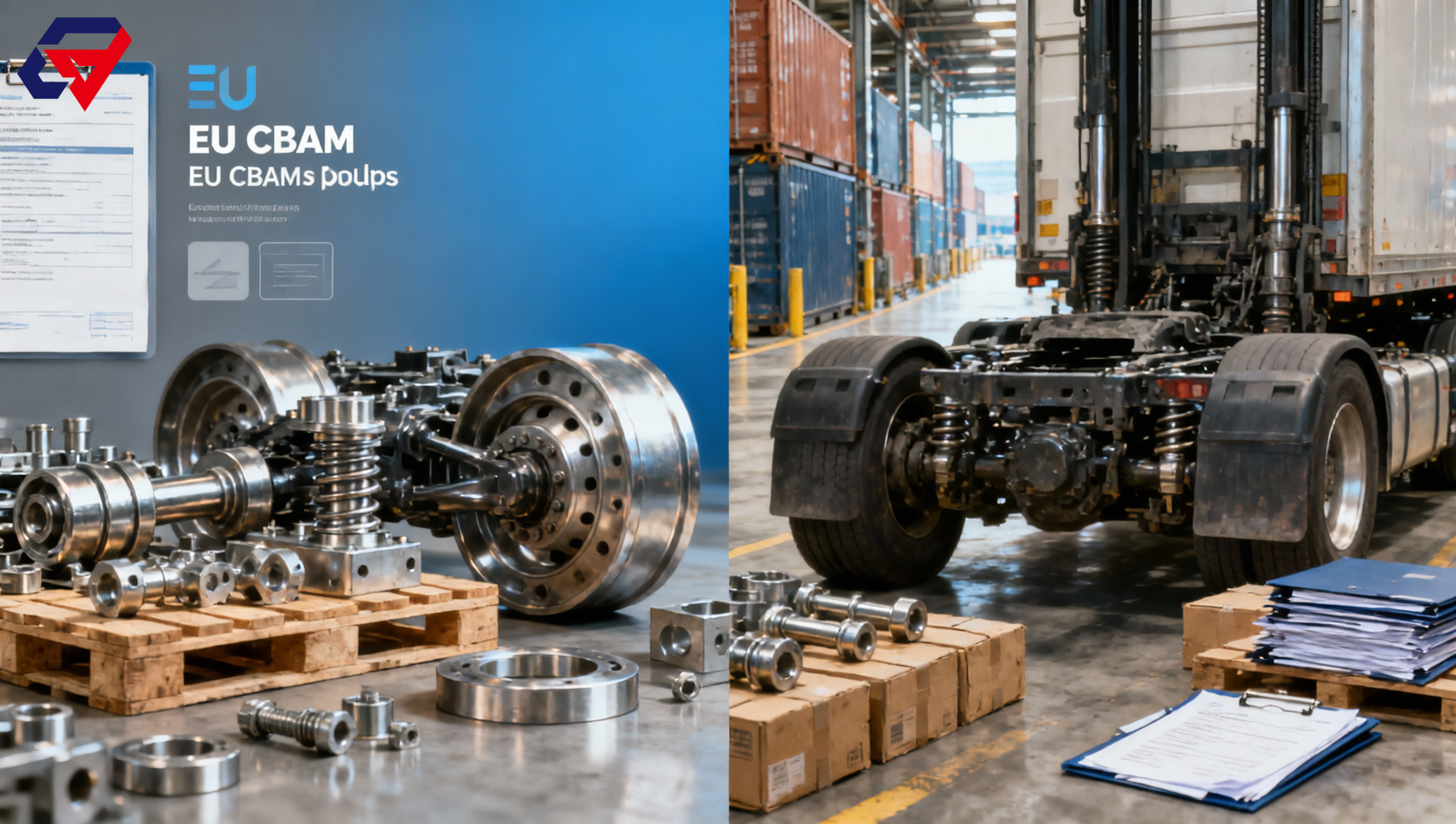
On June 25, 2026, the European Commission notified member state customs authorities and import declaration systems that the first post-transition CBAM emissions filing and prepayment process is now being launched. The move covers steel, aluminum, and an initial group of heavy truck key components including axles and suspension parts, making it a near-term operational issue for exporters, upstream material suppliers, compliance teams, and cross-border delivery planning. For companies shipping related products into the EU, the development is worth close attention because reporting readiness is no longer a distant requirement but part of immediate customs and trade execution.

The filing process has entered an operational stage
According to the provided event information, on June 25, 2026, the European Commission formally informed customs authorities and import declaration systems across EU member states that the first carbon emissions data reporting and fee prepayment procedure after the CBAM transition period has started.
The scope stated in the input covers steel, aluminum, and the first included batch of heavy truck core components such as axles and suspension parts.
The same information states that from 2027, charges will be settled based on actual embedded carbon levels. It also indicates that Chinese heavy truck parts exporters need to complete upstream material carbon footprint checks, obtain third-party verification, and connect to the EU CBAM reporting platform before the third quarter of 2026. Otherwise, they may face customs clearance delays or return shipment risks.
Where the pressure is likely to appear first
Exporters now face a documentation and reporting threshold
From an industry perspective, direct exporters of covered heavy truck parts are the first group likely to feel the impact because the requirement is linked not only to the product itself, but also to the availability and credibility of embedded carbon data. The main pressure point is likely to be in customs documentation, reporting preparation, and delivery scheduling.
Upstream material sourcing becomes part of trade compliance
Analysis shows that suppliers of steel, aluminum, and related inputs may be affected because exporters will need carbon footprint information from upstream materials in order to complete verification and platform reporting. The immediate concern is less about broad sustainability messaging and more about whether material-level data can be checked, organized, and passed downstream in time.
Manufacturing and order fulfillment may need tighter coordination
For processing and manufacturing companies, the effect is likely to emerge in production records, batch traceability, and handover of supporting documents to export teams or overseas customers. What deserves closer attention is whether existing internal processes can align product delivery with carbon-related evidence requirements.
Logistics and supply chain service providers may face timing risks
Supply chain service providers, including customs-facing service roles, may also need to watch the change closely. If exporters fail to complete verification or platform connection on schedule, the operational risk may show up in customs timing, shipment release, and return handling rather than only in cost discussions.
What companies should monitor now
Check whether covered product categories are involved
Companies should first confirm whether their exports fall within the covered scope described in the input, especially where steel, aluminum, axle, or suspension-related heavy truck parts are part of ongoing EU business. This is a practical starting point because exposure depends on actual product coverage.
Review upstream carbon data readiness
Observably, one of the most immediate tasks is to check whether upstream material carbon footprint data can be obtained, reviewed, and matched to export products. The issue is not only whether data exists, but whether it is usable for the required verification and reporting process.
Prepare for third-party verification and platform access
The provided information makes clear that third-party verification and connection to the EU CBAM reporting platform need to be completed before the third quarter of 2026. For companies, this means compliance preparation should be treated as a delivery and market-access issue, not only as an internal reporting exercise.
Align customer communication with shipment planning
What deserves closer attention is the gap between policy language and execution on actual orders. Exporters, buyers, and service partners may need to align early on document completeness, submission timing, and shipment milestones to reduce the risk of customs delay or returned goods.
Why this looks like more than a short-term filing notice
Analysis shows that this development is better understood as both an immediate operational change and a longer-term compliance signal. The immediate part is clear: filing and prepayment procedures have started for the stated product scope. The longer-term signal lies in the shift to settlement based on actual embedded carbon from 2027, which suggests that carbon data quality may increasingly affect cross-border execution for covered goods.
At the same time, it is more appropriate to understand this as a developing compliance framework rather than a fully settled business outcome for every company. The confirmed facts establish reporting, prepayment, timing, and risk points, while the full commercial effect on pricing, sourcing, and customer relationships still needs continued observation.
How the market may best read this stage
At this stage, the industry significance lies in the fact that CBAM requirements for the named heavy truck parts are moving into real filing and customs-linked execution. For affected exporters and supply-chain participants, the practical issue is no longer whether carbon data matters in principle, but whether reporting inputs, verification, and platform access can be completed within the required window.
A neutral reading is that this is not merely a headline policy signal, but it is also not yet a final measure of full market impact. It is more appropriate to understand the development as a concrete compliance milestone with longer-term implications that still require close monitoring.
Basis of this article and what still needs verification
This article is based on the user-provided news title, event date, and event summary. Typical source types for developments of this kind may include official announcements, customs notices, company disclosures, industry association updates, authoritative media coverage, and standards-related documents.
No specific official source link was provided in the input, so the exact official publication path still needs continued verification. Follow-up attention should focus on any further official wording, reporting details, product-scope clarification, and implementation updates related to verification and platform submission.
NAVIGATION
Send Us A Message