



News
Explore what’s going on around the industry and get the latest from the world of heavy equipment and earth-moving.
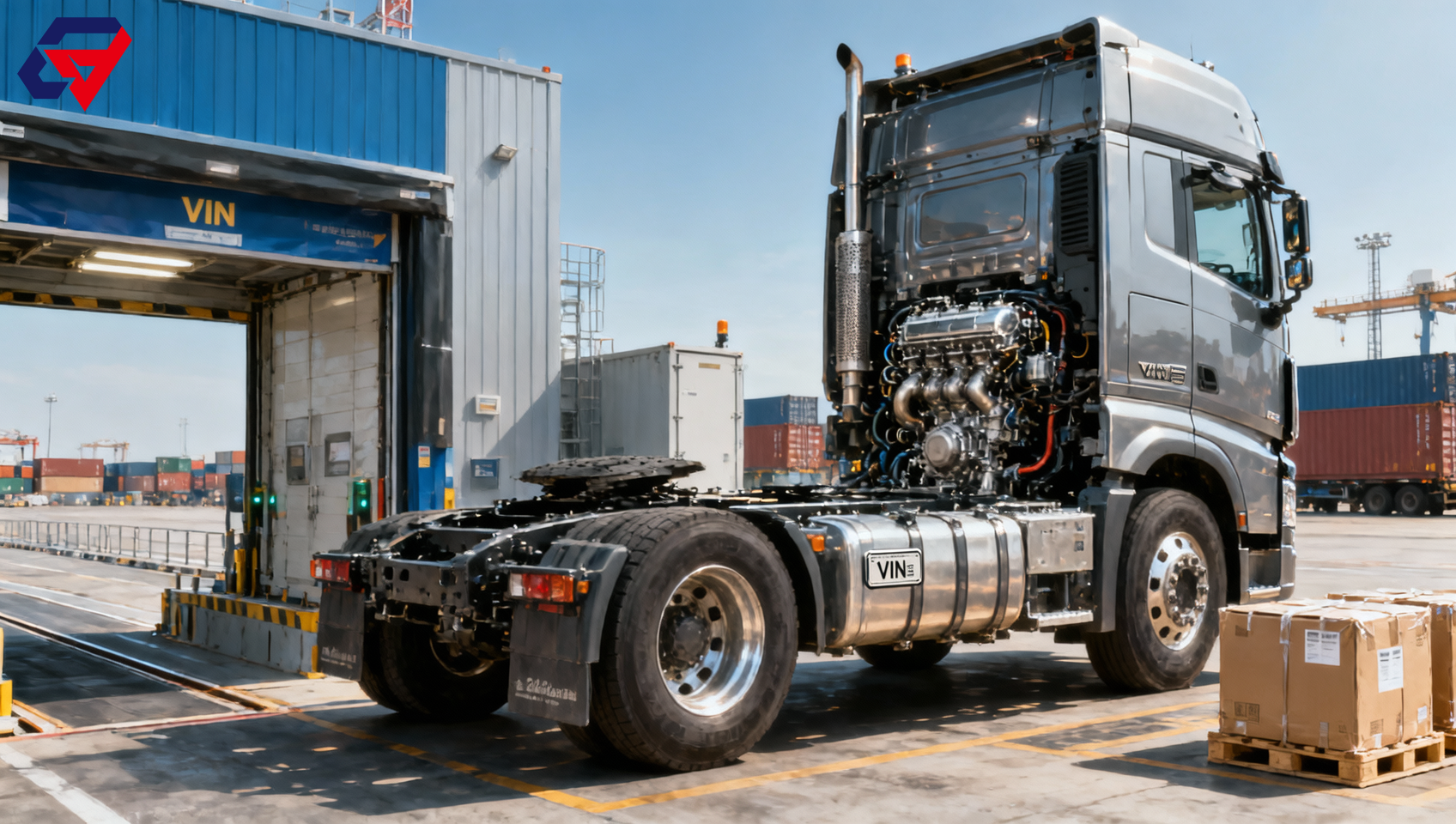
On June 26, 2026, Vietnam’s Ministry of Industry and Trade signed Circular No. 22/2026/TT-BCT, introducing a new pre-customs compliance requirement for imported complete heavy trucks. Starting September 1, 2026, vehicles entering the market must complete a four-point traceability link between the VIN, chassis number, engine number, production date, and key component batch information, while also connecting to the national vehicle traceability platform, VVTIS. For exporters, importers, certification-facing teams, and delivery planners, this is worth close attention because the rule directly ties traceability readiness to import licensing and therefore to shipment release timing.

What the new requirement changes before customs clearance
The confirmed change is that imported complete heavy trucks will face a new traceability condition before customs procedures are completed. Under the circular signed on June 26, 2026, the required four-dimensional binding must be completed before declaration, covering the VIN, chassis number, engine number, production date, and key component batch numbers.
The rule also requires access to Vietnam’s national vehicle traceability platform, VVTIS. According to the provided event summary, vehicles that do not complete the required certification will not be able to obtain an import license. The same summary indicates that this will affect the delivery rhythm of Chinese vehicle exporters shipping heavy trucks to Vietnam.
Where the pressure is likely to appear in the transaction chain
Export delivery planning moves closer to compliance sequencing
From an industry perspective, exporters of complete heavy trucks may be affected first because the new requirement sits ahead of import licensing. That means compliance preparation is no longer separate from delivery scheduling. The main impact is likely to appear in export documentation readiness, vehicle identification consistency, and shipment release coordination.
What deserves closer attention is whether all required identifiers and production-related records are aligned before vehicles reach the customs stage. Any mismatch between traceability data and shipment documents could become a practical bottleneck for delivery timing.
Import and distribution teams face tighter document coordination
Importers and channel operators may be affected because the rule links market entry to traceability certification rather than only to physical delivery. Their operational exposure is likely to center on import license preparation, document completeness, and coordination with upstream manufacturers on the information required for VVTIS access.
Analysis shows that these teams should pay close attention to whether vehicle records, supplier-origin information, and customs-facing materials can be prepared in a synchronized way. The rule change matters not only at the border but also in internal document workflows.
Suppliers of key parts and aftersales traceability functions may come under closer scrutiny
The inclusion of key component batch numbers means the traceability requirement extends beyond the finished vehicle label itself. For manufacturers, procurement teams, and service networks, the practical effect may be stronger attention on how component batch information is recorded, retained, and matched to each exported unit.
Observably, this may also affect aftersales and quality-trace workflows, because once batch-level information is part of a mandatory pre-import record, the reliability of those records becomes more commercially relevant across the vehicle lifecycle.
What companies should review now
Check whether traceability records are export-ready, not only production-ready
Analysis shows that companies shipping heavy trucks to Vietnam should review whether VIN-linked records already capture the chassis number, engine number, production date, and key component batch data in a form that can support certification before customs filing. The issue is not only whether data exists, but whether it is structured and retrievable for regulatory use.
Watch for execution language and platform-level filing expectations
The provided information confirms the new requirement and the effective date, but it does not provide detailed operating procedures. It is therefore more appropriate to monitor how the certification requirement and VVTIS connection are interpreted in practice, including filing sequence, document format, and any official clarification that may shape execution standards.
Reassess delivery windows and procurement coordination
For sales, logistics, and procurement teams, the key practical question is whether existing delivery timetables assume customs processing can begin without prior traceability completion. If so, shipment planning may need adjustment. Companies should also review whether suppliers can provide component batch information in a stable and auditable way within the export cycle.
Prepare for customer-facing and aftersales implications
Where deliveries depend on import license timing, commercial teams may need to review customer communication, acceptance scheduling, and service planning. This does not confirm a broad disruption, but the rule does indicate that traceability compliance now has a direct connection to whether a vehicle can enter the market on schedule.
Why this looks like an execution signal, not just a policy headline
From an industry perspective, this development is better understood as a concrete execution signal because the requirement has a defined signing date, a defined effective date, a named platform, and a direct licensing consequence for non-compliant vehicles. That gives the change more operational weight than a general policy direction statement.
At the same time, observably, the market still needs to watch how implementation is handled in day-to-day practice. The current information does not establish the full enforcement rhythm, the detailed certification workflow, or the degree of flexibility that may exist during early execution. For that reason, companies should treat this as a confirmed rule change with implementation details still worth monitoring.
How this development is best understood now
The immediate significance of the new Vietnam rule is that traceability for imported complete heavy trucks is moving from a background compliance matter to a front-end market access condition. That shift matters most for exporters, importers, certification-facing functions, and supply chain teams whose timing depends on customs and licensing continuity.
It is more appropriate to understand this event as an already established regulatory change with clear commercial relevance, while still recognizing that the detailed execution path requires further observation. The practical focus now is less on debating whether the requirement exists and more on whether companies can align records, documents, and delivery plans before the September 1, 2026 start date.
Basis of this article and what still needs verification
This article is generated based on the user-provided news title, event date, and event summary. For developments of this kind, commonly relevant source categories include official notices, releases from regulatory authorities, customs or trade administration information, industry association updates, standards-related documents, and reporting by authoritative trade media.
A specific official source link was not provided in the input, so the exact source document path still requires follow-up verification. Observably, the areas that remain worth tracking include detailed implementation rules, certification interpretation, filing expectations for VVTIS access, possible changes in tender or procurement documentation, industry feedback, and how companies execute the requirement in actual export and import operations.
NAVIGATION
Send Us A Message