


News
Explore what’s going on around the industry and get the latest from the world of heavy equipment and earth-moving.
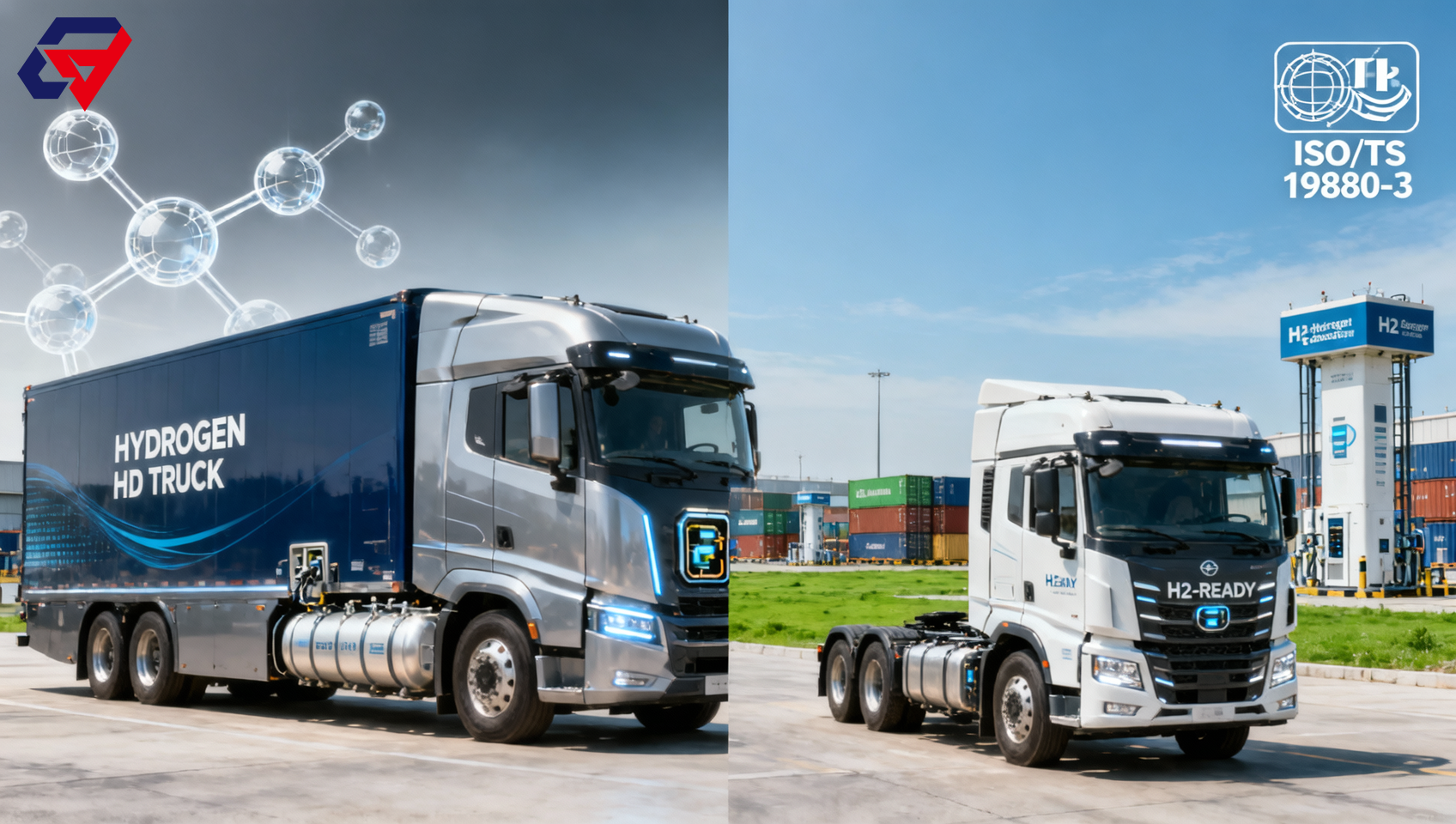
On May 17, 2026, the General Offices of the CPC Central Committee and the State Council jointly issued Opinions on Advancing Energy Conservation and Carbon Reduction at a Higher Level and Higher Quality. This marks the first time a national-level policy document explicitly classifies ‘electric (hydrogen-powered) heavy-duty trucks’ as a ‘strategic essential category’—a designation signaling high-priority status for national energy transition, industrial security, and green export competitiveness. The move directly elevates regulatory alignment expectations, green procurement eligibility, and infrastructure interoperability pathways for Chinese hydrogen heavy-duty truck exporters targeting the EU, Middle East, and Southeast Asia.
Event Overview
On May 17, 2026, the General Offices of the CPC Central Committee and the State Council released the Opinions on Advancing Energy Conservation and Carbon Reduction at a Higher Level and Higher Quality. The document formally designates ‘electric (hydrogen-powered) heavy-duty trucks’ as a ‘strategic essential category’. It further mandates coordinated development of zero-carbon transport corridors and internationalized hydrogen refueling infrastructure. No implementation timeline, funding mechanism, or export licensing detail was specified in the initial release.
Industries Affected
Direct Export Trading Enterprises: These firms—including OEMs and specialized export platforms—gain strengthened policy legitimacy when engaging foreign regulators and public-sector procurement bodies. Impact manifests not in immediate quota or subsidy changes, but in accelerated technical dialogue, faster conformity assessment recognition, and improved standing in green public tender evaluations—particularly where EU Green Public Procurement criteria or Gulf Cooperation Council sustainability benchmarks apply.
Raw Material Sourcing Enterprises: Suppliers of high-purity graphite, iridium, titanium alloys, and carbon fiber for fuel cell stacks and onboard hydrogen storage systems face rising demand visibility—not just domestically, but across downstream export supply chains. While no new import/export controls were announced, the strategic categorization increases long-term planning certainty for upstream material investments and may prompt renewed scrutiny of dual-use export compliance frameworks.
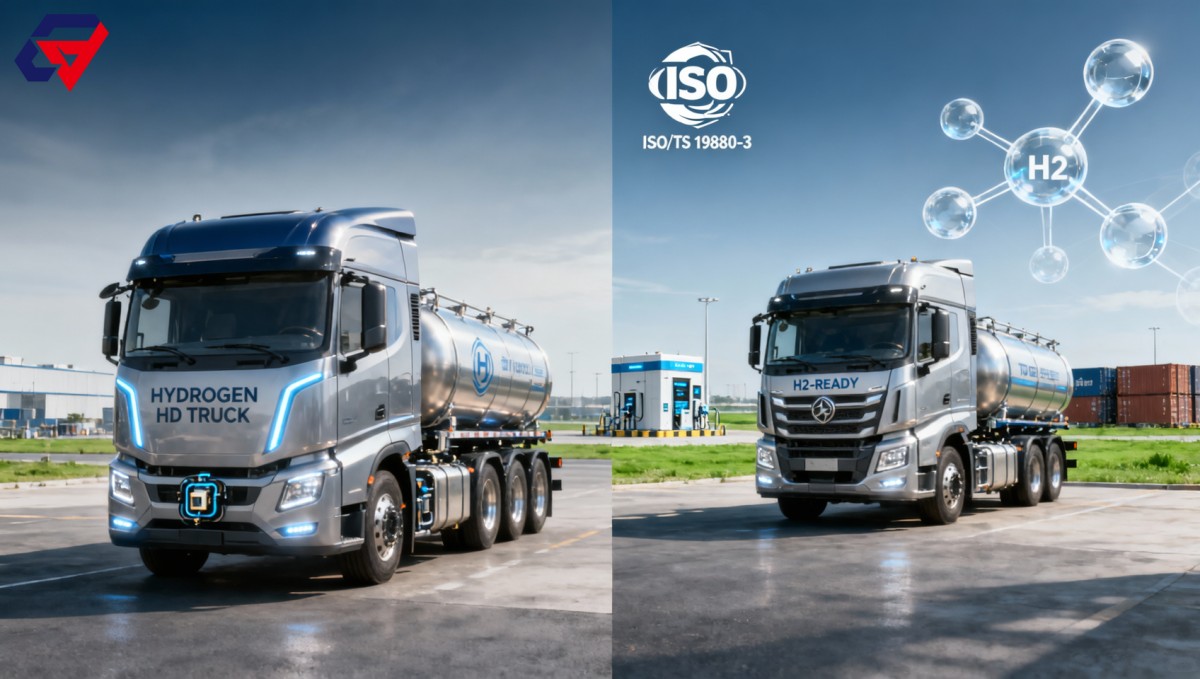
Manufacturing Enterprises: Producers of hydrogen fuel cell stacks, high-pressure Type IV hydrogen tanks, and integrated powertrain systems benefit from de facto standardization signals. The policy does not prescribe technical specifications, but its framing reinforces market pull toward globally interoperable designs (e.g., ISO/TS 19880-3 for refueling interfaces, UNECE R134 for tank certification). Manufacturers now have stronger justification to prioritize international certification cycles over domestic-only validation paths.
Supply Chain Service Providers: Logistics integrators, cross-border certification consultants, and hydrogen infrastructure compatibility testing labs see expanded scope for service bundling—especially around ‘corridor readiness assessments’ (e.g., evaluating port-to-hub refueling coverage along ASEAN trade routes). However, no new government-accredited service designations or subsidy mechanisms were introduced in the Opinions.
Key Focus Areas and Recommended Actions
Align product certification roadmaps with EU and GCC regulatory timelines
Exporters should prioritize EN 15194-compliant vehicle type approval and UNECE R134 tank certification—not only for market access, but to position for anticipated EU Delegated Act updates expected late 2026. Early engagement with notified bodies such as TÜV Rheinland or DEKRA is advised.
Map hydrogen corridor infrastructure gaps in priority markets
Since the Opinions emphasize ‘zero-carbon transport corridor’ coordination, enterprises should co-develop feasibility studies with host-country logistics operators—focusing on intermodal nodes (e.g., Jebel Ali Port–Dubai inland depot; Laem Chabang–Bangkok freight corridor)—to inform bilateral infrastructure MOU proposals.
Review export control classifications for dual-use components
While the policy affirms strategic importance, it does not relax export controls. Firms must reconfirm whether specific stack membrane coatings, high-pressure valve actuation modules, or cryogenic hydrogen sensors fall under China’s updated Dual-Use Items List (2025 revision), particularly for shipments to countries under multilateral sanctions regimes.
Editorial Perspective / Industry Observation
Analysis shows this designation functions less as an immediate market catalyst and more as a long-term signaling instrument—intended to reshape investment horizons, influence multilateral standards negotiations, and recalibrate risk perception among international lenders and insurers. Observably, the inclusion of ‘hydrogen-powered’ within parentheses alongside ‘electric’ reflects ongoing policy caution about technology neutrality: it endorses hydrogen’s role without precluding battery-electric alternatives. From an industry perspective, the emphasis on ‘internationalized refueling infrastructure’ suggests future support will likely flow through diplomatic channels (e.g., Belt and Road Initiative green infrastructure funds) rather than direct export subsidies.
Conclusion
This policy milestone does not guarantee near-term volume growth—but it materially lowers the perceived political and regulatory risk associated with scaling hydrogen heavy-duty truck exports. For global buyers assessing long-term fleet decarbonization partners, it strengthens China’s credibility as a system-integrated supplier—not just a component vendor. A rational interpretation is that the impact will compound gradually, becoming most visible in 2027–2028 as corridor pilot projects mature and third-party verification frameworks stabilize.
Source Attribution
Official source: General Offices of the CPC Central Committee and the State Council, Opinions on Advancing Energy Conservation and Carbon Reduction at a Higher Level and Higher Quality, issued May 17, 2026. Full text published on www.gov.cn.
Areas under active observation: (1) Subsequent implementation guidelines from MIIT and NDRC; (2) Updates to the Export Control Law enforcement notices related to hydrogen energy equipment; (3) Bilateral infrastructure MOUs referencing the ‘zero-carbon transport corridor’ framework.
NAVIGATION
Send Us A Message