



News
Explore what’s going on around the industry and get the latest from the world of heavy equipment and earth-moving.
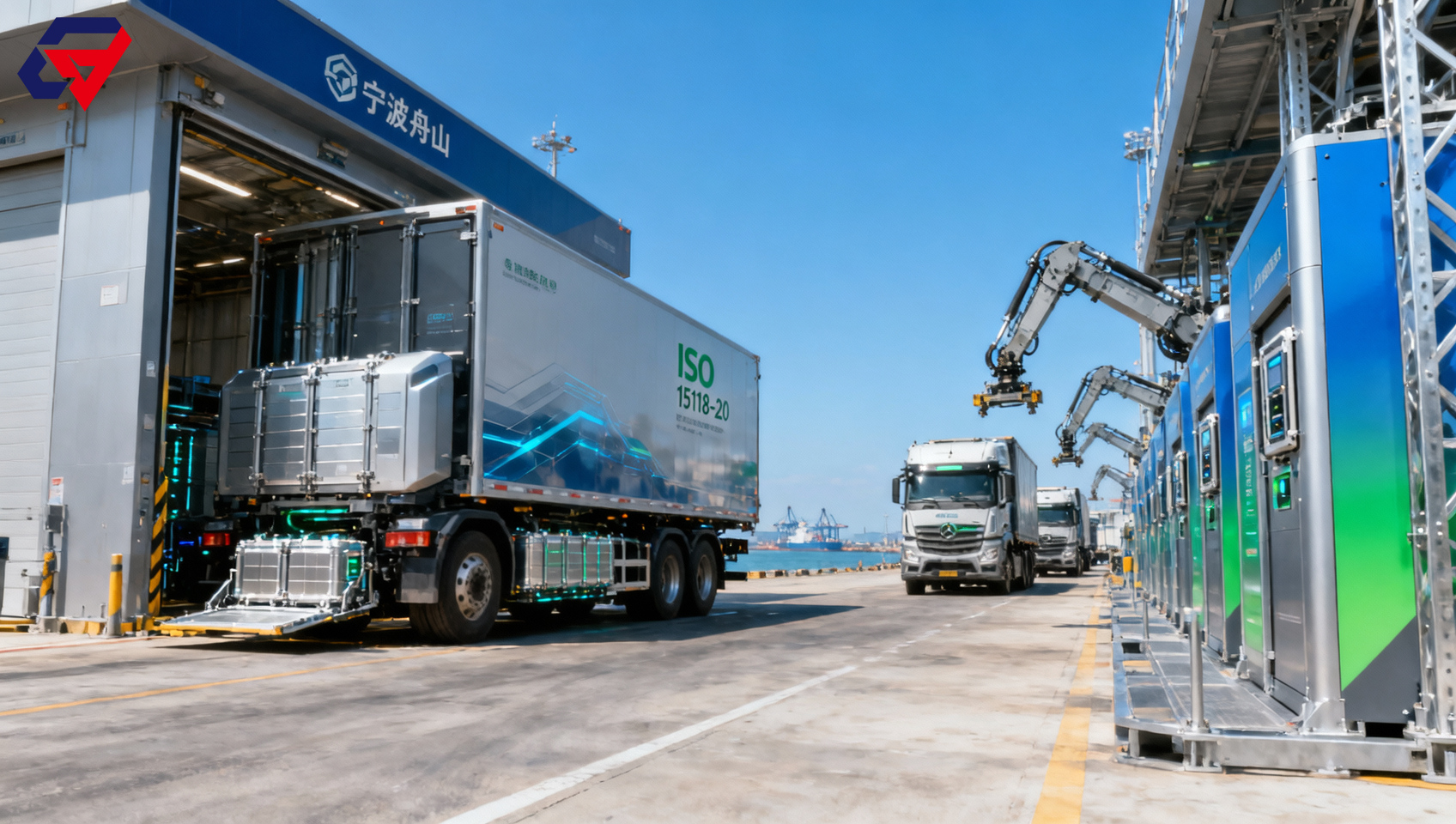
Ningbo-Zhoushan Port announced on May 8, 2026 the completion of its first-phase dedicated battery swap hub for new-energy heavy-duty trucks, with integrated support for the ISO 15118-20 international digital communication protocol. This development is relevant to stakeholders in port logistics, electric commercial vehicle supply chains, cross-border trade services, and RCEP/Mid-Eastern European market-facing infrastructure operators — because it signals a shift from domestic standard adoption toward internationally aligned interface design, potentially reshaping how foreign fleets integrate with Chinese-built charging and swapping infrastructure.
Event Overview
On May 8, 2026, Ningbo-Zhoushan Port confirmed the operational launch of its initial battery swap hub dedicated to new-energy heavy-duty trucks. The hub supports the ISO 15118-20 communication protocol, enabling plug-and-play interoperability with overseas-branded vehicles. It has opened compatibility testing channels for importers from RCEP countries and Central & Eastern Europe. No further technical specifications, capacity figures, or rollout timelines beyond this initial phase were disclosed.
Industries Affected
Direct Trade Enterprises (RCEP & Central/Eastern European Importers)
These enterprises may face revised operational expectations when deploying China-sourced battery-swappable heavy-duty trucks in their home markets. The ISO 15118-20 alignment lowers integration friction — meaning fleet management systems, depot energy scheduling, and vehicle-to-infrastructure handshaking may require fewer custom adaptations than previously assumed.
Electric Commercial Vehicle Manufacturers & Exporters
Manufacturers exporting battery-swappable heavy-duty trucks to RCEP or Central/Eastern European markets now have a reference implementation for ISO 15118-20 compliance at the infrastructure layer. This may influence onboard communication stack design, certification planning, and after-sales service architecture — especially where local grid or telematics providers mandate specific digital handshake protocols.
Port Logistics & Terminal Operators (Domestic & Regional)
Operators outside Ningbo may need to assess whether future infrastructure upgrades — particularly those involving automated or high-throughput swapping — will increasingly be benchmarked against ISO-aligned interfaces rather than proprietary or nationally scoped standards. This could affect tender specifications, vendor selection criteria, and interoperability testing requirements.
Supply Chain Service Providers (Charging Infrastructure Integrators, Certification Bodies)
Service providers involved in certifying or integrating battery swap systems may see growing demand for ISO 15118-20 validation expertise — particularly for projects targeting dual-market (China + export) deployment. This includes testing labs, communication protocol consultants, and cybersecurity auditors focused on V2G (vehicle-to-grid) data exchange integrity.
What Relevant Enterprises or Practitioners Should Monitor and Do Now
Track official updates on expanded testing scope and timeline
The hub currently offers compatibility testing for RCEP and Central/Eastern European importers. Stakeholders should monitor whether the port authority or affiliated technical bodies publish formal test reports, conformance checklists, or eligibility criteria — as these may inform procurement decisions before full-scale deployment.
Assess ISO 15118-20 readiness in current or planned vehicle procurement
Importers and fleet operators evaluating China-made battery-swappable heavy-duty trucks should verify whether their target models implement ISO 15118-20 (not just earlier versions like ISO 15118-2), and whether they support the specific security and plug-and-charge features enabled by the -20 revision. This affects both functional compatibility and long-term upgrade paths.
Distinguish between interface alignment and full operational equivalence
Support for ISO 15118-20 confirms standardized digital handshaking — not necessarily harmonized billing, grid response behavior, or cybersecurity policy enforcement across jurisdictions. Companies should avoid assuming automatic regulatory or commercial equivalence; instead, treat this as a foundational interoperability step requiring complementary local adaptations.
Prepare internal coordination between procurement, IT, and operations teams
Integrating ISO-compliant vehicles into existing depot infrastructure may involve updates to fleet management software, authentication servers, and energy dispatch logic. Cross-functional alignment — especially between procurement leads, vehicle telematics vendors, and terminal automation teams — should begin early, even before hardware deployment.
Editorial Perspective / Industry Observation
Observably, this initiative reflects an emerging pattern: Chinese infrastructure projects are beginning to embed internationally recognized digital interface standards not merely for inbound compatibility, but as an export-ready design principle. Analysis shows that such moves do not yet constitute broad regulatory harmonization — nor do they guarantee seamless cross-border operation — but they do reduce one significant technical barrier for foreign adopters of China-developed EV logistics solutions. From an industry perspective, this is best understood not as a completed standardization milestone, but as an early-stage signal of infrastructure-led interoperability strategy. Continued observation is warranted on whether similar ISO 15118-20 integration appears in other port hubs or inland logistics corridors in the coming 12–18 months.
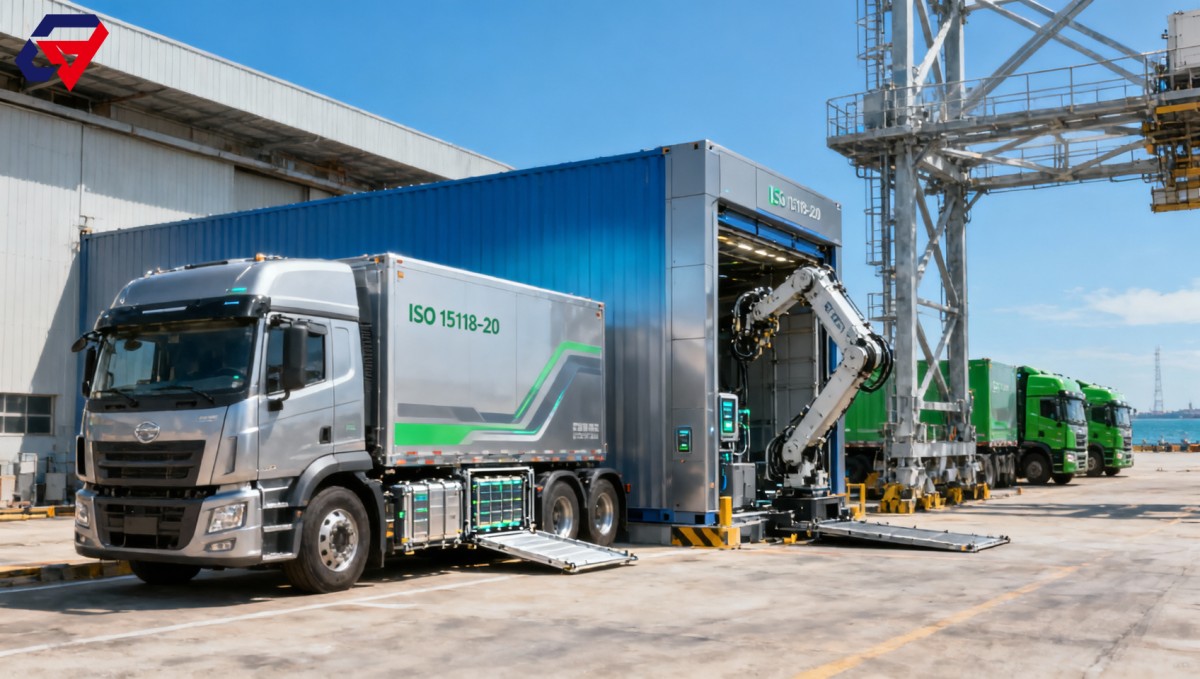
In summary, Ningbo-Zhoushan Port’s ISO 15118-20-enabled battery swap hub represents a targeted infrastructure-level alignment with global vehicle communication norms — not a wholesale regulatory shift, nor a near-term replacement for localized compliance efforts. It is more accurately interpreted as a capability-building step that lowers entry friction for select international users, while highlighting growing attention to digital interface standardization within China’s green port transition agenda.
Source: Official announcement by Ningbo-Zhoushan Port Authority, May 8, 2026.
Note: Further technical implementation details, commercial terms, and expansion plans remain unconfirmed and are subject to ongoing monitoring.
NAVIGATION
Send Us A Message