



News
Explore what’s going on around the industry and get the latest from the world of heavy equipment and earth-moving.
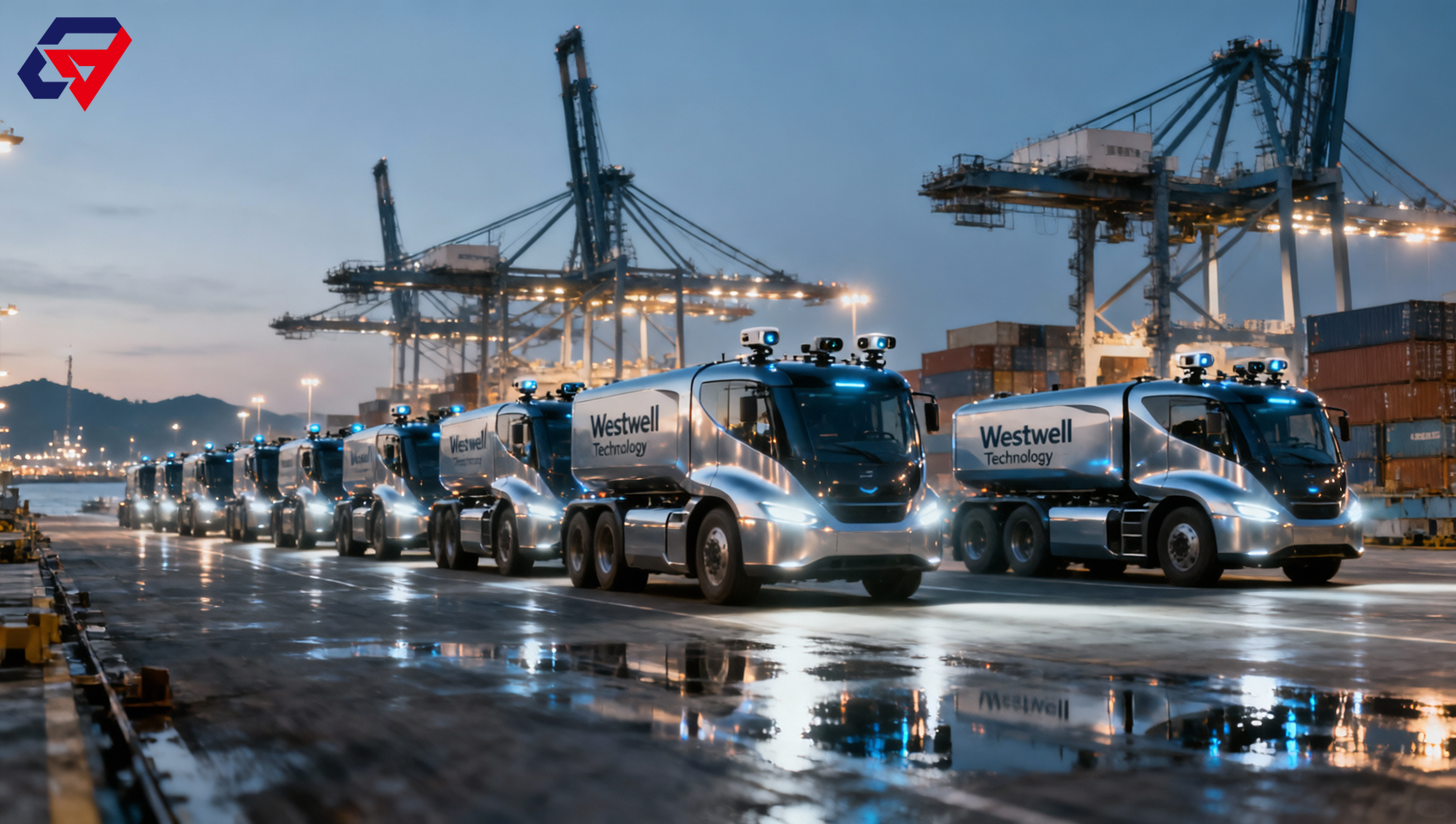
On April 21, 2026, Kwai Tsing Container Terminal in Hong Kong commenced operations with six driverless, cabin-less autonomous trucks (ATs) developed by China’s Westwell Technology — marking the first verified deployment of such vehicles in a live port environment. This development is especially relevant for cross-border logistics providers, importers serving Greater China markets, and supply chain technology adopters, as it signals measurable improvements in container truck turnaround time and operational resilience at a critical node in the China–Hong Kong trade corridor.
Event Overview
On April 21, 2026, six autonomous heavy-duty trucks (ATs), designed without driver cabins and developed by Westwell Technology, entered service at Kwai Tsing Container Terminal in Hong Kong. The vehicles operate in mixed traffic with manned trucks under 24-hour conditions. The AT system integrates with the terminal’s central management system and AI-powered yard monitoring infrastructure, enabling seamless coordination between autonomous and human-driven units.
Impact on Specific Industry Segments
Direct Importers & Overseas Trading Companies
These entities rely on predictable inland transit times from port to distribution hubs or manufacturing sites. The reduction in container truck turnaround cycles — reported as up to 30% faster delivery — directly improves inventory planning accuracy and reduces demurrage exposure. Impact manifests primarily in lower detention charges, tighter shipment scheduling, and improved responsiveness to demand fluctuations.
Cross-Border Logistics Service Providers
For third-party logistics (3PL) and freight forwarders managing China–Hong Kong haulage, the deployment introduces both opportunity and complexity. Reduced manual labor dependency lowers variable cost per trip, but also raises questions about fleet transition timelines, maintenance protocols for autonomous systems, and liability frameworks during mixed-operation phases. Key impact areas include pricing models, insurance coverage scope, and real-time visibility integration requirements.
Manufacturers with Just-in-Time Assembly Lines
Automotive, electronics, and industrial equipment makers sourcing components via Hong Kong ports may experience shorter and more consistent inbound material lead times. This affects production line scheduling stability and buffer stock calculations — particularly for high-value, low-inventory SKUs where delays trigger cascading line stoppages.
Port-Adjacent Warehousing & Distribution Operators
Facilities located near Kwai Tsing Terminal face revised expectations around gate throughput, appointment windows, and yard dwell time. With ATs operating 24/7 and exhibiting higher dispatch consistency, warehouse operators must reassess labor shift patterns, yard slotting logic, and loading bay utilization metrics — especially during overnight and early-morning slots previously constrained by human driver availability.
What Relevant Enterprises or Practitioners Should Monitor and Act On
Track official scalability announcements and regulatory clarifications
Current deployment covers only six units. Observably, the next phase will hinge on Hong Kong’s Transport Department issuing formal guidelines for wider autonomous vehicle operation in port zones — including safety certification pathways and incident reporting standards. Stakeholders should monitor public consultations or policy drafts released after Q2 2026.
Assess exposure to key cargo categories affected by turnaround compression
Analysis shows that time-sensitive shipments — such as temperature-controlled pharmaceuticals, high-frequency consumer electronics, and automotive parts with tight build schedules — stand to gain most from reduced inland transit variability. Companies handling these categories should prioritize mapping current handover points and identifying potential bottlenecks upstream of the terminal gate.
Distinguish between operational pilot results and scalable commercial readiness
The reported 30% improvement in delivery timeliness reflects a controlled, monitored pilot environment. It does not yet indicate full-scale reliability across seasonal weather variations, peak congestion periods, or unplanned infrastructure disruptions. Current more appropriate interpretation is: this is a validated proof point for localized automation, not an immediate signal for wholesale fleet replacement planning.
Review and update internal SLAs, insurance policies, and contingency protocols
Logistics contracts and warehouse service agreements often reference ‘standard’ truck turnaround benchmarks. With ATs altering those baselines, parties should audit existing SLAs for clauses tied to detention, waiting time, or delivery window penalties. Similarly, insurers are beginning to differentiate coverage terms for autonomous vs. conventional haulage — making proactive review advisable before renewal cycles.
Editorial Perspective / Industry Observation
Observably, this deployment is less a standalone milestone and more a calibrated stress test of autonomous heavy-vehicle integration within a complex, legacy port ecosystem. Its significance lies not in scale — six vehicles — but in its operational context: a globally ranked container terminal with dense traffic, strict customs interfaces, and multi-stakeholder coordination. From an industry perspective, this represents a tangible, jurisdiction-specific validation of Chinese-developed autonomous trucking technology in a regulated international trade gateway. Analysis suggests it functions primarily as a policy and operational signal — indicating growing institutional willingness to co-deploy human and machine resources — rather than an immediate commercial inflection point. Sustained attention is warranted not for speed of rollout, but for how regulatory, insurance, and interoperability frameworks evolve alongside it.
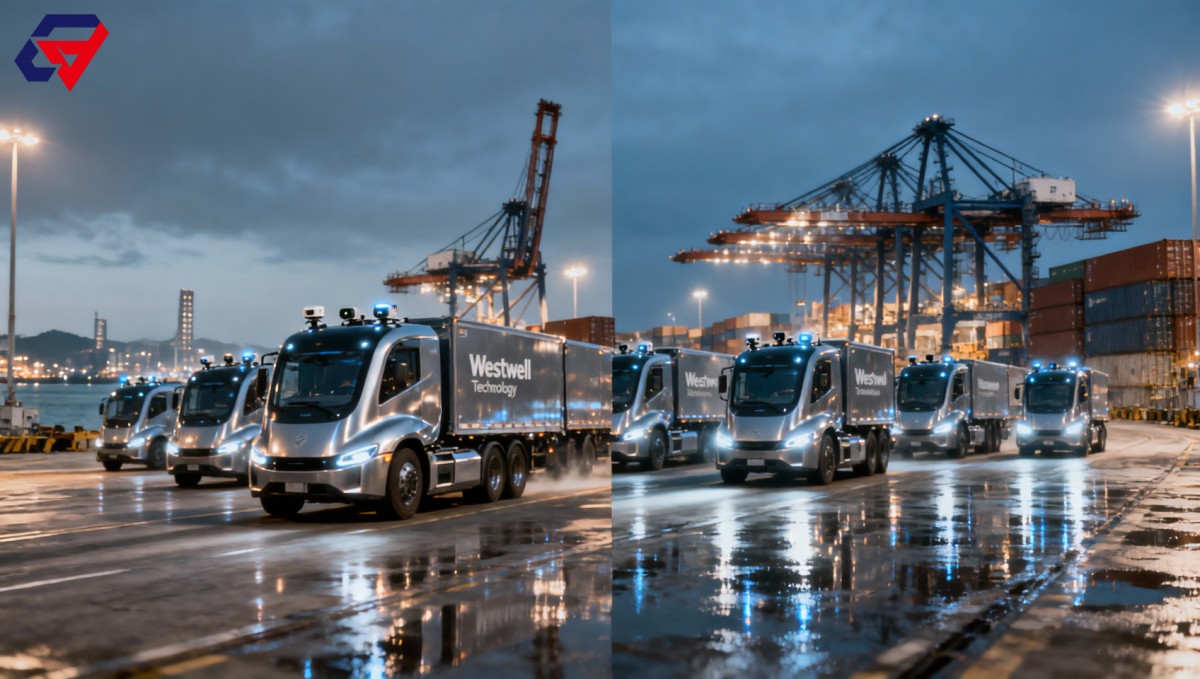
Conclusion: This initiative confirms that autonomous heavy-duty trucking has progressed beyond closed-test environments into functional, supervised port operations — but remains firmly in the early-adoption, evidence-gathering phase. It is best understood not as a near-term replacement for conventional logistics labor, but as a targeted tool to enhance predictability and reduce compliance risk in specific, high-friction segments of cross-border container movement. For stakeholders, measured observation — rather than reactive investment — remains the most appropriate posture at this stage.
Source: Public announcement by Kwai Tsing Container Terminal Authority and Westwell Technology, dated April 21, 2026. Note: Long-term scalability, regulatory framework evolution, and broader geographic rollout remain subjects for ongoing observation.
NAVIGATION
Send Us A Message