


News
Explore what’s going on around the industry and get the latest from the world of heavy equipment and earth-moving.
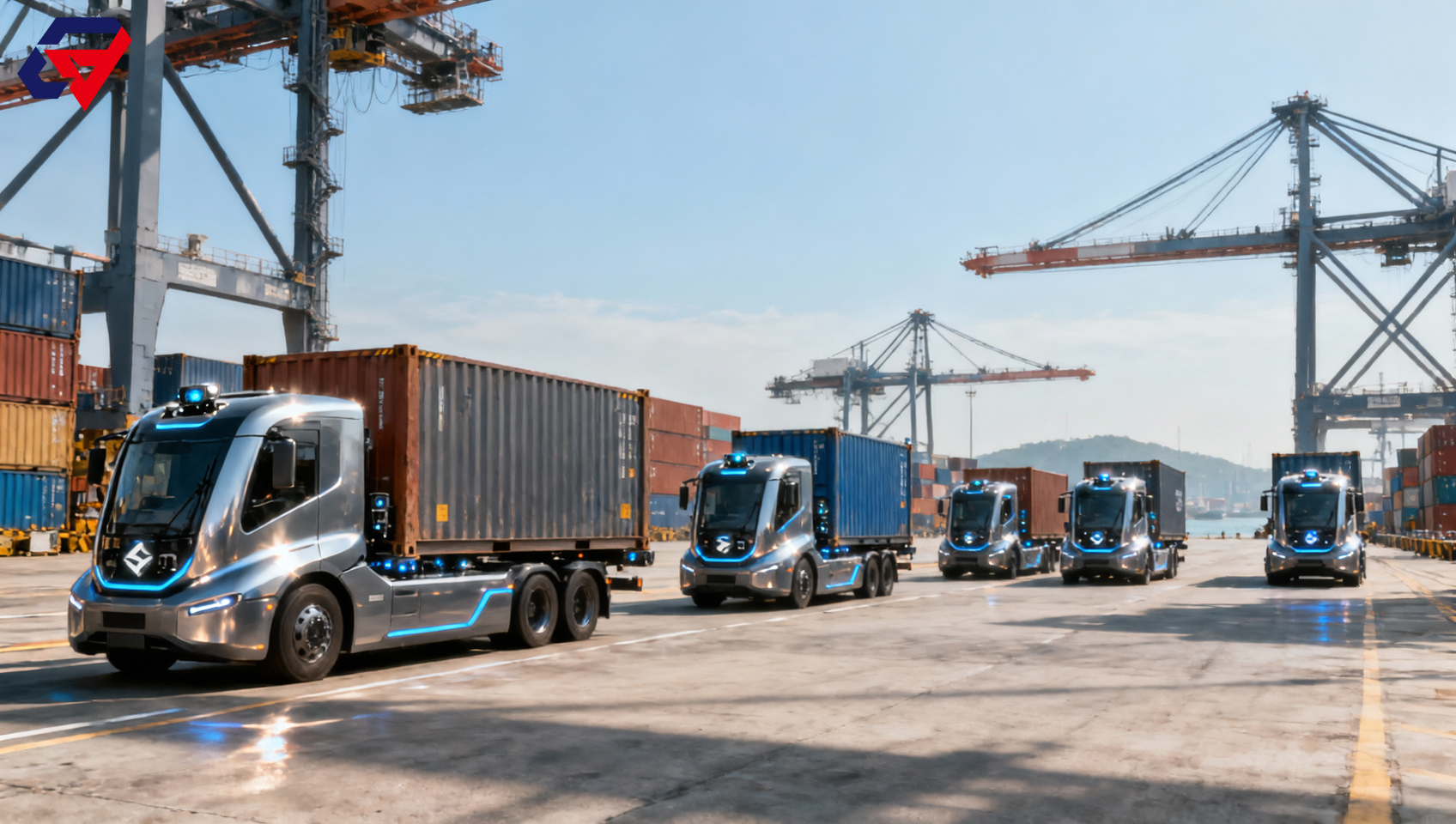
On April 21, 2026, six driverless heavy-duty trucks (AT) developed by Westwell Technology entered operational service at Hong Kong’s Kwai Tsing Container Terminal—the first such deployment in the region. The rollout introduces a rare ‘co-located mixed-operation’ model, enabling seamless coordination between autonomous and manned vehicles on the same作业 site. This development carries implications for port automation providers, logistics integrators, and export-oriented equipment suppliers—particularly those engaged with emerging automated ports in Southeast Asia, the Middle East, and Latin America.
Event Overview
On April 21, 2026, six cabin-less autonomous heavy-duty trucks (AT) developed by Westwell Technology commenced operations at Kwai Tsing Container Terminal in Hong Kong. These vehicles operate under a ‘co-located mixed-operation’ mode—running alongside manned vehicles without physical separation or scheduling isolation. The system has completed closed-loop validation across real vessel-to-yard workflows, under high-density, high-frequency, and all-weather conditions.
Impact on Specific Industry Segments
Port Automation System Integrators
This deployment validates an engineering-ready approach to integrating autonomous trucks into legacy terminal environments—without requiring full infrastructure overhaul or operational silos. For integrators, it signals growing feasibility of phased, interoperable automation rather than ‘greenfield-only’ deployments.
Logistics & Terminal Operating Companies (TOCs)
The mixed-operation model reduces transition risk and capital lock-in during automation upgrades. TOCs operating in jurisdictions with regulatory constraints on fully unmanned operations—or facing labor continuity concerns—may now assess hybrid fleet management as a near-term pathway.
Heavy-Duty EV and Autonomous Vehicle Exporters
The project demonstrates compliance with Hong Kong’s transport and port safety regulations—a jurisdiction with rigorous third-party certification requirements. For exporters targeting ASEAN, GCC, or Mercosur markets, this serves as a reference case for regulatory alignment and verification readiness.
Maritime Supply Chain Service Providers
Real-time coordination between autonomous and manned assets implies tighter synchronization needs across yard planning, gate scheduling, and vessel stowage systems. Providers offering TOS (Terminal Operating Systems) integration or digital twin-enabled dispatch tools may see accelerated demand for interoperability modules.
What Relevant Enterprises or Practitioners Should Focus On Now
Monitor regulatory statements from HKMTA and local transport authorities
Current operation is permitted under a time-bound trial framework. Any extension, scaling, or formalization of mixed-operation rules will directly affect replicability in other jurisdictions with similar regulatory frameworks.
Track deployment scope beyond initial 6 units
Expansion to additional lanes, shifts, or cargo types (e.g., refrigerated or hazardous containers) would indicate maturation of operational protocols—not just vehicle capability—and inform procurement timelines for overseas adopters.
Distinguish between technical validation and commercial scalability
The closed-loop validation confirms functional reliability, but does not yet reflect unit economics, maintenance cadence, or long-term fleet availability rates. Stakeholders should treat this as a proof-of-engineering—not yet a proven business model—for cross-border replication.
Prepare for interoperability interface documentation
Since seamless coordination with manned fleets requires standardized data exchange (e.g., positioning, status, intent), companies developing or deploying TOS, ERTG, or gate systems should review API specifications referenced in the trial—especially those related to ISO/IEC 23270-compliant vehicle-to-infrastructure handshaking.
Editorial Perspective / Industry Observation
From an industry perspective, this launch is best understood not as a finished product rollout, but as a regulatory and operational benchmark: it confirms that mixed human–machine operation in high-stakes container handling is technically viable and institutionally endorsable—at least under controlled, monitored conditions. Analysis来看, its primary value lies in de-risking adoption pathways for ports where full autonomy faces legal, labor, or infrastructural barriers. Observation来看, it shifts the competitive conversation among automation vendors from ‘who can build the most capable truck?’ toward ‘who can deliver the most integrable, certifiable, and phaseable solution?’ Current more relevant interpretation is that this represents a transitional enabler—not a destination.
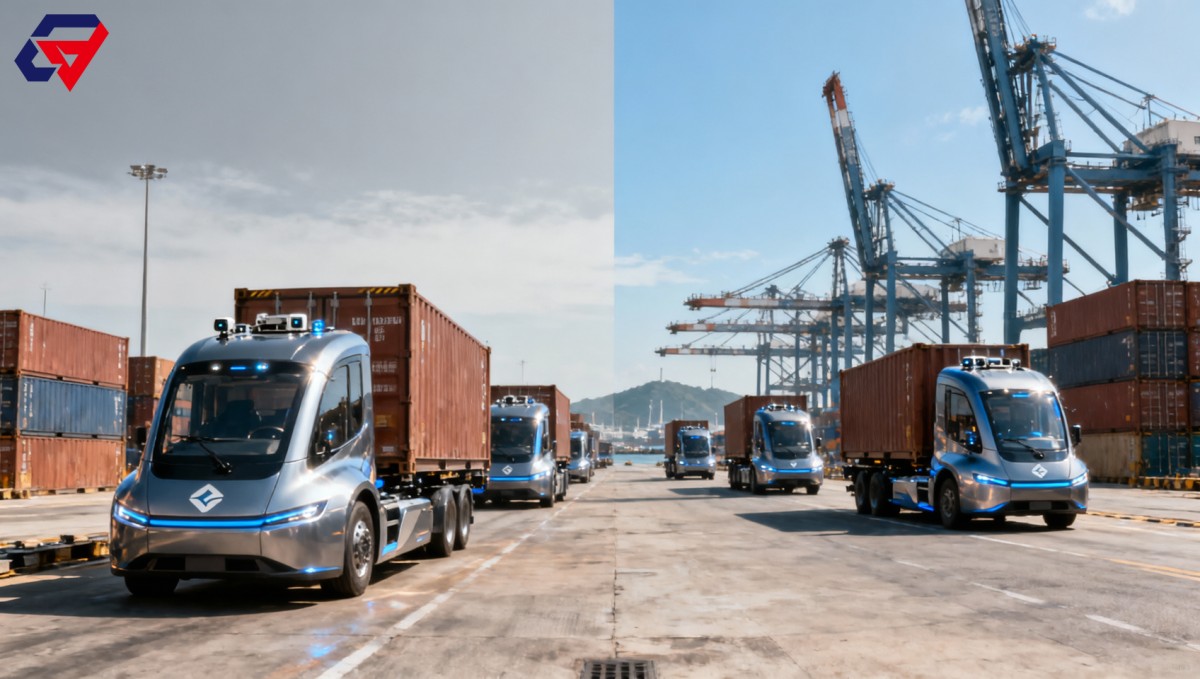
In summary, the Kwai Tsing deployment marks a step toward pragmatic port automation—not through wholesale replacement, but through coexistence. Its significance resides less in technological novelty and more in institutional acceptance and operational adaptability. It is better interpreted today as a replicable compliance and integration reference point, rather than a scalable commercial template.
Source: Public announcement by Westwell Technology and Hong Kong Marine Department (April 21, 2026). Note: Long-term operational KPIs (e.g., uptime, maintenance cost, labor displacement impact) remain unreported and are subject to ongoing observation.
NAVIGATION
Send Us A Message