


News
Explore what’s going on around the industry and get the latest from the world of heavy equipment and earth-moving.
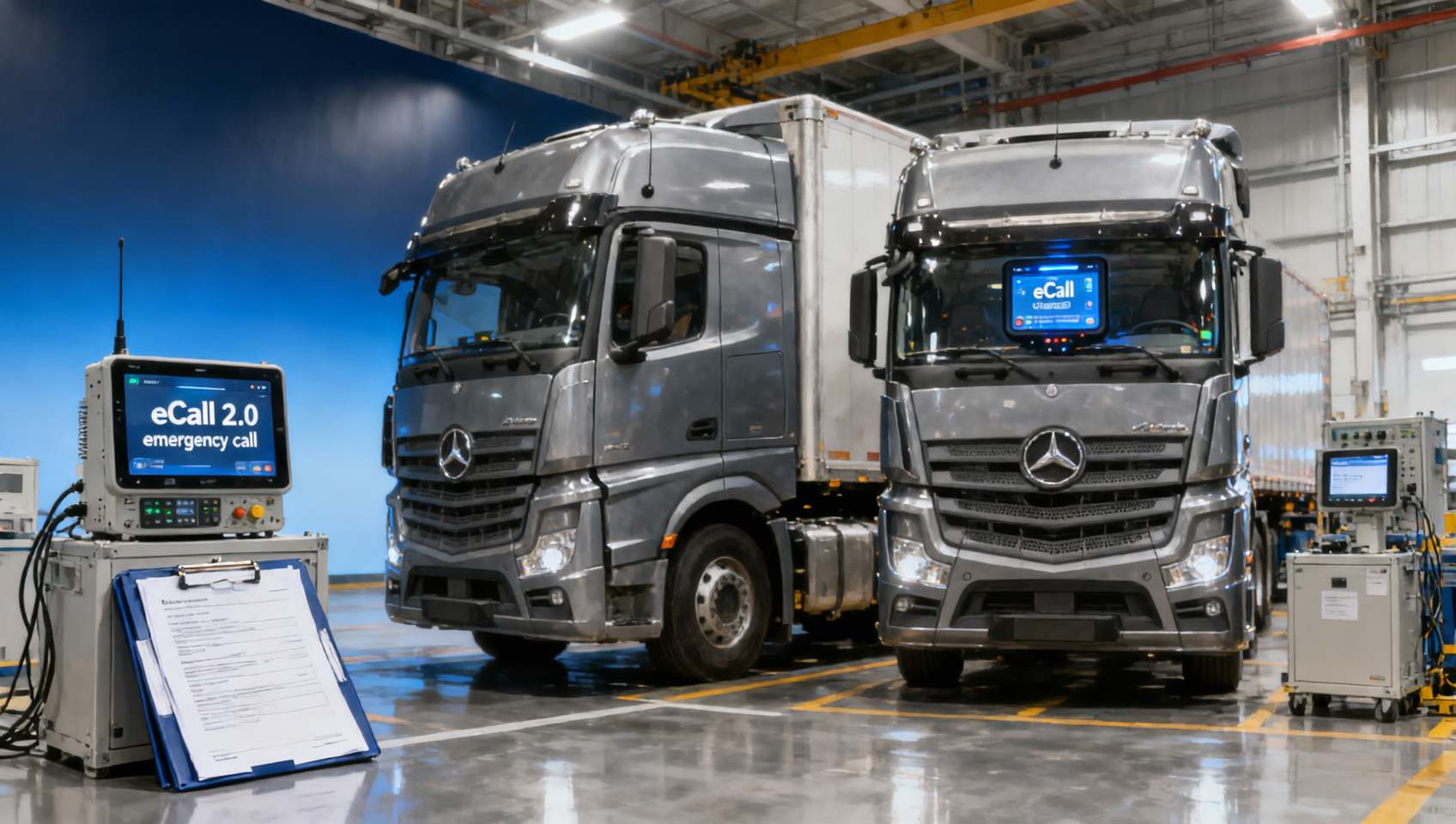
From August 1, 2026, Chinese heavy truck exports to the EU face a new compliance condition tied to vehicle safety system approval. Based on the revised guidance issued by the European Commission on July 27, 2026, newly imported heavy trucks must arrive with an activated eCall 2.0 onboard emergency call system compliant with EN 15037-2:2025, supported by a type test report issued by a CNAS-accredited laboratory in China. For truck manufacturers, KD suppliers, and export delivery teams, this is not just a technical specification update; it directly affects certification preparation, document readiness, and shipment timing.

What the New Entry Requirement Specifies
The confirmed change is tied to the revised Implementation Guidelines for Intelligent Safety Systems for Heavy Vehicles released by the European Commission on July 27, 2026.
According to the information provided, from August 1, 2026, all newly imported heavy trucks must meet three stated conditions: the vehicle must be pre-installed with an eCall 2.0 system, the system must be activated, and the configuration must comply with EN 15037-2:2025.
The same requirement also states that a type test report must be issued by a CNAS-accredited laboratory in China. The rule therefore connects product configuration and certification documentation in the same compliance path.
Where the Immediate Pressure Will Appear
Export vehicle programs moving toward EU delivery
Chinese OEMs exporting complete heavy trucks to the EU are likely to feel the impact first because the new rule applies directly to new imported vehicles. The practical effect is concentrated in model compliance review, onboard system configuration, and readiness of supporting certification documents before shipment.
From an operational perspective, what deserves closer attention is whether existing export models already include an activated eCall 2.0 function aligned with EN 15037-2:2025, and whether the corresponding type test report is available in the required form.
KD supply chains tied to final vehicle compliance
KD suppliers are also exposed because their delivery rhythm is linked to the final vehicle's conformity path. Even where the supplier is not the final importer, any mismatch in hardware preparation, system activation status, or technical documentation may affect assembly planning, acceptance, or downstream delivery scheduling.
Analysis shows that for KD-related business, the issue is not limited to a component change. It may also affect document handover, technical specification alignment, and coordination between vehicle integrators and suppliers.
Testing and certification service workflows
The requirement for a type test report from a CNAS-accredited laboratory in China gives testing and certification work a more visible role in the export process. For companies already preparing EU shipments, the sequence between testing, document issuance, and shipment release becomes more important.
Observably, businesses involved in certification support and compliance file preparation will need to pay closer attention to report completeness, standard alignment, and whether internal export documentation matches the new requirement exactly.
What Companies Should Check Now
Whether current vehicle specifications already match the rule
Companies should first review whether affected heavy truck models intended for EU export are pre-installed with eCall 2.0 and whether the function is activated as required. This is a basic screening step because the rule, as provided, links compliance to both installation and activation rather than to equipment presence alone.
Whether technical files and test reports are ready for use
Another immediate point is document readiness. The provided information specifically refers to a type test report from a CNAS-accredited laboratory in China, so exporters and related suppliers should examine whether existing reports, test plans, and technical files are aligned with EN 15037-2:2025 and are usable for current export procedures.
Whether procurement and delivery schedules need adjustment
From an industry perspective, procurement teams and delivery planners should pay attention to whether the new requirement creates additional preparation steps before shipment. The input information does not provide detailed execution timing beyond the effective date, so this should be treated as a compliance planning issue that still requires close verification in practice.
Whether customer-facing and tender documents reflect the new condition
Where exports are linked to distributor orders, project sales, or tender-based procurement, companies should also check whether commercial documents, technical offers, and model descriptions reflect the updated compliance condition. This matters because any gap between bid documents, vehicle configuration, and certification files can create avoidable delivery friction.
How This Change Should Be Read at This Stage
Analysis shows that this development is more than a general policy signal. The effective date and the stated technical and reporting conditions indicate a rule with immediate compliance relevance for new imports from August 1, 2026.
At the same time, it is more appropriate to understand this as a rule now entering execution rather than a fully closed compliance picture. The supplied information confirms the headline requirement, but it does not provide broader enforcement detail, market implementation feedback, or downstream procurement responses. Those elements still need observation.
What deserves closer attention is how certification interpretation, document review practice, and buyer-side acceptance criteria develop after implementation begins.
Why the Market Will Keep Watching
For the industry, the significance of this update lies in the fact that export compliance to the EU is being shaped not only by product shipment, but also by embedded safety system status and laboratory-backed documentation. That makes the change relevant across engineering, certification, procurement, and delivery functions.
A neutral reading is that this is best understood as a landed compliance change with immediate operational consequences, while several execution details still require continued monitoring. Companies affected by EU-bound heavy truck business should treat it as an active requirement and continue checking how it is reflected in certification practice, customer documents, and actual delivery workflows.
Basis of This Article and What Still Needs Verification
This article is generated from the user-provided news title, event date, and event summary. The analysis is limited to the confirmed information supplied in the input and does not rely on additional unverified facts.
For developments of this type, common source categories usually include official notices, regulatory publications, trade or customs authority information, industry association updates, standard-setting documents, and reporting by established professional media. No specific official source link was provided in the input, so the exact official publication path still needs to be verified on an ongoing basis.
Further observation should focus on detailed implementation language, certification interpretation, tender document updates, market feedback, and how affected companies adjust execution and delivery arrangements after the rule takes effect.
NAVIGATION
Send Us A Message