



News
Explore what’s going on around the industry and get the latest from the world of heavy equipment and earth-moving.
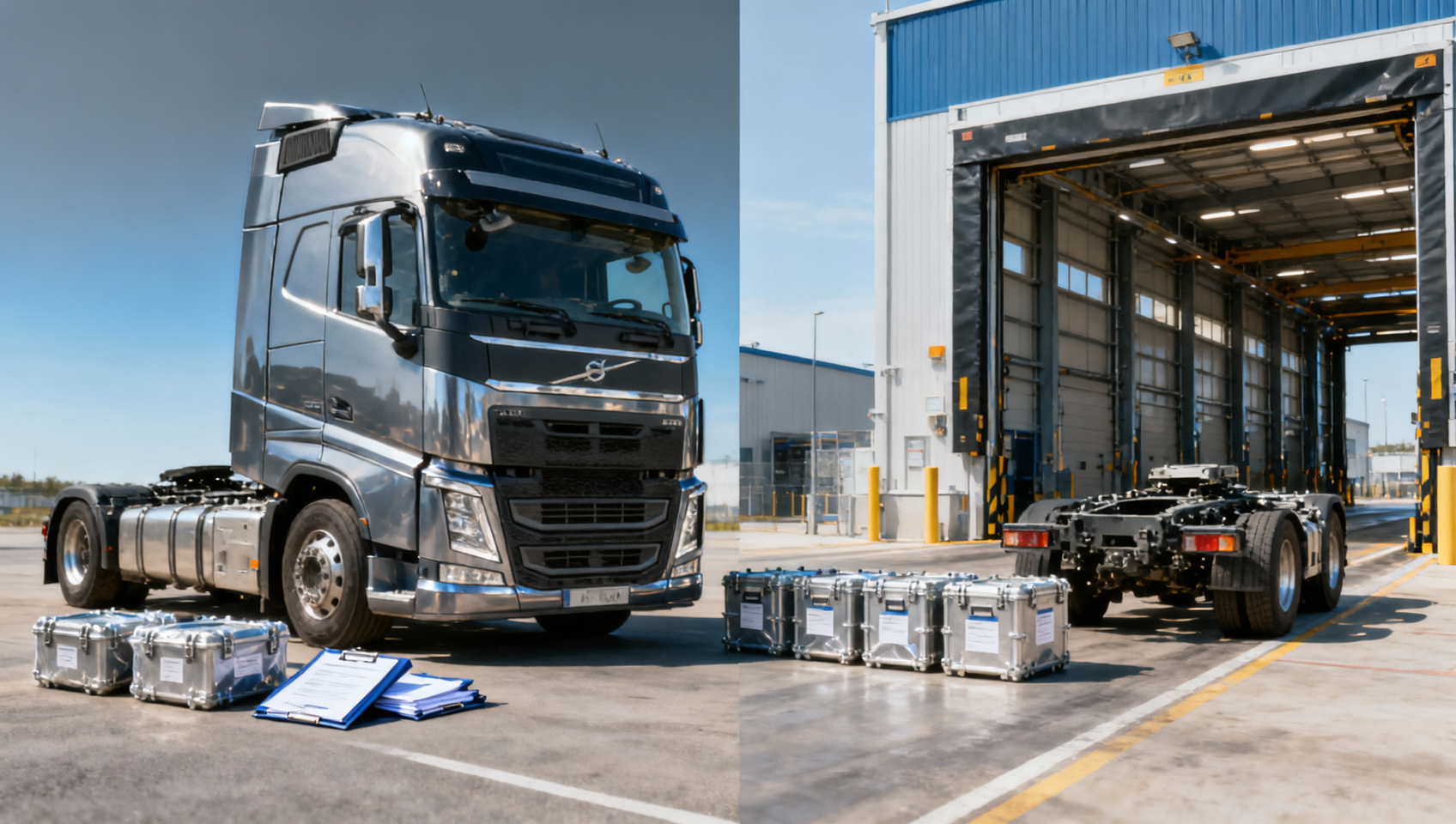
On July 22, 2026, the European Commission formally released Regulation (EU) 2026/XXXX, bringing EN 15038:2026, a compliance standard for commercial vehicle repair services, into the CE mandatory certification framework. For importers of heavy trucks and chassis entering the EU market, this changes the import threshold from a product-only compliance exercise to one that also requires documented service capability and after-sales technical support. The development deserves close attention because it may affect customs clearance, distributor qualification, spare parts alignment, and the execution of after-sales service commitments.
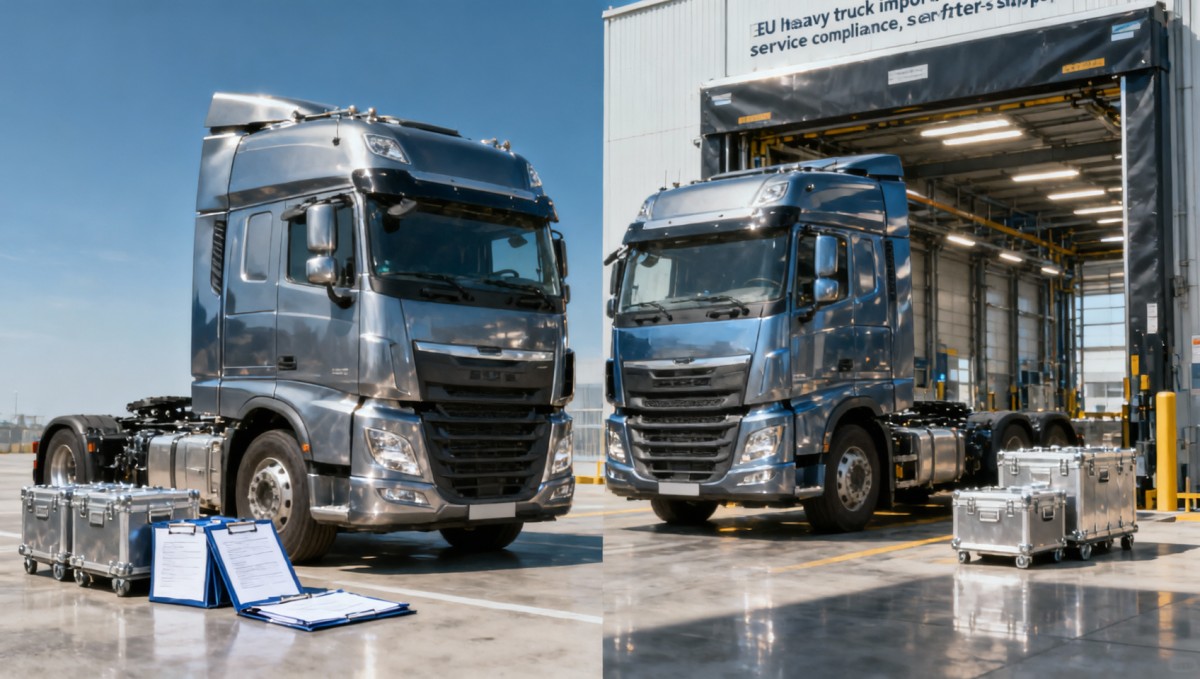
What the New Requirement Formally Covers
The confirmed facts are limited but clear. Regulation (EU) 2026/XXXX was formally issued by the European Commission on July 22, 2026. It incorporates EN 15038:2026, titled as a compliance requirement for commercial vehicle repair services, into the CE mandatory certification system. The rule applies to all importers of heavy-duty trucks and chassis entering the EU market.
Under the new requirement, importers must provide a service capability declaration certified by an EU-authorized body, together with an after-sales technical documentation package. Without these materials, customs clearance cannot be completed. The information provided also confirms that the standard directly affects local service capability certification for overseas distributors, spare parts supply chain adaptation, and the performance of after-sales service contracts.
Where the Pressure May Appear Across the Business Chain
Import and trade operations move closer to service compliance
From an industry perspective, direct importers and export-facing trading companies may be affected first because the rule connects market entry with certified service capability documentation. The impact is likely to show up in document preparation, customs-facing compliance files, and coordination between the importing entity and its service network. What deserves closer attention is whether existing import documentation workflows are structured to include certified service declarations and after-sales technical files in time for shipment and clearance.
Distributor networks face a higher local readiness threshold
Overseas distributors may be affected because the summary explicitly links the rule to local service capability certification. Analysis shows that this is not only a sales-channel issue but also a network-readiness issue: distributors serving heavy trucks may need to align their local repair and support arrangements with the certification expectations reflected in the new standard. For companies working through third-party channels, the practical concern is whether local partners can support the required declarations and technical documentation without delaying market access.
Parts and after-sales support become part of import execution
Spare parts suppliers, aftermarket service providers, and companies managing service contracts may also feel the effect. Observably, the rule is framed around repair-service compliance rather than product delivery alone, so the ability to match spare parts supply, technical support materials, and service obligations to the imported vehicle or chassis becomes more relevant. The business impact may therefore extend into parts planning, documentation consistency, and the contractual definition of after-sales responsibilities.
What Companies Should Watch Before October 2026
Review whether current CE files are sufficient
Analysis shows that companies should not assume an existing CE-oriented product file will be enough for heavy truck imports after the rule takes effect. The summary indicates that a certified service capability declaration and an after-sales technical documentation package will be required, so compliance teams should check whether their current documentation scope already covers these elements or whether additional preparation will be needed.
Check the readiness of local service arrangements
What deserves closer attention is the operational link between import activity and local service capability. Businesses relying on distributors or third-party service partners may need to review whether those arrangements can support certification by an EU-authorized body. At this stage, the input does not provide the detailed execution criteria, so this should be treated as a point for active monitoring rather than a settled checklist.
Revisit spare parts and technical document alignment
Observably, the rule may affect how companies organize technical files, parts support, and after-sales obligations around imported heavy trucks and chassis. Firms involved in procurement, supply planning, or service support should pay attention to whether spare parts availability and technical documentation are aligned with the service commitments that underpin the import process.
Watch for execution language in contracts and tenders
It is more appropriate to understand this as a compliance development that may also influence commercial documentation. Companies should monitor whether after-sales service contracts, procurement specifications, or tender documents begin to reflect the new service-standard requirement more explicitly. Because the provided information does not include detailed implementation language, any contract impact should still be treated as an area to monitor rather than a confirmed outcome.
Why This Looks Like More Than a Routine Standards Update
Analysis shows that this development is significant because it places repair-service compliance inside a mandatory certification pathway tied to market entry. That shifts attention from the vehicle alone to the supporting service structure behind the import transaction. It is more appropriate to understand this as an execution signal with direct trade implications, while also recognizing that the detailed enforcement approach, certification interpretation, and market response still require observation.
From an industry perspective, the main issue is not only whether companies know the standard exists, but whether they can operationalize the required declarations and technical files through their importer, distributor, and after-sales arrangements. Until more detailed implementation language is available, the market will likely be watching for how certification bodies, customs-facing procedures, and commercial counterparties interpret the new requirement in practice.
How This Update Is Best Understood Now
At this stage, the rule is best read as a concrete compliance change with immediate relevance for heavy truck and chassis imports into the EU, especially where market access depends on local service capability and after-sales documentation. It should not be reduced to a general policy headline, but it also should not be overstated beyond the confirmed facts. The practical takeaway is that companies connected to import, distribution, spare parts support, and service contract performance should treat this as a real compliance threshold and continue tracking how implementation details develop.
Basis of This Article and What Still Needs Verification
This article is generated on the basis of the user-provided news title, event date, and event summary. For developments of this kind, commonly relevant source categories may include official regulatory notices, releases from supervisory authorities, customs or trade administration information, industry association updates, standard-setting documents, and reporting by established trade media.
No specific official source link was provided in the input, so the exact official publication path still needs to be verified on an ongoing basis. Observably, the points that remain worth tracking include any detailed implementation guidance, certification interpretation, changes in tender or procurement language, market feedback, and how affected companies execute the requirement in practice.
NAVIGATION
Send Us A Message