



News
Explore what’s going on around the industry and get the latest from the world of heavy equipment and earth-moving.
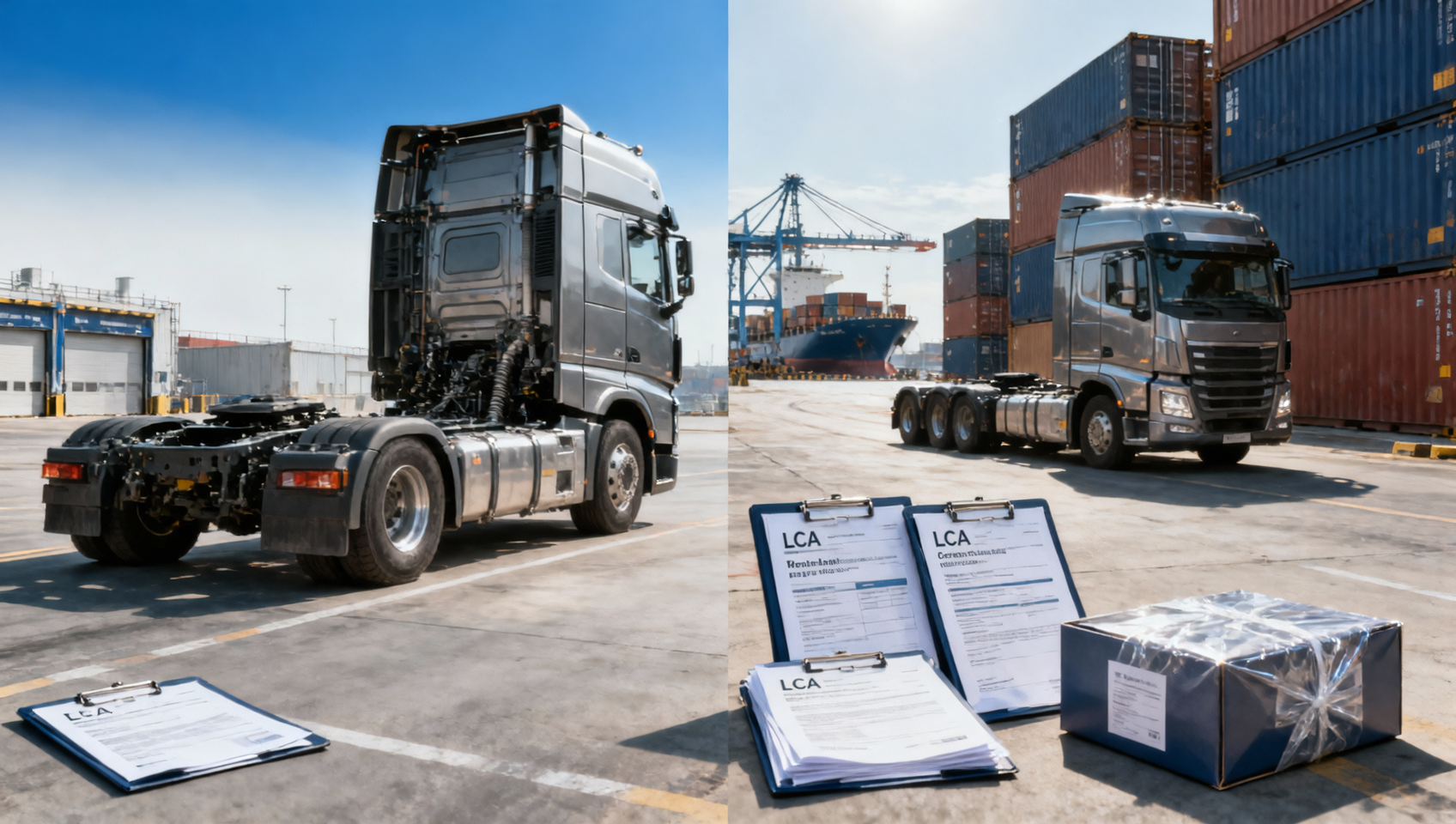
Starting on October 1, 2026, heavy-duty trucks entering the EU market will face a more document-driven carbon compliance process. The trigger is the European Commission’s July 20, 2026 update to its technical guidance for imported heavy commercial vehicles, which makes accredited lifecycle assessment (LCA) reports and compliance with the carbon intensity threshold under Article 8 of EU 2024/1253 a practical import requirement. For truck exporters, chassis suppliers, certification teams, testing providers, and customs-facing logistics operations, this is worth close attention because the issue is no longer only product access in principle, but whether supporting carbon documentation is complete in time for approval and clearance.

What the Updated EU Guidance Now Requires
The confirmed facts are clear. On July 20, 2026, the European Commission updated the Technical Guidance for Heavy Commercial Vehicle Import Compliance. Under the updated guidance, from October 1, 2026, all heavy-duty trucks entering the EU market, including chassis and complete vehicles, must be accompanied by a lifecycle assessment report certified by an accredited body. The imported vehicles must also meet the carbon intensity threshold set out in Article 8 of EU 2024/1253. The requirement directly affects type approval procedures for Chinese exporters, third-party testing costs, and customs clearance timing. If LCA documentation is not prepared in advance, cargo may face port detention or be returned.
Where the Pressure Will Appear First in the Supply Chain
Exporters will feel the impact at the approval stage
For companies shipping heavy-duty trucks or chassis into the EU, the immediate impact is on the type approval and pre-shipment compliance workflow. The requirement adds a document that must be prepared, certified, and aligned with the import process before goods move smoothly into the market. From an industry perspective, what deserves closer attention is whether internal product, compliance, and export teams are working from the same document schedule rather than treating LCA as a late-stage formality.
Testing and certification service providers become part of the delivery timeline
The update also matters for third-party testing and certification bodies because the LCA report must come from an accredited institution. Analysis shows that this does not only raise cost questions; it also changes sequencing. Once certification capacity, report issuance, and shipment timing become linked, service providers move closer to the center of transaction execution rather than remaining a back-end support role.
Logistics and customs-facing teams face timing risk
For supply chain service providers handling customs clearance and port operations, the key issue is delay risk. The provided information explicitly notes that failure to prepare LCA documents in advance may lead to port detention or return shipment. That means the compliance file is no longer separate from delivery performance. In practical terms, documentation readiness becomes part of lead-time control.
EU buyers and procurement teams may tighten document expectations
For downstream buyers and procurement-facing teams, the relevance lies in transaction certainty. Observably, when an import rule ties market entry to carbon documentation and threshold compliance, counterparties are likely to pay closer attention to whether suppliers can provide complete and accepted files on time. The business issue here is not only product specification, but also execution reliability.
Practical Issues Companies Should Track Now
Separate confirmed rules from operational interpretation
The confirmed requirement is that an accredited LCA report must accompany imports and that the vehicles must meet the threshold under Article 8 of EU 2024/1253. What deserves closer attention is the operational interpretation inside each company: which team owns the file, when the report must be completed in the shipment cycle, and how it is checked before export and customs submission. Treating those internal points as assumptions would create avoidable risk.
Review product scope carefully
The update explicitly covers both chassis and complete vehicles. Companies should therefore check whether their current export categorization, customer quotations, and compliance preparation already distinguish between these product forms in a way that matches the new import filing requirements. This is especially relevant where a business handles mixed product structures under one export program.
Reassess cost and lead-time assumptions
The provided information confirms an effect on third-party testing costs and customs timing. Analysis shows that companies should not read this only as an added compliance line item. It also affects delivery planning, customer commitment dates, and internal approval milestones. Where contracts or shipment plans were built around older assumptions, the risk now sits in execution gaps rather than in policy awareness.
Prepare customer and supplier communication around documents
From an industry perspective, one of the more immediate response areas is document communication. Exporters need to know what accredited files can be delivered, customers need clarity on timing and completeness, and supply chain partners need to understand what must be ready before port entry. The practical issue is coordination: incomplete alignment across supplier, exporter, and logistics partner could turn a known rule into a shipment disruption.
Why This Looks Like More Than a Short-Term Filing Change
Analysis shows that this development is better understood as an operational compliance tightening rather than a routine paperwork adjustment. The immediate rule is already defined for October 1, 2026, so this is not only a distant policy signal. At the same time, it is also more appropriate to understand it as part of a broader direction of travel in market access, where carbon documentation is becoming embedded in import execution rather than handled as a separate policy topic. That said, the current input does not support broader conclusions about market size, exclusion scope, or enforcement outcomes, so those points still require observation.
How the Market May Read This Requirement
At this stage, the most balanced reading is that the EU guidance creates a concrete near-term compliance threshold for heavy-duty truck imports while also sending a longer-term signal about the role of carbon documentation in cross-border vehicle trade. The direct consequence is procedural: LCA readiness, accredited certification, and customs timing now sit closer together. The broader implication remains something to monitor rather than overstate. It is more appropriate to understand this as a confirmed rule change with immediate operational consequences and continuing regulatory significance.
Basis of This Article and What Still Needs Verification
This article is based on the user-provided news title, event date, and event summary. For developments of this kind, commonly relevant source types may include official notices, company disclosures, industry association updates, authoritative media reporting, and standards or compliance documents. A specific official source link was not provided in the input, so the underlying text and any later implementation details still need ongoing verification against official materials. Areas that warrant continued tracking include any further official clarification of compliance wording, document expectations in practice, and how the requirement is applied in approval and customs workflows.
NAVIGATION
Send Us A Message