



News
Explore what’s going on around the industry and get the latest from the world of heavy equipment and earth-moving.
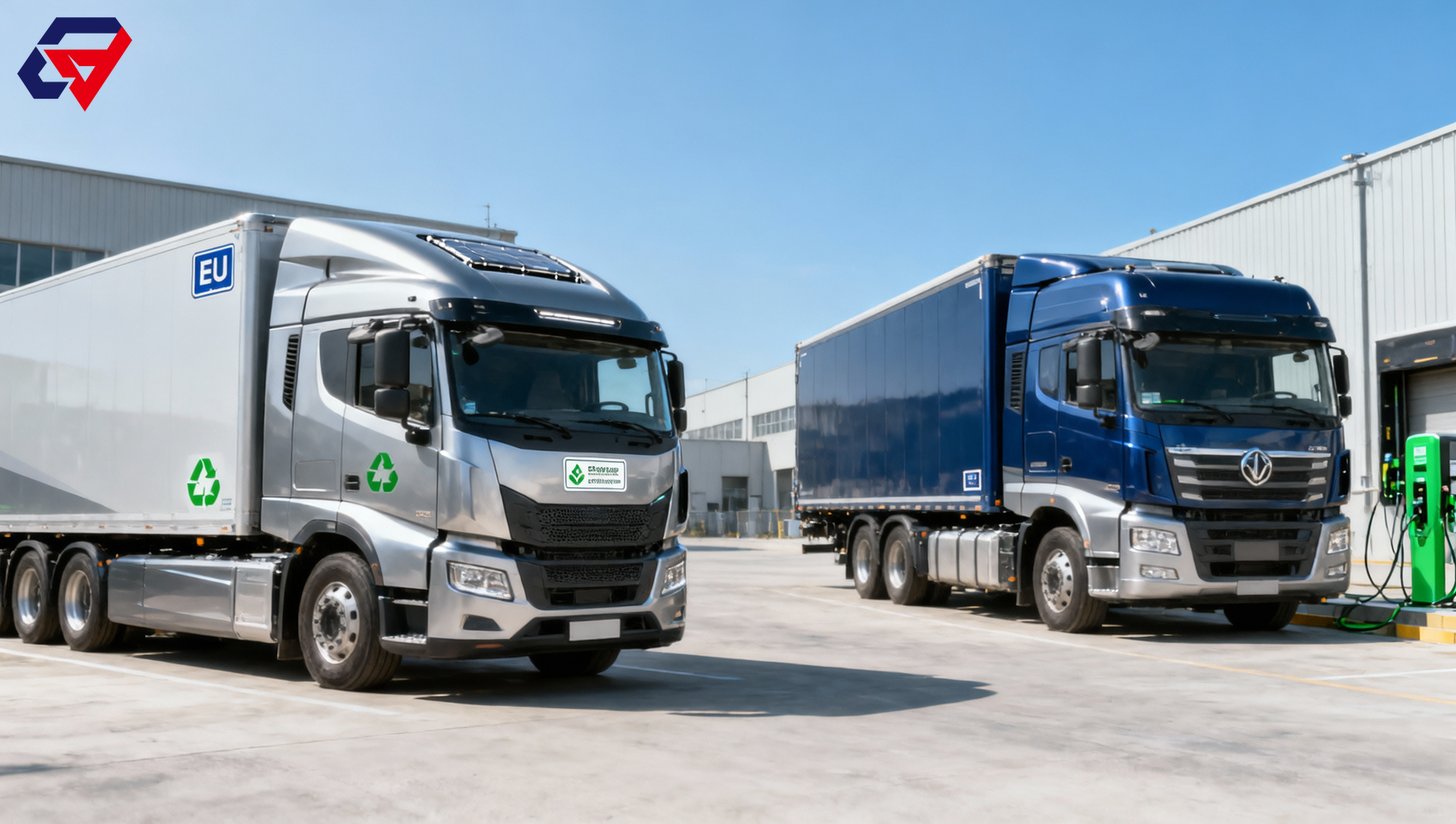
Starting 1 June 2026, the European Union’s mandatory carbon footprint certification—introduced under the New Battery Regulation—will apply to all imported new-energy commercial vehicles, including heavy-duty electric trucks. This requirement mandates third-party verified Life Cycle Assessment (LCA) reports for carbon emissions across the full product lifecycle. Affected stakeholders include Chinese original equipment manufacturers (OEMs) of new-energy heavy trucks and their battery, motor, and power electronics suppliers—particularly those targeting EU market access.
Event Overview
The EU’s carbon footprint certification scheme, aligned with the New Battery Regulation, becomes enforceable on 1 June 2026 for all imported new-energy heavy-duty trucks. As confirmed in official regulatory texts, importers must submit LCA verification reports issued by EU-recognized third-party bodies. Products without valid certification will be prohibited from entering the EU market or may incur substantial compliance adjustment costs.
Industries Affected by Segment
Direct Exporting OEMs (New-Energy Heavy Truck Manufacturers)
These manufacturers face direct market access risk: non-compliant vehicles cannot be placed on the EU market after the effective date. Impact centers on technical documentation readiness—including traceability of battery materials, accounting for grid-mix and renewable electricity usage in manufacturing, and alignment with EU-specific LCA modeling rules (e.g., allocation methods, system boundaries).
Powertrain Component Suppliers (Battery, Motor, Power Electronics)
Suppliers supporting OEMs’ EU-bound vehicles must provide auditable upstream data—including raw material origin, energy source mix during production, and process-level emission factors. Their ability to deliver granular, ISO 14040/14044-compliant data directly affects OEMs’ LCA report validity and certification timelines.
Supply Chain Data & Verification Service Providers
Third-party LCA verifiers, environmental data platform operators, and battery passport service providers face increased demand for EU-recognized validation services. Their capacity to support Chinese exporters hinges on recognition status under EU Regulation (EU) 2023/1542 and interoperability with the upcoming EU Battery Passport system.
Key Focus Areas and Recommended Actions for Stakeholders
Monitor Official Guidance and Recognition Updates
Stakeholders should track announcements from the European Commission and national competent authorities regarding the list of approved LCA verifiers, updated methodological guidelines (e.g., PCR revisions), and transitional provisions—especially any clarifications on data cut-off dates or grandfathering for pre-certified models.
Prioritize LCA Data Collection for High-Volume Export Models
Focus initial LCA efforts on vehicle platforms representing >70% of projected EU-bound shipments over 2026–2027. Prioritize collection of primary data on battery cell production energy sources, cathode/anode material procurement routes, and assembly plant grid intensity—rather than relying solely on generic regional averages.
Distinguish Between Regulatory Signal and Operational Readiness
The 2026 deadline reflects a binding legal obligation—not a voluntary initiative. However, analysis shows that full implementation depends on parallel progress in EU verification capacity and harmonized digital infrastructure (e.g., Battery Passport integration). Companies should treat certification as a product compliance milestone, not a sustainability reporting exercise.
Initiate Cross-Functional Alignment Now
Establish joint working groups spanning R&D, procurement, manufacturing, and export compliance functions. Assign ownership for battery material traceability mapping, green electricity procurement documentation, and LCA model version control. Early alignment reduces rework risk once verification begins.
Editorial Perspective / Industry Observation
Observably, this regulation marks a structural shift—not merely an administrative hurdle. It institutionalizes lifecycle carbon accountability as a market entry condition, moving beyond end-of-pipe emissions metrics. Analysis shows that its enforcement signals growing convergence between climate policy and trade policy in major markets. From an industry perspective, it is less a one-time certification event and more the first phase of an ongoing due diligence regime. Continued attention is warranted as the EU rolls out complementary tools—including digital battery passports and recycled content verification—expected to interact closely with the LCA requirement.
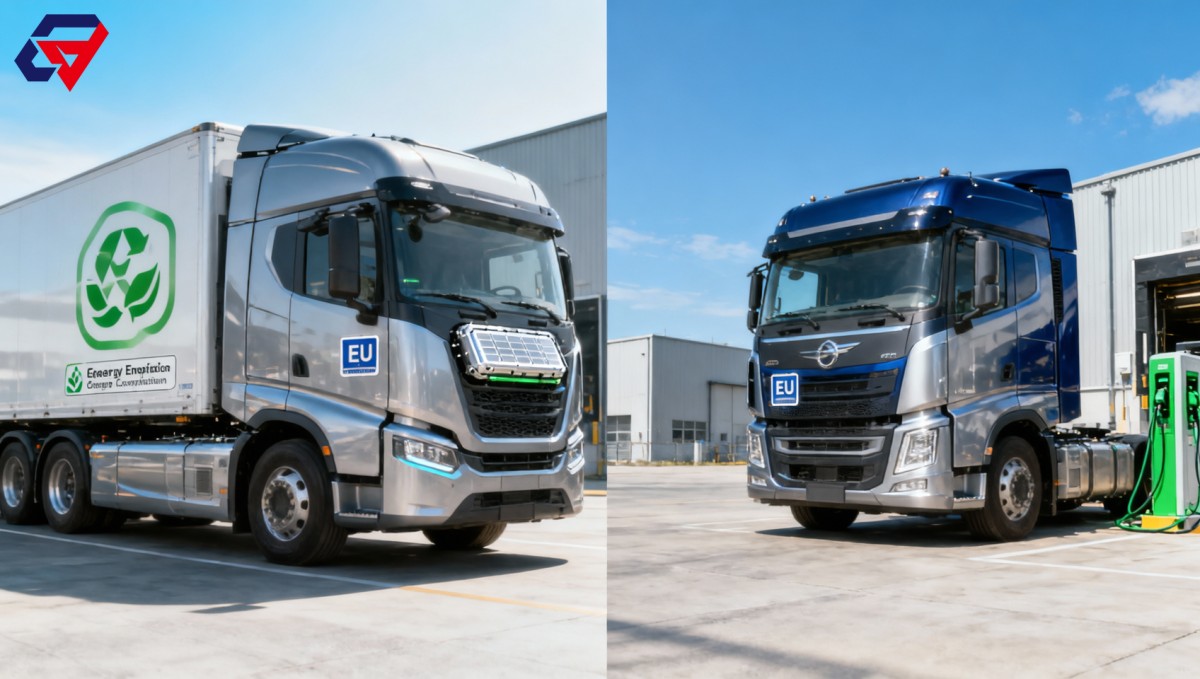
Concluding, the EU carbon footprint certification for new-energy heavy trucks formalizes lifecycle carbon transparency as a prerequisite for market access—not a differentiator. Its significance lies not in novelty alone, but in its binding nature, scope (covering entire vehicle systems), and linkage to tangible trade consequences. Currently, it is best understood as a hard compliance threshold that reshapes technical preparation timelines and cross-border supply chain coordination—not as a distant policy signal or optional ESG enhancement.
Source: Official text of Regulation (EU) 2023/1542 (New Battery Regulation); European Commission guidance documents published through 2024; EU Implementing Regulation on carbon footprint verification procedures (C/2024/1892).
Note: Ongoing developments—including verifier recognition status, PCR updates, and Battery Passport technical specifications—remain subject to monitoring.
NAVIGATION
Send Us A Message