



News
Explore what’s going on around the industry and get the latest from the world of heavy equipment and earth-moving.
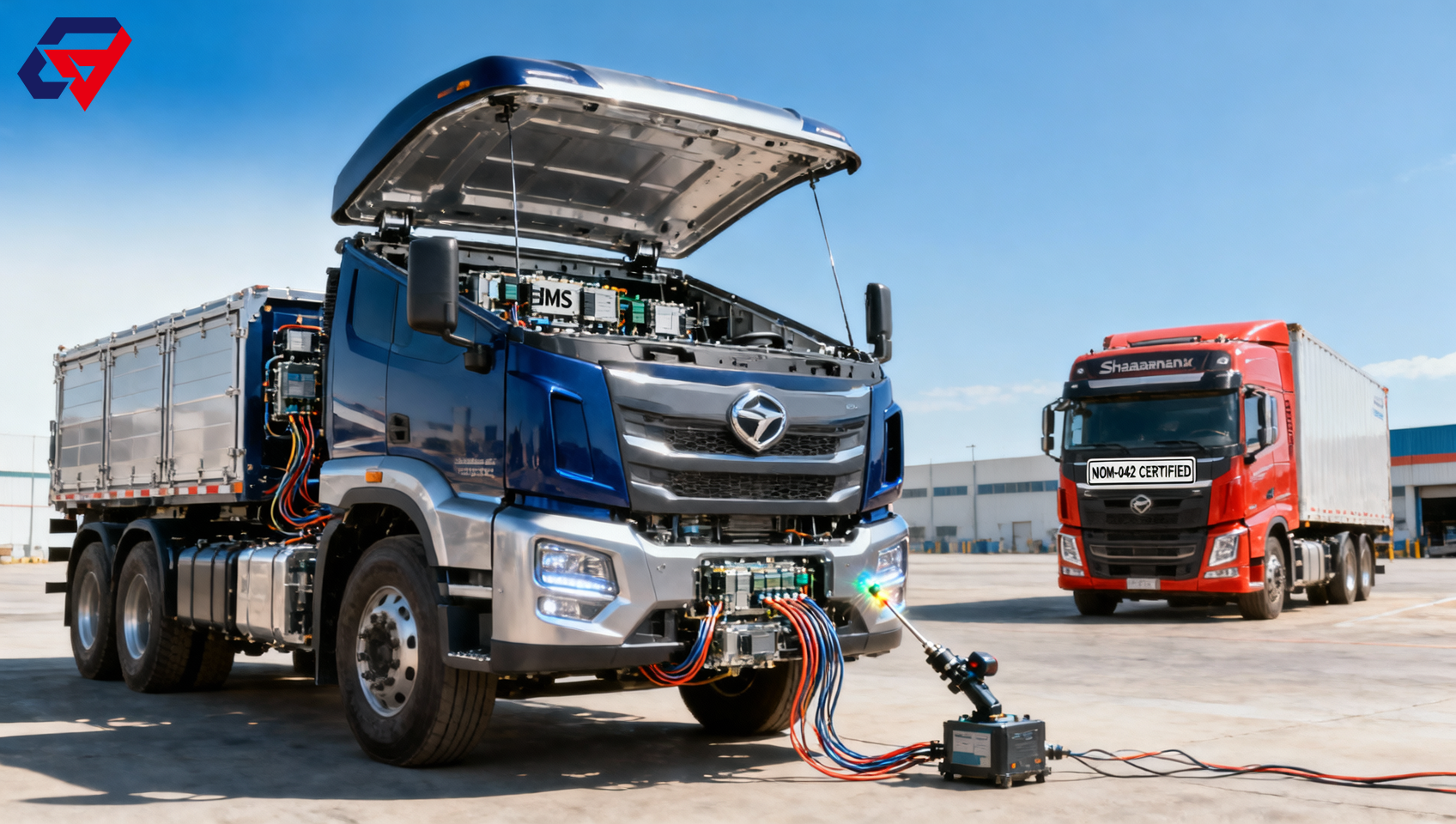
Mexico’s new NOM-042-SE-2026 regulation — mandating full operational electromagnetic compatibility (EMC) testing for battery-electric heavy-duty trucks — enters into force on May 23, 2026. This marks the first time such vehicles, including both charging and battery-swapping variants, are subject to mandatory EMC validation across real-world temperature ranges (−5 °C to 45 °C) and under dynamic operating conditions. Exporters, importers, and certification service providers active in the North American and Latin American commercial vehicle markets should pay close attention: non-compliant models will be denied import clearance, with potential consequences including cargo rejection or on-site retesting.
Event Overview
Mexico’s Ministry of Economy (SE) and the National Standards Directorate (DGN) jointly published NOM-042-SE-2026. The standard becomes mandatory on May 23, 2026. It explicitly extends EMC requirements to battery-electric heavy-duty trucks, requiring radiation emission and immunity testing of high-voltage drive systems, vehicle control units (VCUs), and battery management system (BMS) communication modules under full operational conditions across an ambient temperature range of −5 °C to 45 °C. As of the effective date, only two China-exported models — the Shaanxi Automobile Delong X6000-EV and Dongfeng Tianlong KL-EV — have completed this certification. Unverified models will not receive import permits; already declared shipments may face return or mandatory on-site testing.
Industries Affected
Direct Exporters and Trading Companies
These entities face immediate regulatory gatekeeping at Mexican customs. Since NOM-042 compliance is now a prerequisite for import licensing, failure to secure certification before shipment may result in clearance delays, detention, or forced repatriation of cargo. The requirement applies regardless of contract terms or prior market presence.
OEMs and Tier-1 Suppliers Manufacturing Electric Heavy-Duty Trucks
Manufacturers must integrate full-temperature-range EMC validation into product development and pre-certification testing workflows. Unlike previous standards that permitted lab-simulated or partial-condition testing, NOM-042-SE-2026 mandates testing under representative operational loads and thermal profiles — increasing test duration, cost, and engineering coordination between powertrain, control software, and EMI shielding design teams.
Aftermarket and Retrofit Providers
Companies offering electric powertrain conversions or controller upgrades for existing heavy-duty chassis fall within the scope if their modified vehicles meet the definition of “battery-electric heavy-duty truck” under Mexican regulations. There is no grandfathering clause stated in the published text; retrofitted units intended for sale or registration in Mexico must comply.
Certification and Testing Service Providers
Accredited labs capable of performing full-load, temperature-cycled EMC testing on heavy-duty vehicle platforms — especially those with high-power inverters and complex CAN/FlexRay/Ethernet-based communication stacks — will see increased demand. However, capacity remains limited globally, particularly for facilities meeting DGN’s accreditation criteria and equipped for vehicles over 12 tonnes GVW.
What Stakeholders Should Monitor and Do Now
Track official implementation guidance from DGN and SE
While NOM-042-SE-2026 is published, supplementary documents — such as test procedure details, acceptable test laboratories list, and transitional provisions (if any) — have not yet been released. Stakeholders should subscribe to DGN’s official notices and monitor updates via Mexico’s Official Journal of the Federation (DOF).
Verify model-level certification status before finalizing export schedules
Importers and distributors should request formal NOM-042 test reports and DGN-recognized certification body letters — not just internal declarations or preliminary test summaries. Only certifications issued by DGN-accredited bodies, referencing the full operational test matrix (including temperature sweeps and load cycling), satisfy the requirement.
Distinguish between policy announcement and enforceable enforcement timelines
The rule takes effect May 23, 2026, but enforcement rigor — including inspection frequency, documentation review depth, and discretion granted to customs officers — remains unconfirmed. Early shipments post-effective date may encounter variable treatment; stakeholders should treat the deadline as absolute, not aspirational.
Prepare for extended lead times in EMC validation and documentation submission
Full-temperature, full-load EMC testing for heavy-duty EVs typically requires 6–10 weeks per configuration. Factor in report review, translation (if required), and DGN submission processing. Initiate certification planning no later than Q3 2025 for products scheduled for Mexican delivery in H1 2026.
Editorial Perspective / Industry Observation
Observably, NOM-042-SE-2026 signals Mexico’s intent to align its EV regulatory framework with functional safety and electromagnetic integrity expectations seen in mature markets — though it does so without adopting international standards (e.g., ISO 11452 or CISPR 25) verbatim. Analysis shows this is less a technical harmonization step and more a localized risk-mitigation measure targeting interference risks from high-power traction systems in mixed-traffic urban and freight corridors. From an industry perspective, the rule functions primarily as a market access filter rather than a technology promotion tool. Its early impact will likely be concentrated among Chinese OEMs expanding into Latin America, given current certification uptake. Continued monitoring is warranted: the absence of phased implementation or grace periods suggests DGN intends strict adherence from day one — making this a de facto hard deadline, not a soft policy signal.
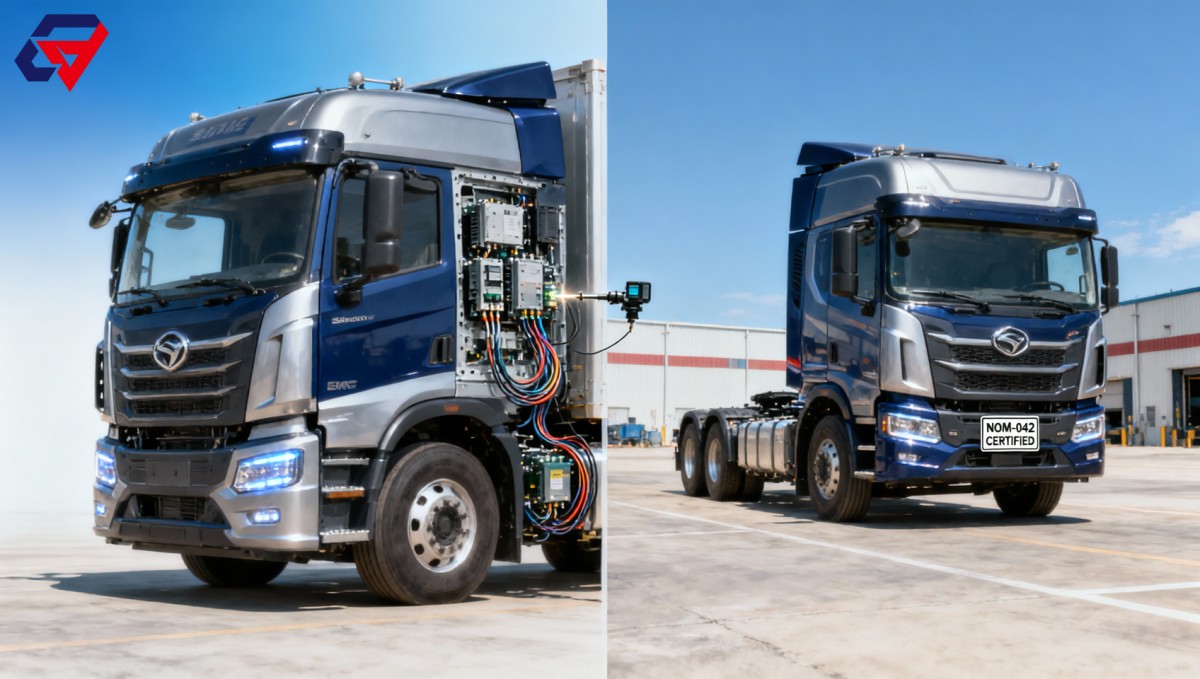
This regulation underscores a broader trend: emerging EV markets are increasingly prioritizing electromagnetic reliability alongside emissions and energy efficiency. For stakeholders, it is best understood not as an isolated compliance hurdle, but as an indicator of tightening technical gatekeeping in regional trade corridors — where certification readiness now directly determines market entry viability.
Source: Mexico’s Ministry of Economy (SE); National Standards Directorate (DGN); Official publication of NOM-042-SE-2026 in the Diario Oficial de la Federación (DOF).
Noted for ongoing observation: DGN’s forthcoming implementation guidelines, accredited laboratory list, and enforcement protocols — none of which have been published as of the regulation’s release date.
NAVIGATION
Send Us A Message