



News
Explore what’s going on around the industry and get the latest from the world of heavy equipment and earth-moving.
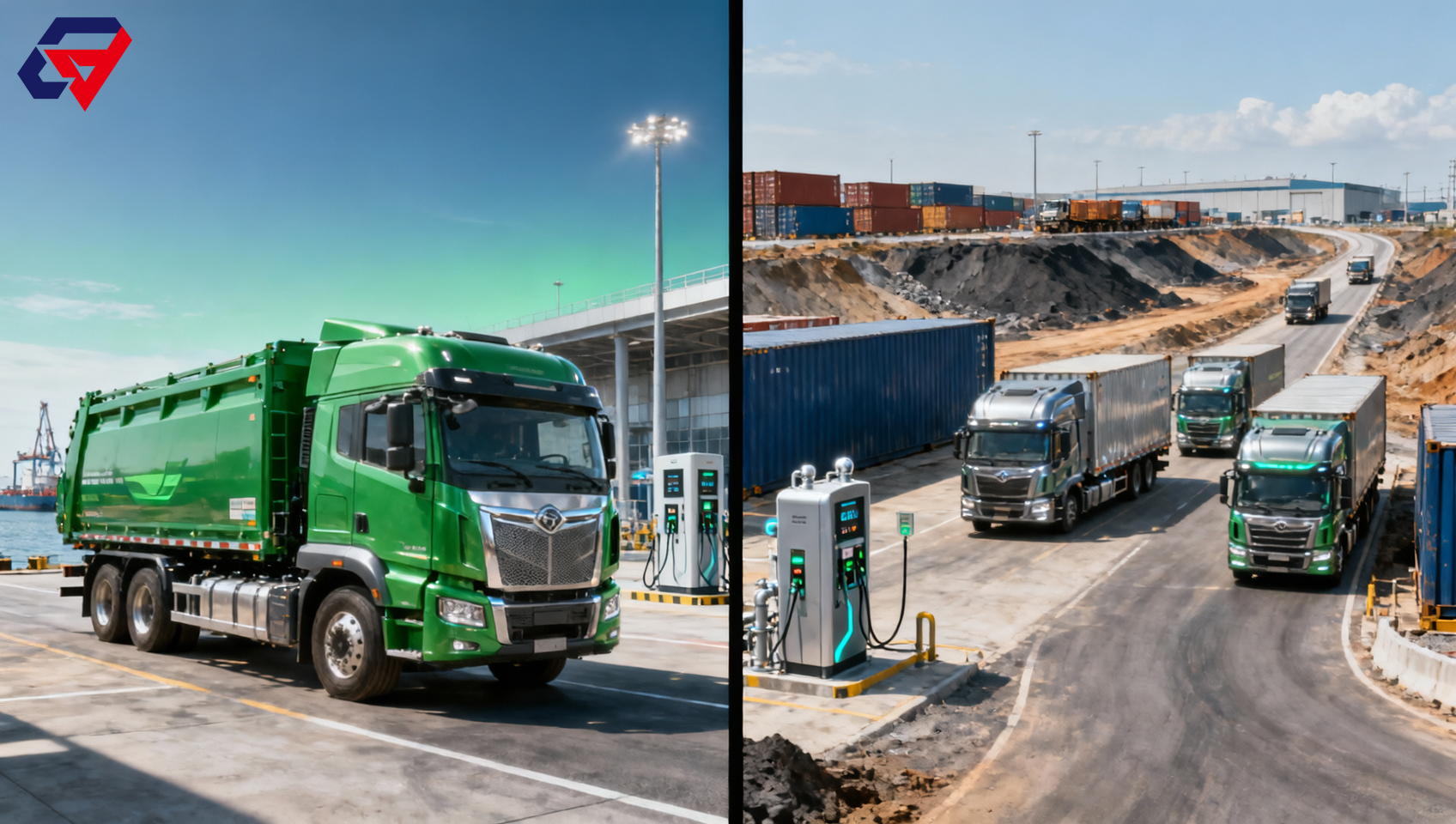
On June 20, 2026, attention in the commercial vehicle market turned to a new implementation plan jointly issued in June 2026 by eleven Chinese departments to accelerate scaled deployment of new energy heavy trucks. The policy direction matters not only for operators in ports, mining areas, and trunk logistics, but also for overseas buyers sourcing such trucks in China, because the combination of purchase subsidies, charging or hydrogen refueling infrastructure support, urban road access preferences, and diesel replacement incentives can affect lifecycle cost calculations, financing structures, procurement timing, and local operating assumptions.
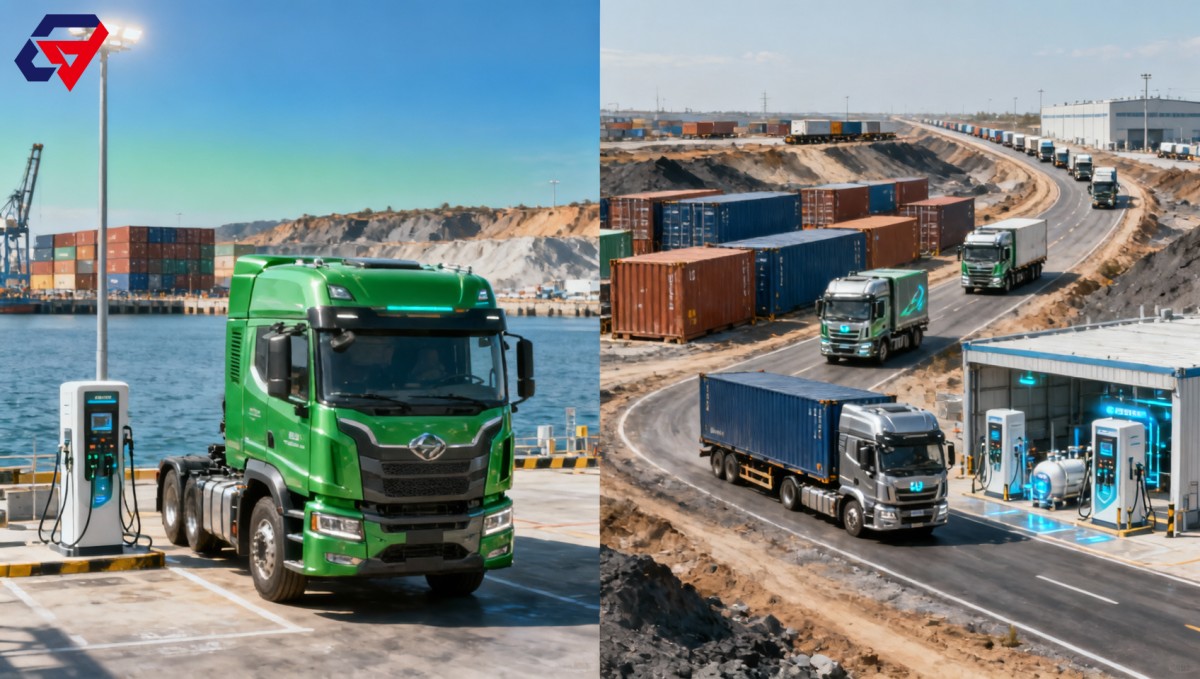
What the newly issued plan clearly sets out
Confirmed information shows that eleven Chinese departments jointly issued the Implementation Plan for Promoting the Large-Scale Application of New Energy Heavy Trucks in June 2026. The plan identifies ports, mining areas, and trunk logistics as key application scenarios for new energy heavy trucks.
The disclosed measures include purchase subsidies for eligible new energy heavy trucks, support for charging and hydrogen refueling infrastructure, preferential urban traffic access, and incentives tied to the replacement of older diesel trucks. The policy is described as materially shortening the total cost of ownership payback period and directly affecting how overseas customers evaluate full-lifecycle costs, financing plans, and localized operating fit when buying new energy heavy trucks in China.
Where the rule change may be felt first
Procurement decisions become more scenario-driven
From an industry perspective, buyers are likely to feel the impact first at the procurement stage. The policy is tied to defined operating scenarios rather than a generic vehicle purchase environment, so purchasers and fleet planners may need to examine whether their intended use in ports, mining sites, or trunk logistics aligns with the practical conditions under which subsidies, infrastructure support, or road access advantages can be realized.
What deserves closer attention is the procurement file itself: technical specifications, use-case descriptions, delivery arrangements, and supporting documentation may need to reflect how the vehicle will be deployed if customers want cost assumptions to match actual policy treatment.
Export and cross-border deal structures may need recalibration
For exporters and cross-border trading parties, the change is relevant because the commercial case for buying in China may no longer rest only on vehicle price or drivetrain choice. Analysis shows that policy-linked operating benefits can alter the way overseas customers compare asset cost, route access, replacement timing, and financing burdens over the truck's operating life.
As a result, trade negotiations may place greater emphasis on model configuration, energy-support compatibility, delivery sequencing, and the documentation needed for customer-side investment review. This is not the same as saying that every transaction automatically benefits; rather, the policy increases the importance of verifying how policy-linked advantages translate into real operating conditions.
Infrastructure and after-sales coordination gain weight
Supply chain service providers and after-sales operators may also be affected because the policy does not stop at vehicle acquisition. Support for charging and hydrogen refueling infrastructure means that vehicle delivery, site readiness, and service planning may need to be coordinated more closely than in a conventional diesel transaction.
Observably, this raises practical questions for service partners: whether operating support documents are complete, whether technical handover materials match the intended energy pathway, and whether post-delivery service arrangements are sufficient for the customer's localized operation model. These are execution issues rather than confirmed outcomes, but they are central to whether the policy value can be captured in practice.
What companies should review now
Recheck TCO and financing assumptions
Analysis shows that companies involved in purchasing, exporting, or financing new energy heavy trucks should revisit total cost of ownership models. The plan explicitly changes the variables that matter most in payback analysis, especially where subsidies, access preferences, and diesel replacement incentives may interact. Businesses should be careful not to treat those policy elements as universally available without checking the applicable operating context.
Track compliance wording in procurement and bid documents
What deserves closer attention is whether procurement materials, bid documents, technical files, and delivery terms accurately reflect the intended service conditions. If policy-linked benefits influence customer decision-making, then inconsistencies between declared operating use and actual deployment assumptions could become a commercial or compliance issue during review, contracting, or implementation.
Watch the execution language, not only the headline policy
Because the input does not provide detailed enforcement rules, it is more appropriate to understand this stage as a confirmed policy direction with execution details still requiring follow-up. Companies should therefore monitor how later official wording, implementing guidance, and transaction documents describe eligibility, infrastructure coordination, and practical operating treatment in the named scenarios.
Prepare service and traceability support around delivery
For manufacturers, exporters, and after-sales teams, localized operating adaptation deserves attention. Businesses may need to ensure that technical documentation, delivery records, quality traceability materials, and service commitments are organized in a way that supports cross-border customers evaluating long-term use in the Chinese sourcing context. The current information does not confirm a standard execution path, so preparation is more important than assumption.
How this should be read at this stage
Observably, this development is more than a routine policy announcement because it links vehicle deployment, infrastructure support, and operating access in a single implementation framework. At the same time, it should not be overstated as a fully settled market outcome. Analysis shows that its immediate significance lies in the regulatory and commercial signal it sends: new energy heavy truck economics in China are being shaped not only by the vehicle itself, but also by access rules, replacement incentives, and infrastructure support tied to actual use scenarios.
It is more appropriate to understand this as a landed policy change with important execution questions still open. That is why industry participants should keep watching subsequent implementing language, procurement practice, and market feedback rather than relying only on the headline announcement.
A practical reading for the market
The main industry meaning of this development is that policy support for new energy heavy trucks in China is becoming more operationally specific and more relevant to transaction structuring. For overseas buyers, the issue is no longer limited to product selection; it now also touches lifecycle costing, financing design, infrastructure readiness, and localized deployment assumptions.
From an industry perspective, the most balanced conclusion is that this is a meaningful execution signal rather than a final compliance endpoint. The plan clearly affects how companies should evaluate procurement and operating economics, while the precise business impact will still depend on how later implementation details, documents, and market practice evolve.
Basis of this article and what still needs verification
This article is generated from the user-provided news title, event date, and event summary. For events of this kind, relevant source categories typically include official government notices, regulator releases, trade or transport authority information, industry association updates, standard-setting documents, and reporting by established business or industry media.
No specific official source link was provided in the input, so the underlying official link remains to be independently verified. Follow-up observation is still needed on implementing details, compliance interpretation, procurement document changes, certification or qualification treatment where applicable, industry feedback, and how companies actually execute purchases and operations under the new plan.
NAVIGATION
Send Us A Message