


News
Explore what’s going on around the industry and get the latest from the world of heavy equipment and earth-moving.
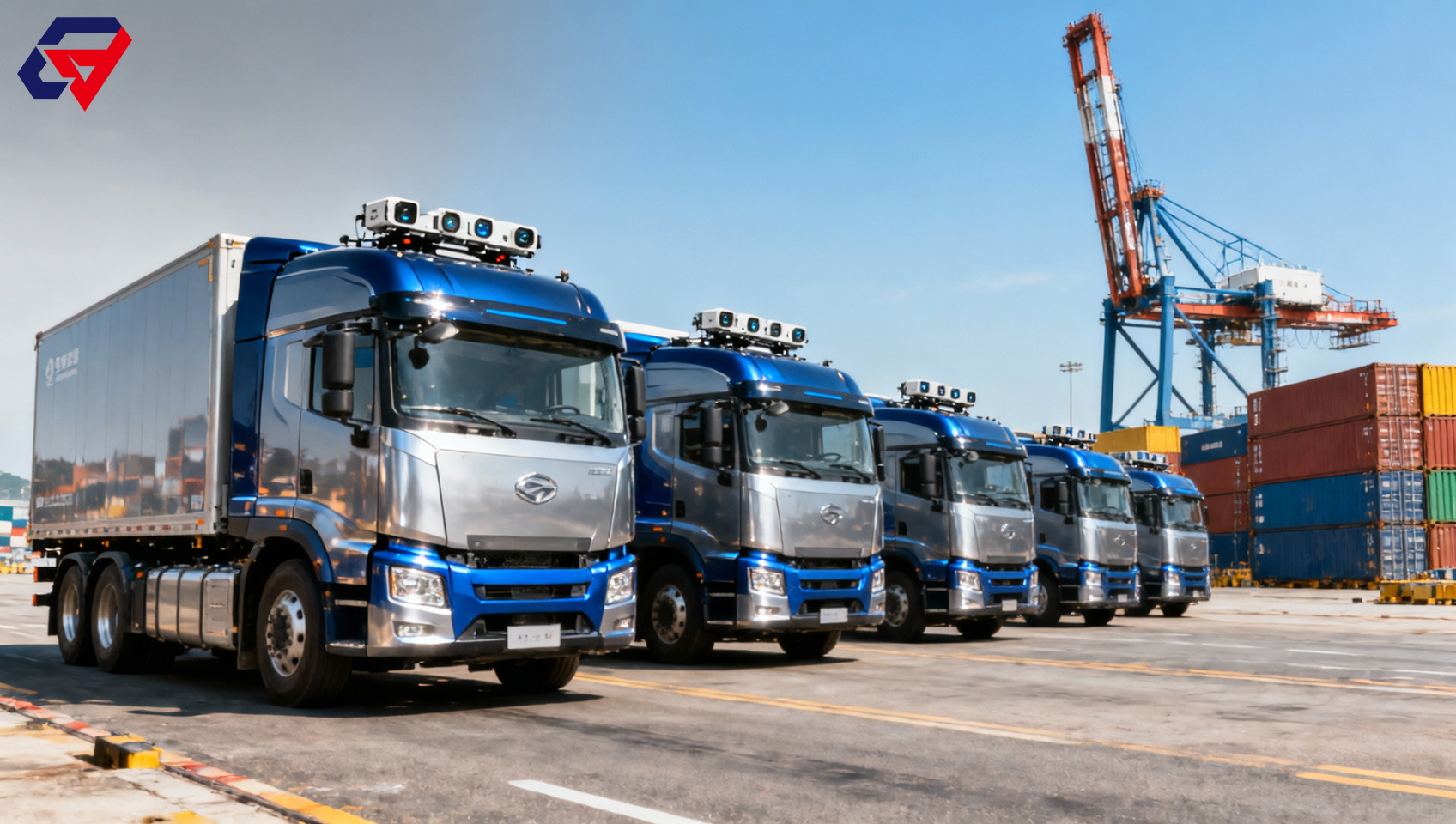
On April 21, 2026, Hong Kong International Terminals (HIT) commenced full operations of six driverless heavy-duty trucks (ATs) developed by China’s Westwell Technology at Kwai Tsing Container Terminal — marking one of the world’s few international hub ports to implement 24/7 mixed-operation (human-operated and autonomous vehicles coexisting in the same yard). This milestone signals material relevance for global port operators, importers, and logistics integrators, particularly those active in Southeast Asia, the Middle East, and Latin America — regions currently advancing automated terminal upgrades.
Event Overview
On April 21, 2026, Hong Kong International Terminals officially launched commercial operations of six autonomous heavy-duty trucks (ATs) without driver cabins, supplied by Westwell Technology. The vehicles operate continuously across mixed-traffic yard environments and have passed compliance review by the Hong Kong Marine Department and Transport Department. The system is integrated with the terminal’s central management platform and AI-powered yard monitoring infrastructure.
Industries Affected by This Deployment
International Importers & Exporters
Importers relying on Hong Kong as a transshipment or consolidation hub may experience improved predictability in yard dwell times and gate turnaround — especially during off-peak shifts. Impact manifests in reduced variability in container handover windows and potential downstream effects on inland transport scheduling and customs clearance coordination.
Port Operators (Especially in Emerging Markets)
Operators in markets pursuing automation — such as those in ASEAN, GCC, and Andean countries — now have a verified reference case for deploying autonomous trucking in high-density, real-world international port settings. Unlike pilot-only deployments, this rollout demonstrates regulatory acceptance, system integration capability, and sustained operational resilience under live commercial load.
Logistics Integrators & 3PL Providers
Third-party logistics providers managing cross-border drayage or yard-to-yard transfers within port ecosystems may face revised service-level expectations — particularly around 24/7 availability, real-time tracking fidelity, and interface compatibility with terminal OS platforms. Integration readiness with AI-driven yard systems becomes a tangible differentiator.
Supply Chain Technology Providers
Vendors offering terminal operating systems (TOS), fleet management software, or AI-based yard optimization tools must now account for interoperability with autonomous vehicle control layers — specifically those built on Westwell’s architecture. Demand for standardized API frameworks and certified integration pathways is likely to rise.
What Stakeholders Should Monitor and Act On Now
Track official updates on regulatory extension pathways
While approved for Kwai Tsing, the current authorization is site-specific. Stakeholders should monitor whether Hong Kong’s Marine Department publishes broader guidelines or certification templates applicable to other terminals — a potential signal for regional scalability.
Assess compatibility with existing terminal operating systems (TOS)
Port operators evaluating automation should verify whether their current TOS vendor supports documented interfaces with Westwell’s AT control stack — not just theoretical API availability, but proven deployment records in mixed-traffic yards.
Distinguish between policy endorsement and operational readiness
The approval reflects compliance with safety and maritime regulations, not automatic endorsement of performance benchmarks (e.g., MTBF, throughput gain, or labor transition protocols). Due diligence should focus on publicly reported uptime, incident logs, and human-supervision ratios — not just the existence of regulatory sign-off.
Prepare for upstream data integration requirements
Early adopters should begin scoping data exchange protocols (e.g., ISO 20252-compliant telemetry feeds, container event timestamps, gate handover acknowledgments) required to align autonomous yard operations with ERP or customs declaration systems — especially where Hong Kong serves as a first point of entry.
Editorial Perspective / Industry Observation
Observably, this deployment is less a standalone technology breakthrough and more a validation milestone: it confirms that Chinese-developed autonomous trucking systems can meet stringent international port regulatory, integration, and reliability thresholds — not in controlled test zones, but within an active, high-throughput, multi-stakeholder maritime environment. Analysis shows the significance lies not in novelty of autonomy itself, but in the convergence of three elements — regulatory clearance, live-system interoperability, and sustained 24/7 operation — all achieved simultaneously. From an industry perspective, this is best understood as a credible reference point for procurement decisions, not yet a template for wholesale replication. Continued observation is warranted on scalability beyond the initial six units, long-term maintenance cost trends, and adaptation to non-Chinese chassis or powertrain configurations.
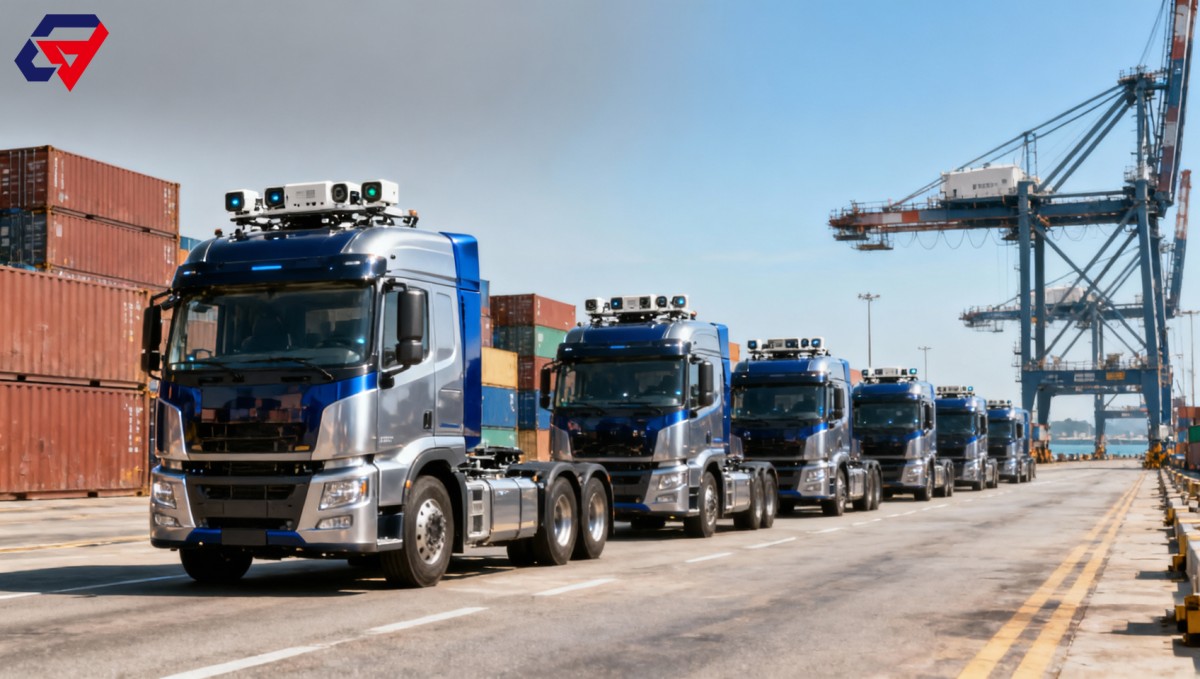
In summary, the Kwai Tsing deployment represents a concrete step toward institutional acceptance of autonomous heavy vehicles in global port infrastructure — but one anchored in specific technical, regulatory, and operational conditions. It is more accurately interpreted as an evidence-based signal for strategic planning than an immediate trigger for broad operational change. Current readiness hinges less on adopting the same hardware and more on auditing one’s own integration maturity, data governance capacity, and regulatory engagement posture.
Source: Public announcement by Hong Kong International Terminals (HIT), April 21, 2026; regulatory confirmation statements issued by Hong Kong Marine Department and Transport Department. Note: Long-term performance metrics, expansion timelines beyond the initial six units, and commercial terms remain subject to ongoing observation.
NAVIGATION
Send Us A Message