


News
Explore what’s going on around the industry and get the latest from the world of heavy equipment and earth-moving.
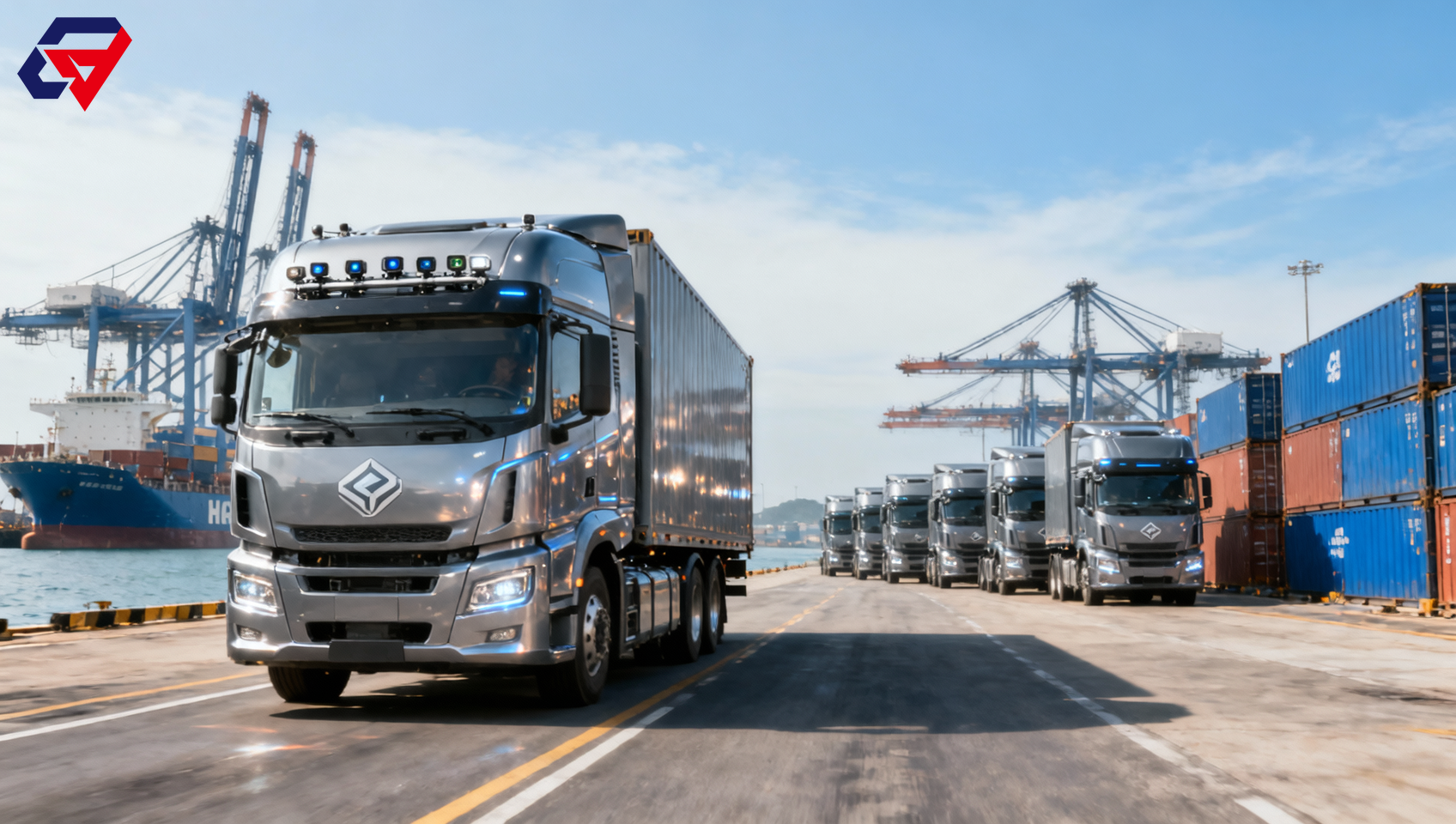
China’s heavy-duty truck exports surged 46% year-on-year to 105,400 units in Q1 2026, per a joint notice from the Ministry of Transport and the Ministry of Industry and Information Technology issued on April 21, 2026. Concurrently, Westwell’s six autonomous heavy-duty trucks entered 24-hour mixed-operation service at Kwai Tsing Container Terminal in Hong Kong — marking the first validation of a Chinese intelligent chassis solution in an international mainstream port’s live vessel logistics environment. This development is particularly relevant for freight forwarders, logistics integrators, overseas distributors of Chinese commercial vehicles, and port-adjacent warehousing & consolidation service providers — as it signals measurable shifts in delivery reliability and lead-time predictability across key export corridors.
Event Overview
In Q1 2026, China exported 105,400 heavy-duty trucks, a 46% increase compared to the same period in 2025, according to official data released jointly by China’s Ministry of Transport and Ministry of Industry and Information Technology on April 21, 2026. Separately, on the same date, Westwell’s six driverless heavy-duty trucks commenced 24-hour mixed-operation deployment at Kwai Tsing Container Terminal in Hong Kong — the first time a Chinese intelligent heavy-truck chassis system has been validated in real-world, ship-integrated logistics operations at an internationally recognized port.
Industries Affected
Direct Export Trading Companies
These firms handle order fulfillment, documentation, and shipment coordination for Chinese heavy-truck OEMs. The port automation milestone directly affects their ability to commit to fixed delivery windows — especially for Southeast Asia and Middle East markets served via South China ports. Impact manifests as reduced uncertainty in inland transport-to-vessel handover timing and lower risk of last-minute schedule slippage during peak seasons.
Logistics Integration & Freight Forwarding Firms
Firms managing multimodal haulage (road-to-port) and customs-cleared consolidation are seeing improved predictability in gate-in and yard dwell times at Kwai Tsing. As automated yard operations reduce manual bottlenecks, these providers can better align truck arrival schedules with vessel berthing windows — improving asset utilization and reducing demurrage exposure.
Overseas Distributors & Aftermarket Service Providers
Distributors in target markets (e.g., Vietnam, Saudi Arabia, UAE) report heightened sensitivity to Q2 delivery volatility. The port-level validation reinforces confidence in the robustness and field-readiness of Chinese heavy-truck platforms — potentially easing pre-shipment technical audits and accelerating local type-approval processes where interoperability with automated infrastructure is a regulatory consideration.
Port-Affiliated Warehousing & Consolidation Operators
Operators near Kwai Tsing and other South China gateway ports face tighter synchronization requirements with terminal operating systems (TOS). The shift toward mixed human–autonomous vehicle workflows implies increased demand for standardized telematics interfaces, real-time yard visibility tools, and trained personnel familiar with remote monitoring protocols.
What Enterprises and Practitioners Should Monitor and Do Now
Track official updates on port automation rollout scope
Monitor announcements from Hong Kong Marine Department and terminal operators regarding expansion plans beyond Kwai Tsing — especially timelines for integration with Guangzhou Nansha and Shenzhen Yantian terminals. This will clarify how broadly the current lead-time compression effect may scale across South China export lanes.
Review Q2 delivery commitments for SEA and Middle East contracts
Assess whether existing customer agreements include clauses addressing port-handling delays or force majeure tied to manual labor constraints. The Kwai Tsing validation does not eliminate all variability — but it does narrow one historically volatile node. Update internal delivery planning models accordingly.
Distinguish between technical validation and full-scale operational adoption
The Westwell deployment is a verified use case, not yet a widespread standard. Avoid assuming automatic replication at other ports without confirmed pilot announcements or TOS vendor partnerships. Treat this as a signal of direction — not an immediate de facto benchmark.
Prepare for upstream data-sharing requirements
Autonomous port operations rely on structured, real-time vehicle telemetry. Exporters and forwarders should audit current GPS/telematics capabilities and evaluate compatibility with emerging port digital twin platforms — especially if planning to serve automated terminals beyond Hong Kong.
Editorial Perspective / Industry Observation
Observably, this is less a standalone milestone and more a convergence point: export volume growth is now intersecting with infrastructure-grade validation of supporting technologies. Analysis shows the 46% export rise reflects both demand recovery and enhanced competitiveness — but the Kwai Tsing deployment adds a new dimension: proof that Chinese heavy-truck systems can interoperate within complex, safety-critical, international logistics environments. From an industry perspective, this is currently best understood as a strong signal — not yet a systemic shift — because scalability depends on port-by-port investment decisions, regulatory alignment, and OEM-TOS integration depth. Continued attention is warranted not just for lead-time implications, but as an indicator of how quickly ‘intelligent chassis’ capabilities transition from feature differentiation to baseline infrastructure expectation.
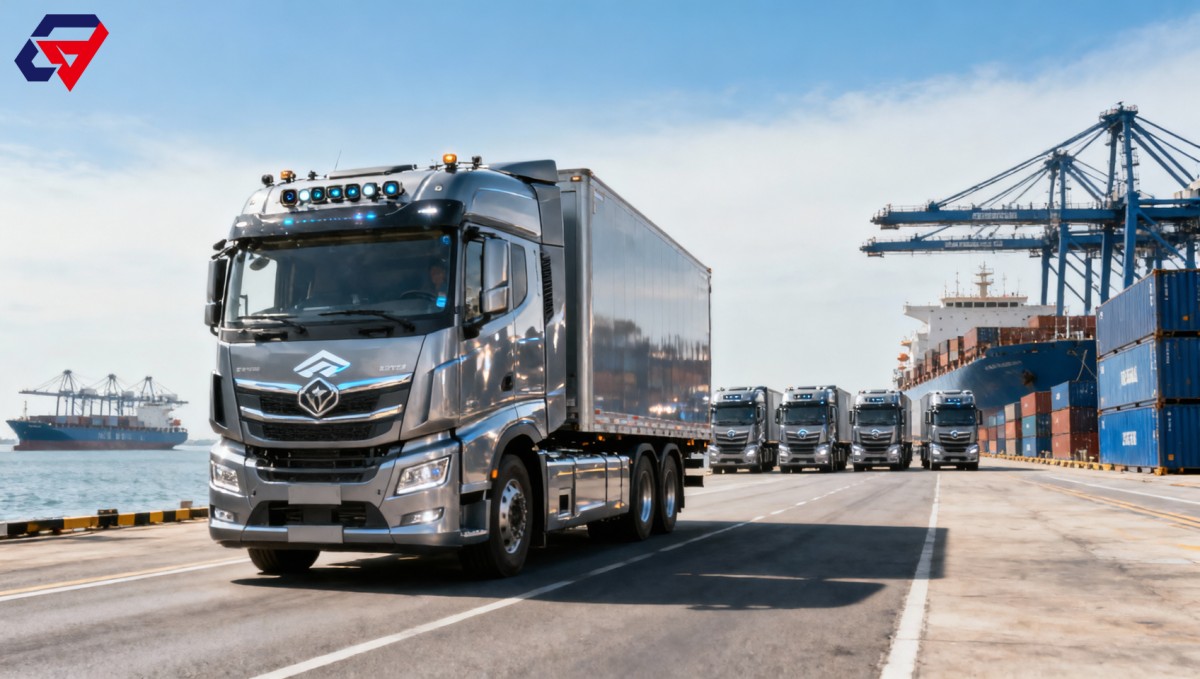
Conclusion: The Q1 2026 export surge and Kwai Tsing automation validation together reflect maturing integration between Chinese manufacturing output and global logistics infrastructure readiness. It is not yet evidence of fully synchronized supply chains — but it does mark a tangible step toward greater predictability in cross-border heavy-vehicle delivery. Current interpretation should emphasize measured progress: meaningful, localized, and operationally grounded — rather than broad, immediate, or universal transformation.
Source: Joint notice issued by China’s Ministry of Transport and Ministry of Industry and Information Technology, April 21, 2026. Westwell’s Kwai Tsing deployment confirmed via terminal operator statement dated April 21, 2026. Note: Expansion plans beyond Kwai Tsing remain unannounced and are subject to ongoing observation.
NAVIGATION
Send Us A Message