



News
Explore what’s going on around the industry and get the latest from the world of heavy equipment and earth-moving.
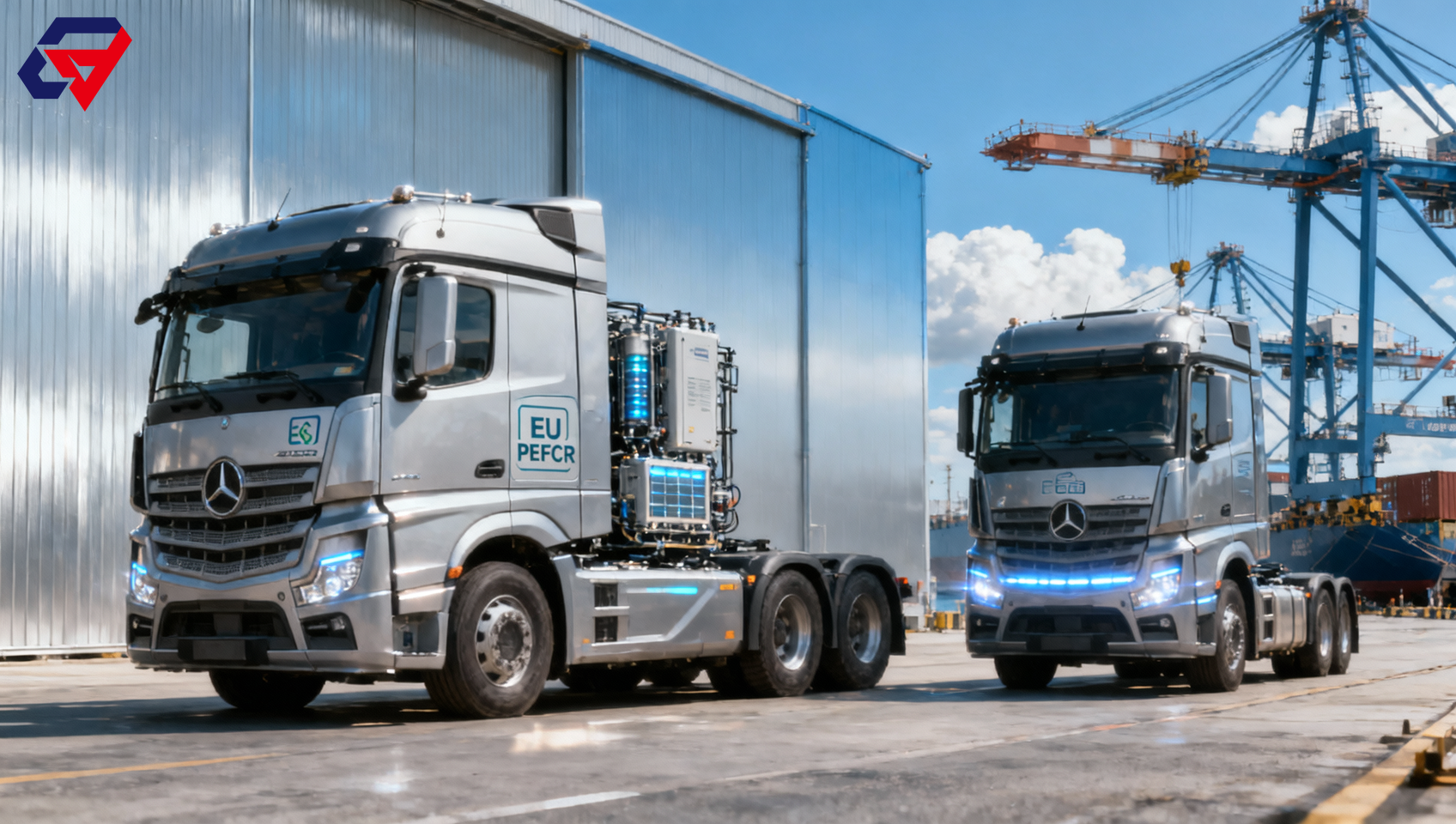
On 28 April 2026, the European Commission launched a mandatory pilot programme requiring lifecycle carbon footprint reporting for heavy-duty trucks entering the EU market — a development with immediate implications for Chinese exporters, Tier 1 suppliers, and LCA service providers.
Event Overview
The European Commission officially published Directive C/2026/2871, titled “Pilot Directive on Lifecycle Carbon Emission Transparency for Heavy-Duty Commercial Vehicles”, on 28 April 2026. Effective from October 2026, all heavy-duty truck整车 manufacturers and powertrain suppliers placing products on the EU market must submit third-party-verified Life Cycle Assessment (LCA) reports. The pilot explicitly covers major Chinese export brands and accepts ISO 14040/14044 and the Product Environmental Footprint Category Rules (PEFCR) for heavy vehicles as compliant standards.
Industries Affected by Segment
Direct Exporters of Heavy-Duty Trucks and Powertrains
Chinese OEMs and powertrain suppliers exporting to the EU are directly subject to the reporting obligation. Non-compliance after October 2026 may result in delayed market access or exclusion from tender processes ahead of the full implementation of Euro VII regulations in 2027.
Component Manufacturers (Battery & Hydrogen Systems)
Suppliers of battery packs, fuel cell systems, and hydrogen storage units face new boundary-definition requirements under the LCA framework — particularly concerning upstream material sourcing, manufacturing energy mix, and end-of-life assumptions. Their data inputs will constitute critical segments of the final vehicle-level report.
LCA Service Providers and Verification Bodies
Organisations offering LCA modelling, data collection support, or third-party verification services are now positioned at a key inflection point: demand for EU-compliant assessments is rising sharply, but capacity remains limited — especially for providers experienced in PEFCR-aligned heavy-vehicle modules and localised electricity grid factors.
What Relevant Enterprises or Practitioners Should Focus On — and How to Respond
Monitor official guidance on PEFCR application and national grid factor updates
The European Commission is expected to issue technical implementation notes before July 2026. These may clarify how national electricity emission factors apply to Chinese-manufactured components assembled in EU facilities — a key variable for accurate LCA outcomes.
Prioritise internal LCA capability building for battery and hydrogen subsystems
Analysis shows that battery production and hydrogen system assembly account for over 60% of uncertainty in current heavy-truck LCAs. Exporters should initiate data collection protocols for cathode material origin, cell manufacturing location, and electrolyser efficiency — not wait for formal verification deadlines.
Distinguish between pilot obligations and future regulatory requirements
Observably, this is a transparency-focused pilot — not yet a compliance gate. However, the requirement for third-party verification signals that the methodology and data quality thresholds established here will likely carry forward into Euro VII’s enforcement phase. Treating the pilot as a trial run rather than a standalone exercise is more pragmatic.
Begin supplier engagement on primary data sharing now
Current LCA standards require primary data for >95% of cradle-to-gate emissions in key subsystems. Exporters should initiate structured data requests with battery cell makers, steel suppliers, and casting foundries — using ISO 14040-compliant templates — to avoid bottlenecks during report submission windows.
Editorial Perspective / Industry Observation
This pilot is best understood not as an isolated administrative step, but as the first operational signal of the EU’s broader shift toward product-level environmental accountability in transport equipment. From an industry perspective, its significance lies less in immediate enforcement and more in its function as a de facto readiness test: it reveals gaps in data infrastructure, cross-border LCA coordination, and technical alignment between Chinese manufacturing practices and EU environmental accounting norms. Continued monitoring is warranted — particularly for how verification bodies interpret ‘reasonable effort’ in sourcing missing primary data, and whether the pilot expands beyond reporting to include public disclosure or performance benchmarks.
Conclusion
The launch of the EU’s heavy-duty truck carbon footprint pilot marks a concrete step toward integrating environmental data into market access conditions — not merely as sustainability branding, but as a functional requirement for trade. For affected enterprises, the six-month window (April–October 2026) is not preparatory in the abstract sense; it is the minimum viable timeframe to establish foundational LCA workflows, align supply chain partners, and validate boundary definitions — especially for electrified and hydrogen-powered powertrains. This is better understood as the beginning of a procedural transition, not a one-off compliance event.
Source Attribution
Main source: European Commission Official Document C/2026/2871, published 28 April 2026.
Areas requiring ongoing observation: Technical implementation guidance (expected Q2 2026), national grid factor harmonisation status, and verification body accreditation criteria for non-EU-based LCA practitioners.
NAVIGATION
Send Us A Message