



News
Explore what’s going on around the industry and get the latest from the world of heavy equipment and earth-moving.

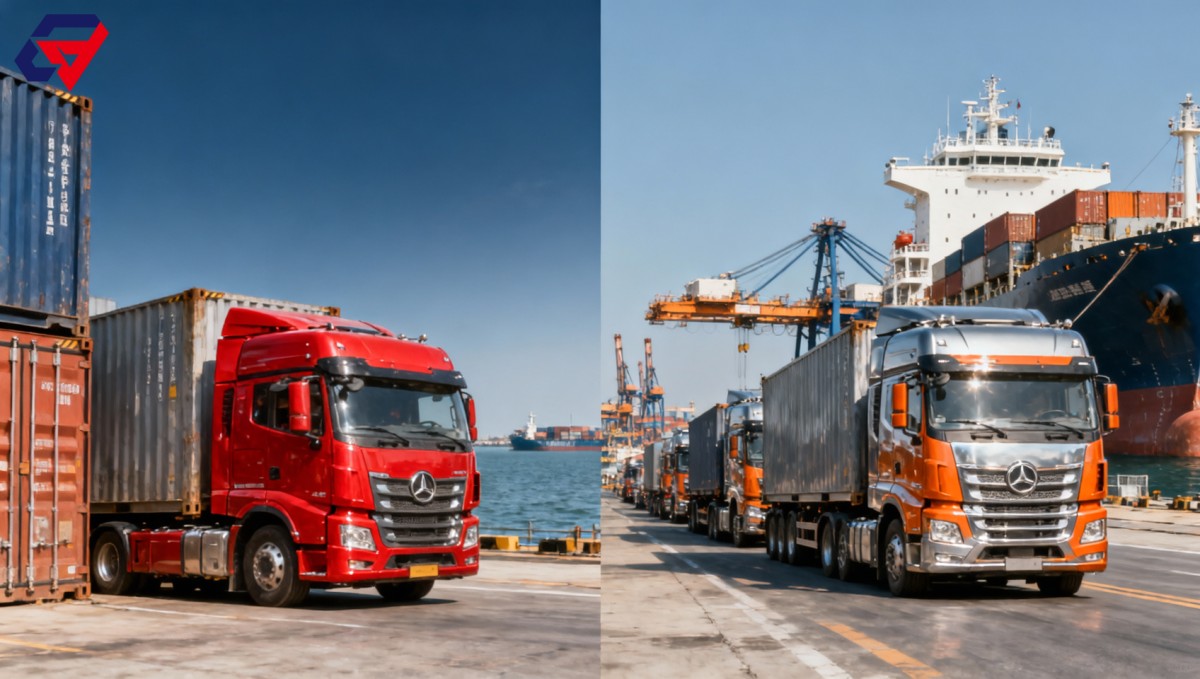
The timing of the event is not explicitly stated in the source material, but the latest market update points to a clear change in current trade execution conditions: continued rerouting linked to the Red Sea crisis and transit limits at the Suez Canal are pushing up Asia-Europe freight costs, while container rates for China’s heavy truck exports are being raised by 18% to 22% from June. For exporters, overseas importers, logistics providers, and procurement teams, this is not just a price move. It affects delivery schedules, shipping mode choices, landed cost calculations, and inventory planning in markets already facing tighter vessel capacity.
What the latest shipping data confirms
According to the latest data cited from the Shanghai Shipping Exchange, the normalization of Red Sea rerouting and restrictions on Suez Canal transit have continued to affect freight conditions on China-Europe routes. In early June 2026, the spot rate for 40HQ containers from China to major ports in Northern Europe and the Mediterranean reached $4,850.
The same data indicates that this level was up 20.3% month on month and 67% year on year. At the same time, space on Ro-Ro vessels, which are relied on for complete heavy truck exports, has also become tight. For some orders to the Middle East and Africa, delivery cycles have been extended to more than 12 weeks.
The information provided also indicates that these changes are materially affecting overseas importers’ procurement costs and inventory planning.
Where the pressure is now appearing across the trade chain
Export contract execution is becoming more difficult
For exporters of heavy trucks, the direct impact is not limited to higher freight quotations. The combination of higher container rates and tighter Ro-Ro capacity can affect shipment scheduling, delivery commitments, and the practical feasibility of using one transport mode over another. From an industry perspective, what deserves closer attention is whether existing commercial terms, delivery windows, and shipping allocations still match current transport conditions.
Exporters may need to review booking arrangements, shipment sequencing, and delivery documentation timing more closely, especially where customer acceptance, dispatch milestones, or payment procedures are linked to shipment dates.
Overseas buyers face revised landed-cost and inventory assumptions
For overseas importers and distributors, the reported freight increases and longer lead times directly affect purchasing budgets and stock planning. Analysis shows that when freight and transit uncertainty rise together, procurement decisions are no longer based only on factory pricing, but also on whether delivery timing remains commercially workable.
In practice, buyers may need to pay closer attention to shipment terms, validity periods of quotations, and any trade documents tied to dispatch, customs clearance, or delivery acceptance. Where inventory cycles are already tight, longer shipping lead times can also change reorder timing and buffer stock requirements.
Logistics and supply-chain service providers must manage execution risk more carefully
For freight forwarders, shipping agents, and other supply-chain service providers, the current development signals a more demanding execution environment rather than a routine market fluctuation. The relevant issue is not only price volatility, but also whether space allocation, routing arrangements, and booking confirmation processes remain reliable enough for truck export programs.
Observably, service providers involved in project cargo, vehicle exports, or multimodal arrangements may need to communicate more clearly on booking lead times, route stability, and documentary cut-off requirements, so that exporters and buyers can make workable delivery decisions.
Operational issues companies should now watch closely
Check whether delivery promises still match actual transport conditions
Analysis shows that companies should first reassess whether current delivery commitments remain realistic under higher freight rates and tighter vessel space. If contract timelines, tender commitments, or customer delivery schedules were built on earlier shipping assumptions, execution risk may now be higher.
Pay closer attention to trade documents and shipment-linked compliance timing
Where export transactions depend on shipping documents, inspection files, technical documentation, or acceptance records being issued within a specific time window, delayed bookings or longer transit cycles may create indirect compliance or performance risks. It is more appropriate to understand this as a practical execution issue that can affect customs handling, payment progress, and customer-side acceptance procedures, even though no new formal rule text is provided in the source material.
Revisit procurement and inventory planning for affected destination markets
For companies serving the Middle East, Africa, Northern Europe, or Mediterranean destinations referenced in the update, procurement and replenishment plans may need review. The reported extension of some delivery cycles beyond 12 weeks suggests that buyers and suppliers should not assume previous logistics timing remains valid.
Continue monitoring whether the market change becomes a stable execution baseline
The available information confirms current freight and capacity pressure, but it does not provide detailed official implementation rules beyond the reported market conditions. Companies should therefore continue to monitor carrier notices, customer tender documents, trade terms, and other transaction-specific execution requirements before treating the present situation as a fully stabilized long-term baseline.
How this development is best understood at this stage
Observably, this development is better understood as an execution signal already visible in the market rather than as a newly published regulatory act. The core change is that route disruption and transit constraints are now feeding directly into freight formation, vessel availability, and delivery timing for heavy truck exports.
From an industry perspective, the significance lies in how trade rules in practice can tighten without a single new statute being announced. When routing constraints, vessel access, and shipment timing become harder to secure, commercial compliance, procurement planning, and delivery performance all become more sensitive to logistics conditions.
At the same time, it would be premature to treat every cost increase or delay as a fixed long-term outcome. What deserves closer attention is how consistently these higher freight and longer lead-time conditions appear in subsequent market execution and whether buyers, exporters, and logistics providers begin adjusting documents, tender terms, and delivery clauses accordingly.
Why the market should keep this on its watchlist
The current update points to more than a temporary price movement. It shows that shipping constraints linked to the Red Sea and Suez route are affecting the real operating environment for China’s heavy truck exports, especially in freight budgeting, capacity booking, and order fulfillment. For the industry, the most reasonable reading at present is that this is an active execution pressure point with direct implications for trade performance, rather than a fully settled rule framework.
A neutral conclusion is that companies should treat the reported freight rise and delivery extension as actionable market conditions, while continuing to verify how they translate into contract practice, procurement behavior, and shipment management in the coming period.
Basis of this article and what still needs verification
This article is generated based on the user-provided news title, event timing, and event summary. The specific official source link was not provided in the input and therefore still requires further verification.
For developments of this kind, commonly relevant source types may include official notices, releases from regulatory authorities, customs or trade-administration information, industry association updates, standard-setting documents, and reporting by authoritative media. Further observation is still needed on later policy detail, execution interpretations, tender document changes, industry feedback, and how companies are adjusting delivery and procurement practices in response.
NAVIGATION
Send Us A Message