


News
Explore what’s going on around the industry and get the latest from the world of heavy equipment and earth-moving.
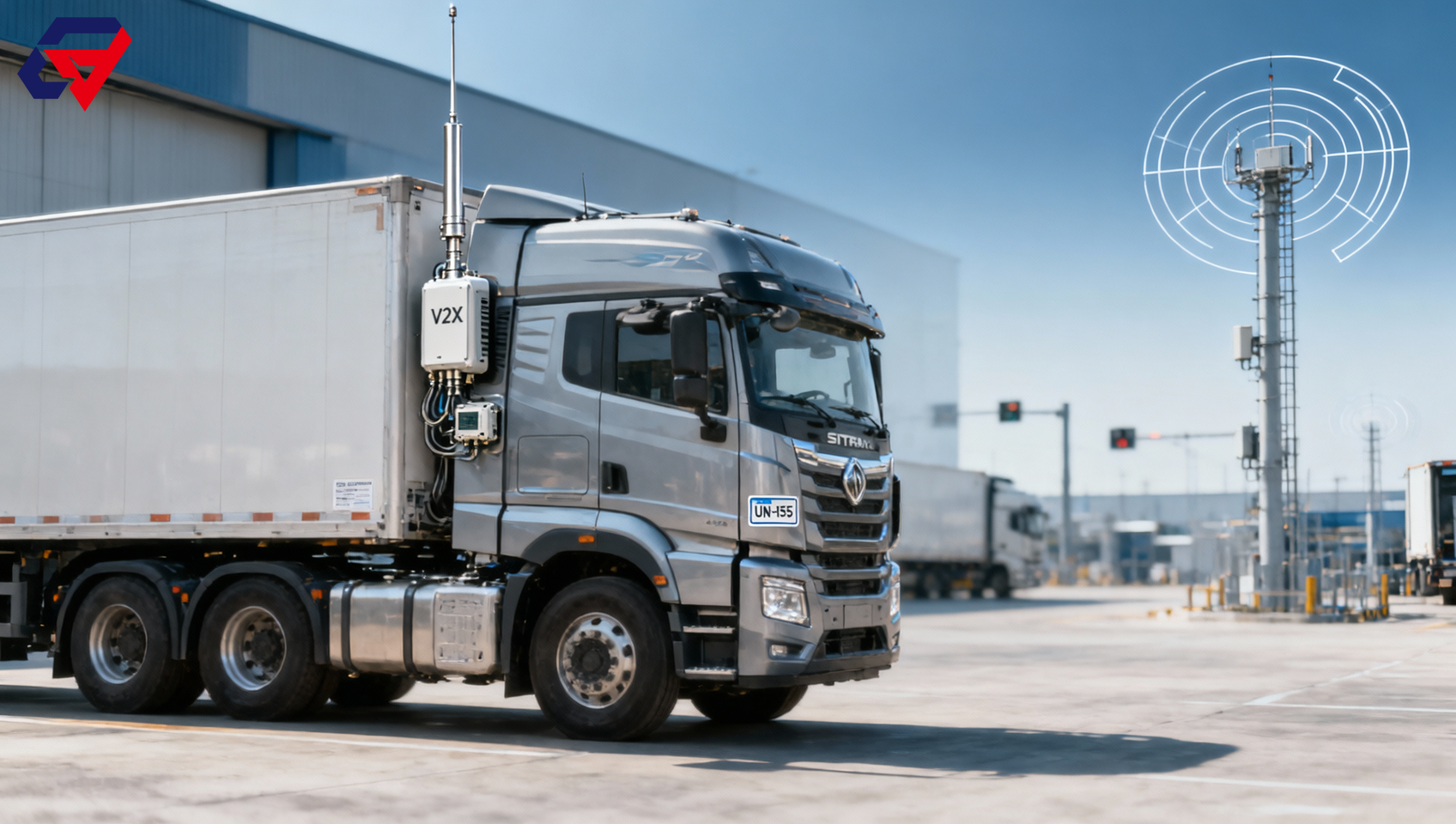
On May 19, 2026, the European Commission published the Draft Amendment to Intelligent Connectivity Requirements for Heavy Vehicles, proposing mandatory V2X communication modules for all newly type-approved heavy-duty trucks—including imported models—starting October 2027. This development directly impacts exporters of Chinese heavy-duty trucks and stakeholders across the EU import, certification, and supply chain ecosystem.
Event Overview
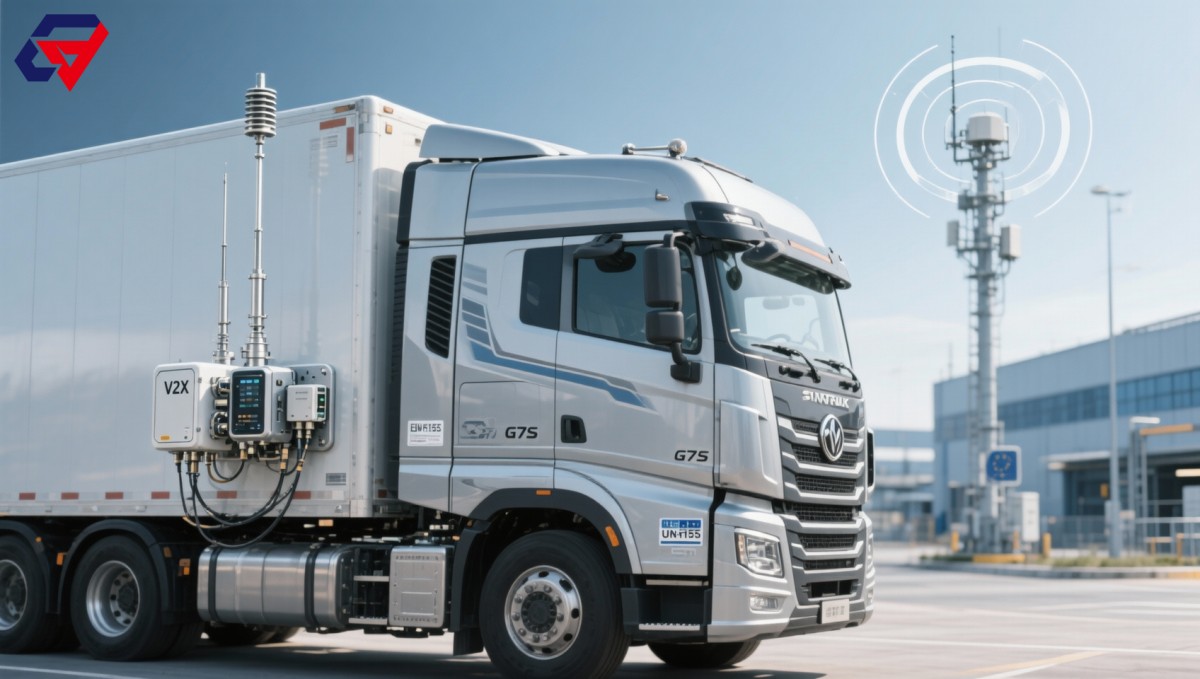
The European Commission released the Draft Amendment to Intelligent Connectivity Requirements for Heavy Vehicles on May 19, 2026. It proposes that, effective October 2027, all new type approvals for heavy-duty trucks sold in the EU must include a V2X communication module compliant with ETSI EN 302 637-2 and integrated into a UN-R155-compliant software update management system. As of the draft’s publication, only a limited number of Chinese models—including the FAW J7 TIR and SINOTRUK SITRAK G7S—have completed preliminary V2X type verification. Importers and distributors are advised to reassess procurement timelines and compliance-related costs.
Industries Affected
Direct Exporters and Trading Enterprises
Chinese OEMs exporting heavy-duty trucks to the EU face immediate regulatory alignment pressure. Because the mandate applies to all newly type-approved vehicles—not just domestic EU production—exporters must ensure V2X hardware integration, firmware validation, and UN-R155 software update management system documentation prior to certification. Delayed readiness may result in postponed market entry or loss of tender eligibility in EU public procurement programs.
Component Suppliers and Tier-1 Manufacturers
Suppliers of telematics control units (TCUs), V2X modems, and related middleware must verify conformance with ETSI EN 302 637-2 and support UN-R155-compliant over-the-air (OTA) update architectures. Those lacking EU-type-approval-ready reference designs or certified test reports may see reduced demand from OEMs accelerating compliance efforts ahead of the 2027 deadline.
Certification and Compliance Service Providers
Testing laboratories and technical service providers accredited under EU Regulation (EU) 2018/858 must expand capabilities to cover V2X functional testing, interoperability verification against EU roadside units (RSUs), and UN-R155 software update audit trails. Demand for these services is expected to rise among Chinese manufacturers seeking third-party validation ahead of official type approval.
Import Distributors and Aftermarket Support Networks
EU-based importers and dealers will need to manage dual inventory during transition—maintaining pre-compliance stock while preparing for post-2027 sales requiring full V2X functionality. They also face increased technical training needs for after-sales diagnostics, OTA update handling, and customer support related to V2X-dependent features such as cooperative adaptive cruise control (C-ACC) or intersection movement assist (IMA).
What Relevant Enterprises or Practitioners Should Focus On
Monitor Official Status and Timeline Confirmation
The draft remains subject to consultation and formal adoption. Stakeholders should track updates from the European Commission and the United Nations Economic Commission for Europe (UNECE), particularly any revisions to the implementation date, scope exclusions (e.g., retrofitting vs. new type approval), or transitional provisions for existing certifications.
Prioritize Vehicle Models with Highest EU Market Exposure
Exporters should identify which models account for the largest share of current or planned EU shipments—and focus V2X integration, validation, and documentation efforts on those first. Early engagement with EU technical services for gap analysis is recommended.
Distinguish Between Policy Signal and Operational Requirement
While the draft signals strong regulatory intent, it does not yet constitute binding law. Companies should avoid premature capital expenditure on full-scale production tooling until final adoption; instead, allocate resources toward feasibility studies, prototype integration, and pre-certification testing aligned with ETSI EN 302 637-2 and UN-R155 Annex 10 requirements.
Align Internal Cross-Functional Teams Now
OEMs and suppliers should initiate coordination between R&D, homologation, purchasing, and software teams to map dependencies—for example, verifying whether existing TCUs support required message sets (e.g., CAM, DENM), secure boot, and signed OTA update mechanisms. Early alignment reduces rework risk if architecture changes are needed later.
Editorial Perspective / Industry Observation
Observably, this draft reflects the EU’s strategic shift from voluntary V2X deployment to mandatory baseline connectivity for safety-critical commercial vehicles. Analysis shows it functions primarily as a regulatory signal—not yet an enforceable obligation—but one with high likelihood of adoption given parallel developments in EU C-ITS deployment plans and the General Safety Regulation (GSR) II framework. From an industry perspective, the timing suggests growing emphasis on harmonizing vehicle-level software governance with infrastructure-readiness. Current relevance lies less in immediate compliance and more in early-stage preparation: identifying technical gaps, mapping certification pathways, and assessing supplier capability. Continued monitoring is warranted—not because the rule is certain to pass unchanged, but because its core requirements align with broader EU mobility policy direction.
Conclusion
This draft represents a significant step toward embedding standardized, safety-oriented connectivity into the EU heavy-vehicle regulatory baseline. Its primary significance lies in shifting V2X from an optional feature to a prerequisite for market access—starting with new type approvals. For now, it is best understood not as an imminent operational mandate, but as a clear, actionable signal prompting structured technical and procedural readiness across export supply chains.
Source Attribution
Main source: European Commission, Draft Amendment to Intelligent Connectivity Requirements for Heavy Vehicles, published May 19, 2026.
Note: The draft is still under consultation; final text, effective date, and scope may change. Ongoing observation of UNECE WP.29 and EU Commission updates is recommended.
NAVIGATION
Send Us A Message