



News
Explore what’s going on around the industry and get the latest from the world of heavy equipment and earth-moving.

From August 1, 2026, new heavy trucks imported into the European Union, along with key drive subsystems, will face a stricter compliance threshold for electric assist drive systems under EN 15194:2026. The update, published in the Official Journal of the European Union on July 18, 2026 through amending Directive (EU) 2026/1132, is relevant not only to truck importers but also to subsystem suppliers, certification teams, customs-facing documentation functions, and downstream buyers tracking delivery risk. The reason this deserves industry attention is straightforward: the rule links market access directly to certification and technical file readiness before customs clearance.
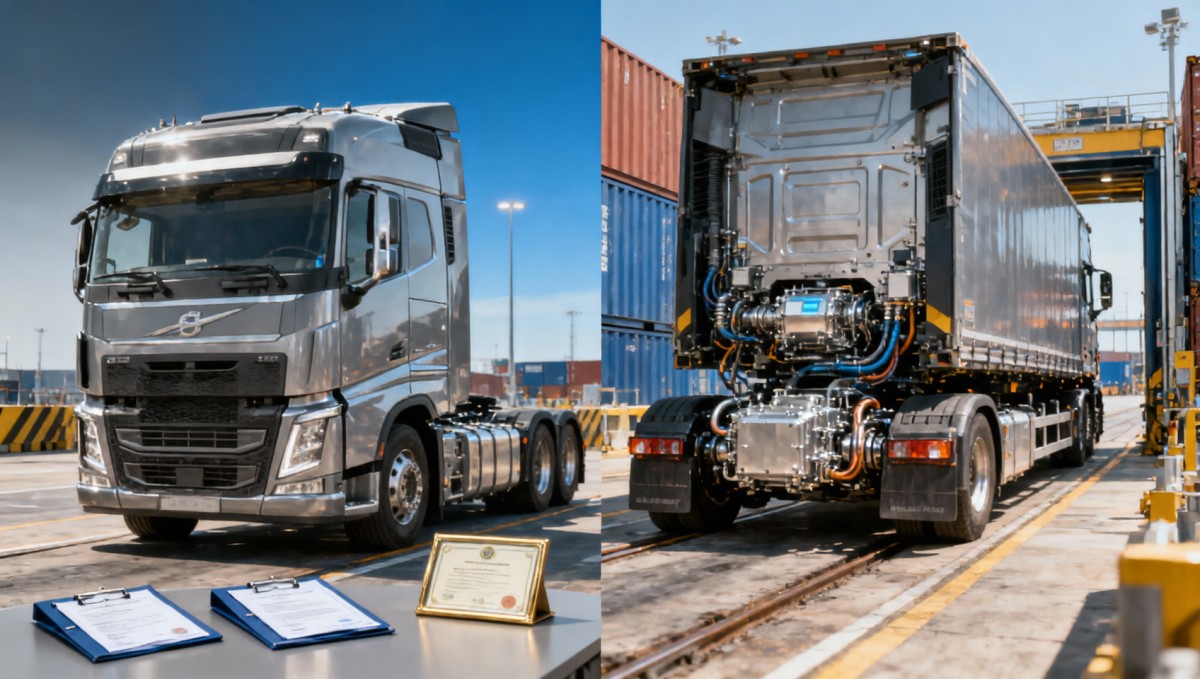
What the rule now requires
According to the provided information, the amended EU measure brings electric assist drive systems used in heavy trucks into the mandatory certification scope of EN 15194:2026. The covered systems include examples such as e-Axles and hybrid energy recovery modules.
The requirement applies to all new heavy trucks imported into the EU as well as key drive subsystems. Before customs clearance, importers must submit an EU Type Examination Certificate together with technical documentation. Products that do not meet the requirement may be denied entry into the EU market or recalled.
Where the impact is likely to appear first
Imported vehicle programs and customs preparation
From an industry perspective, importers are the first group likely to feel the operational effect because the rule directly ties customs clearance to document submission. The main pressure point is not only product compliance itself, but whether the required certificate and technical documents are complete and available at the right stage of the import process.
Suppliers of electric assist drive subsystems
Manufacturers and exporters of components such as e-Axles or hybrid energy recovery modules may be affected through customer qualification, documentation support, and delivery timing. What deserves closer attention is whether subsystem-level compliance evidence can be aligned with the importer's clearance schedule and vehicle program requirements.
Procurement and downstream commercial coordination
Buyers, OEM sourcing teams, and channel participants may also be affected where procurement decisions depend on imported heavy trucks or critical drive modules reaching the EU market on time. The practical issue here is the increased importance of certification status in supplier selection, contracting, and delivery planning.
Service providers supporting cross-border execution
Supply chain service providers, including teams involved in customs documentation and shipment coordination, may see more scrutiny around document completeness and timing. Analysis shows that the business impact in this segment is likely to center on process control rather than on product design itself.
What companies should watch now
Whether product scope is interpreted consistently in practice
Companies should closely track how the mandatory scope is applied in real transactions, especially for key drive subsystems connected to imported heavy trucks. The policy text provided makes the coverage direction clear, but in practice businesses will still need to verify how individual products are classified within import workflows.
Readiness of certificates and technical files before shipment arrival
The clearest operational issue is timing. Since importers are required to submit the EU Type Examination Certificate and technical documentation before customs clearance, companies should pay attention to whether internal review, supplier handoff, and document validation are completed early enough to avoid border delays.
Supplier qualification and contract communication
For businesses sourcing covered systems, supplier discussions will likely need to move beyond product specifications and pricing into compliance evidence, document responsibility, and update obligations. Observably, this is where commercial risk can emerge even before any physical shipment is affected.
Contingency planning for rejected entry or recall exposure
The stated consequence for non-compliant products is refusal of entry or recall. Companies involved in imports, deliveries, and customer commitments should therefore pay attention to escalation routes, replacement planning, and communication arrangements tied to compliance failure scenarios.
Why this looks larger than a one-off customs adjustment
Analysis shows that this development is better understood as more than a short-term filing change. The immediate fact is a compliance requirement effective from August 1, 2026, but the broader signal is that electric assist drive technology in heavy trucks is being treated with more formal regulatory scrutiny at the point of EU market entry.
At the same time, it would be premature to extend this into claims that go beyond the provided facts. It is more appropriate to understand this as a clear regulatory step with immediate trade execution consequences, while further market effects still need continued observation.
How the market may need to frame this update
For the industry, the significance of this update lies in the direct connection between certification status and import feasibility. The rule does not simply add a background compliance expectation; it places documentary readiness at the front end of market access for new heavy trucks and key electric assist drive subsystems entering the EU.
A neutral reading is that this is already a concrete operational requirement, not merely an early policy signal. At the same time, the wider commercial and supply-chain impact is still best treated as an evolving development that depends on how companies, suppliers, and border-facing processes adapt.
Basis of this article and what still needs verification
This article is based on the user-provided news title, event date, and event summary. For this type of development, commonly relevant source categories include official government or regulatory notices, company disclosures, industry association updates, authoritative media reporting, and standards-related documents.
The specific official source link was not provided in the input, so continued verification remains necessary. Follow-up attention should focus on any further official wording, implementation clarifications, and practical interpretations affecting covered heavy trucks, key drive subsystems, certification documents, and customs procedures.
NAVIGATION
Send Us A Message