


News
Explore what’s going on around the industry and get the latest from the world of heavy equipment and earth-moving.
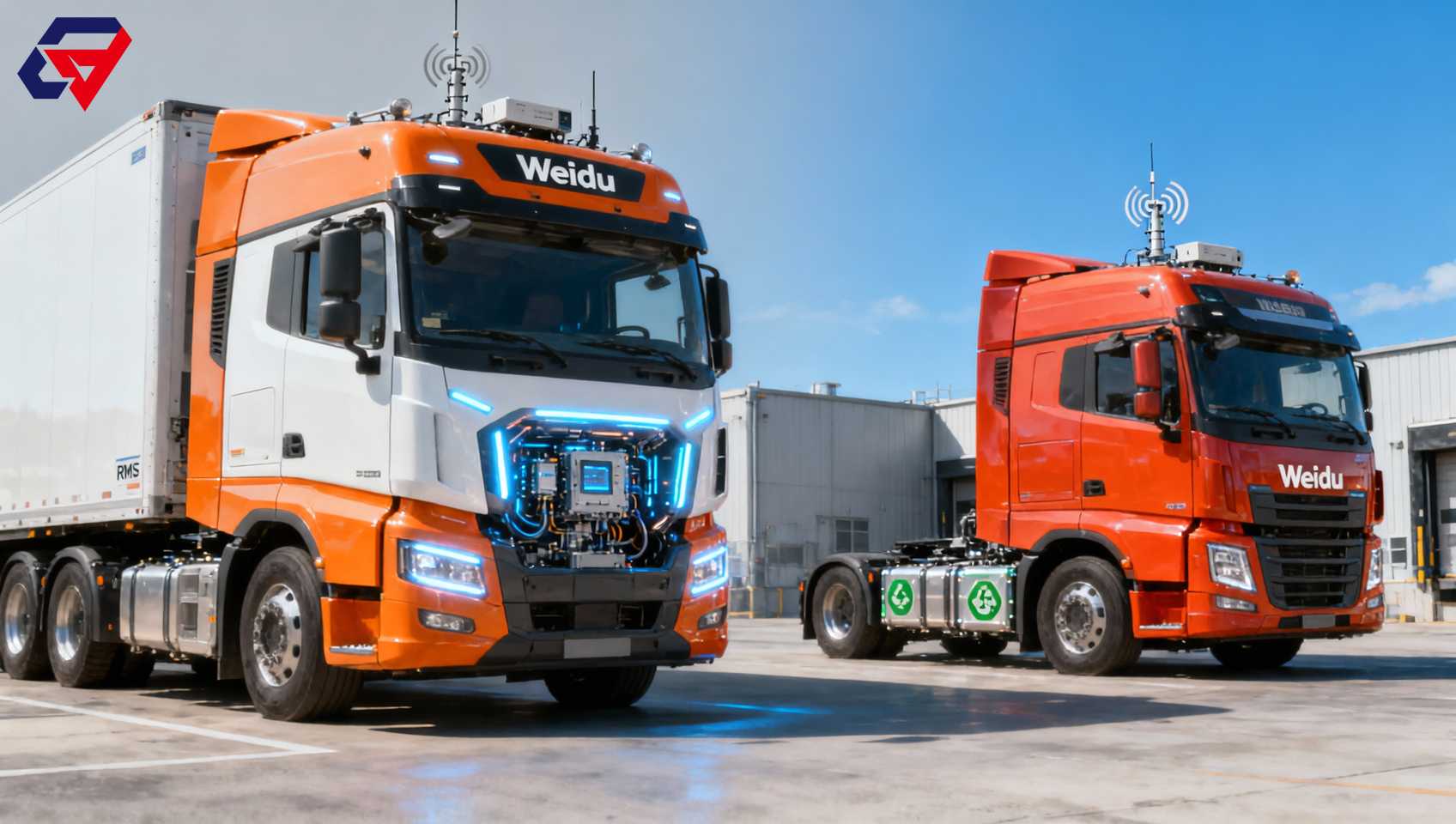
On May 9, 2026, French telecom leader Orange officially integrated its global cellular connectivity service into Weidu New Energy’s heavy-duty electric truck onboard communication system. This development directly supports vehicle compliance with the EU’s upcoming Remote Monitoring System (RMS) regulation — effective July 2026 — and is of immediate relevance to exporters of commercial EVs, EU-based importers, after-sales service providers, and regulatory compliance specialists.
Event Overview
On May 9, 2026, Orange confirmed integration with Weidu New Energy’s connected vehicle platform for heavy-duty electric trucks. The service delivers GDPR-compliant and eCall 2.0-certified cellular connectivity across global markets. As a result, Weidu EV trucks now support remote fault diagnostics, over-the-air (OTA) software updates, and real-time carbon emissions data transmission — capabilities required under the EU’s RMS mandate for heavy vehicles, scheduled to take effect in July 2026.
Impact on Specific Industry Segments
Heavy-Duty EV Exporters & OEMs
This collaboration reduces technical barriers for Chinese EV OEMs entering the EU market. The pre-integrated Orange solution eliminates the need for exporters to independently develop or certify RMS-compliant telematics stacks — lowering both time-to-market and certification cost. Impact manifests primarily in reduced compliance engineering overhead and faster type-approval timelines for new models.
EU-Based Commercial Vehicle Importers & Distributors
Importers gain direct operational benefit: vehicles arrive with RMS-ready functionality, avoiding post-import retrofitting or third-party telematics integration. This mitigates delays in fleet deployment and lowers risk of non-compliance penalties during initial operation. Impact centers on logistics planning, warranty scope definition, and first-year service readiness.
After-Sales & Connected Services Providers
Remote diagnostics and OTA capability shift service delivery models. Providers must adapt diagnostic workflows, technician training, and cloud-based monitoring infrastructure to support real-time vehicle health analysis. Impact appears most acutely in service contract design, spare parts forecasting accuracy, and SLA definitions tied to uptime metrics.
Regulatory Compliance & Certification Consultants
The integration sets a de facto benchmark for RMS implementation pathways. Consultants advising clients on EU market access now have a verified reference architecture — one that combines certified network connectivity (Orange), vehicle-side data collection (Weidu), and regulatory alignment (GDPR + eCall 2.0). Impact lies in accelerated gap analysis and more predictable conformity assessment roadmaps.
What Stakeholders Should Monitor and Act On
Track official RMS implementation guidance from the European Commission and national type-approval authorities
The EU has not yet published final technical specifications for RMS data fields, reporting frequency, or cybersecurity validation requirements. Stakeholders should monitor updates from ACEA, JRC, and national agencies like KBA (Germany) and UTAC (France) — particularly regarding enforcement timelines beyond July 2026.
Assess dependency on Orange’s certified connectivity stack for future model variants
Weidu’s current implementation relies on Orange’s infrastructure. Exporters planning new platforms — especially those targeting multiple regions (e.g., UK, GCC, ASEAN) — should evaluate whether this vendor-specific integration constrains regional flexibility or requires parallel certification efforts elsewhere.
Distinguish between RMS readiness and full type-approval compliance
Remote monitoring capability is only one component of EU Whole Vehicle Type Approval (WVTA). Stakeholders must avoid conflating RMS functionality with broader requirements including braking performance, electromagnetic compatibility (EMC), and battery safety (UN R100/R136). Regulatory engagement remains essential across all domains.
Prepare internal service systems for standardized emissions data ingestion
Real-time CO₂ telemetry introduces new data governance needs. Importers and fleet operators should audit existing telematics platforms for compatibility with ISO 15118-20 and EN 15722-compliant emissions data formats — and verify secure handling of personally identifiable information (PII) embedded in location and driver behavior metadata.
Editorial Perspective / Industry Observation
Observably, this partnership signals a maturing phase in China-EU EV regulatory interoperability — where infrastructure-level alignment (not just vehicle hardware) becomes decisive. Analysis shows it is less a standalone product launch and more a structural enabler: it validates a repeatable, certifiable pathway for RMS compliance, reducing uncertainty for other Chinese OEMs. From an industry perspective, it reflects growing recognition that global market access increasingly hinges on pre-integrated, standards-aligned connectivity — not just battery or powertrain performance. It is currently best understood as a policy-enabling milestone rather than a fully scaled commercial outcome; broader adoption depends on replication by additional OEMs and verification of Orange’s multi-market coverage consistency.
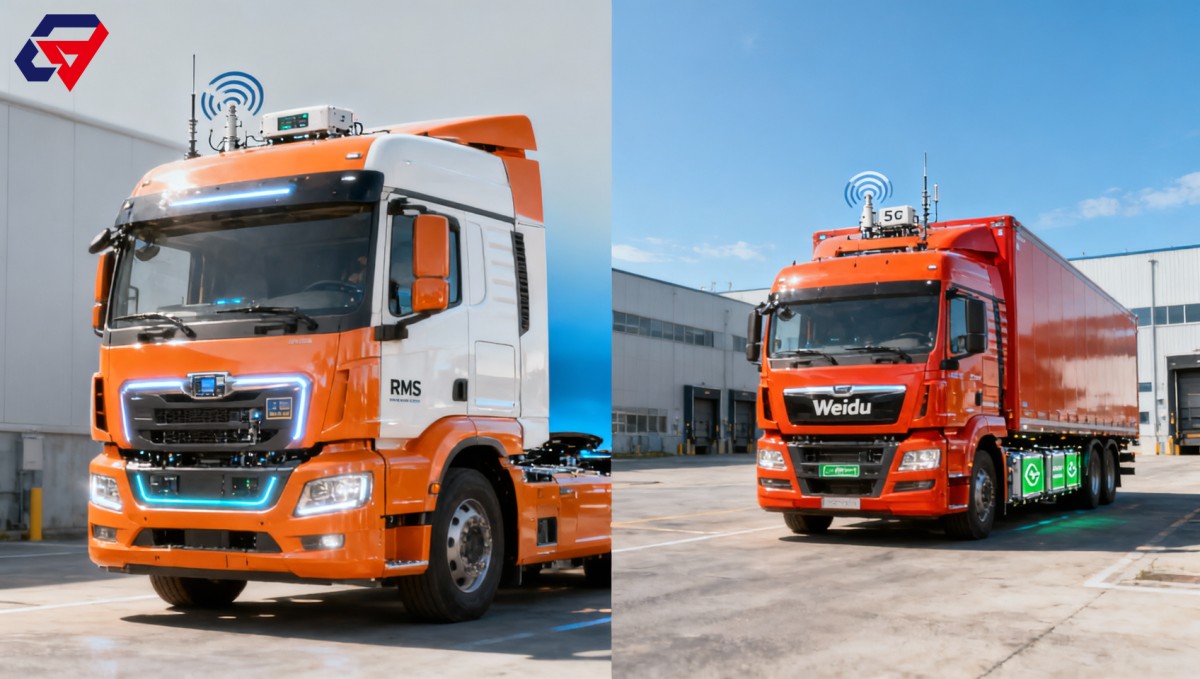
In summary, Orange’s integration with Weidu EV marks a concrete step toward harmonized heavy-duty EV telematics compliance in Europe. Its significance lies not in technological novelty, but in demonstrable alignment with imminent regulatory deadlines — offering stakeholders a tangible reference point for planning, procurement, and cross-border service design. Currently, it is more appropriately understood as an early-adopter validation of RMS implementation feasibility, rather than evidence of systemic market readiness.
Source: Official announcement by Orange S.A., dated May 9, 2026; referenced regulatory framework includes EU Regulation (EU) 2019/1242 (CO₂ standards), Delegated Regulation (EU) 2022/2405 (RMS requirements), and EN 15722:2022 (eCall 2.0). Ongoing monitoring is advised for final RMS technical implementation guidelines expected from the European Commission before Q3 2026.
NAVIGATION
Send Us A Message