


News
Explore what’s going on around the industry and get the latest from the world of heavy equipment and earth-moving.
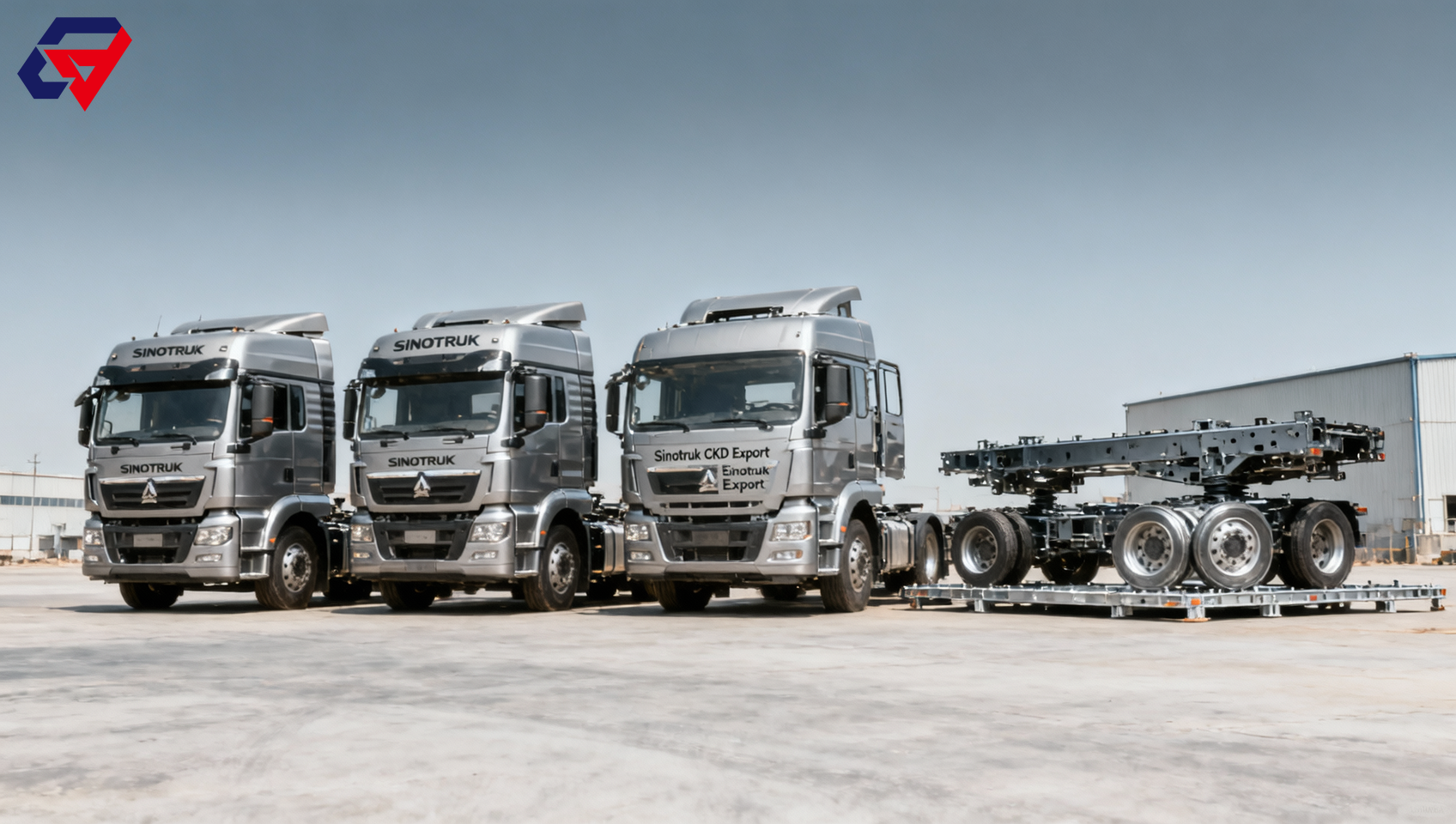
China National Heavy Duty Truck Group (Sinotruk) reported a 43% year-on-year increase in heavy-duty truck exports for January–April 2026, with over 35% of orders originating from Kenya, Nigeria, and Algeria. As of May 21, 2026 — the date of its investor relations disclosure — three African national ministries of industry have issued formal letters of intent for Complete Knock-Down (CKD) local assembly cooperation, requesting technical transfer, production line training, and local supply chain development support. This shift signals growing demand across African markets for manufacturing capability co-development — not just finished vehicle imports — and carries implications for international heavy-truck exporters, automotive component suppliers, regulatory compliance service providers, and logistics & localization support firms.
Event Overview
According to Sinotruk’s investor relations activity disclosed on May 21, 2026, its heavy-duty truck exports rose by 43% YoY in the first four months of 2026. Key markets included Kenya, Nigeria, and Algeria, collectively accounting for more than 35% of total export volume during that period. Concurrently, industrial authorities in three African countries submitted official letters of intent proposing CKD-based local assembly partnerships. These proposals explicitly require Sinotruk to support technology transfer, workforce training on assembly lines, and cultivation of domestic Tier-2 and Tier-3 suppliers. No further details on timelines, locations, or binding agreements were disclosed.
Industries Affected
Direct Exporters of Commercial Vehicles
Exporters face intensified pressure to restructure product design toward modularity and disassembly readiness — prerequisites for efficient CKD operations. The shift also raises requirements for localized documentation packages (e.g., SABS certification for South Africa, SONCAP for Nigeria, COC for Algeria), which must now be generated per-country and updated alongside evolving national standards.
Automotive Component Suppliers & Tier-1 Manufacturers
Suppliers serving original equipment manufacturers (OEMs) exporting to Africa may see increased demand for standardized, pre-certified sub-assemblies (e.g., axles, cabs, driveline modules) compatible with CKD workflows. However, this requires early alignment on packaging specifications, labeling conventions, and traceability protocols — all subject to regional import regulations.
Regulatory Compliance & Certification Service Providers
Service providers supporting African market access must now scale capacity for multi-jurisdictional conformity assessments. The need extends beyond one-time type approvals to ongoing support for local production audits, factory inspections, and post-assembly verification — especially where national standards (e.g., SONCAP’s mandatory conformity assessment program) apply to domestically assembled units.
Logistics & Localization Support Firms
Firms offering port handling, inland distribution, and after-sales infrastructure development may see rising demand for CKD-specific services: bonded warehousing for semi-knocked-down kits, customs classification guidance for modular components, and technical staffing for local assembly line commissioning. These services require deeper integration with OEM engineering teams and host-country industrial agencies.
What Stakeholders Should Monitor and Act On
Track official follow-up communications from African industrial ministries
Letters of intent are non-binding. Stakeholders should monitor whether any of the three countries issue formal tender announcements, publish CKD policy frameworks, or designate priority industrial zones — indicators of actual implementation readiness.
Assess readiness of existing product platforms for CKD adaptation
Companies exporting to Africa should audit current vehicle architectures against CKD feasibility criteria: number of major sub-assemblies, standardization of fasteners and interfaces, availability of multilingual technical documentation, and compatibility with common local tooling. Prioritizing platforms already certified under multiple African regulatory regimes (e.g., both SONCAP and COC) reduces time-to-market risk.
Validate local supply chain development requirements against existing partner networks
Requests for ‘local supplier cultivation’ imply long-term commitments. Exporters and suppliers should map current African Tier-2 capabilities (e.g., sheet metal stamping, cab painting, wiring harness assembly) against CKD bill-of-materials — identifying gaps requiring joint investment, training, or third-party vendor onboarding.
Update compliance documentation packages proactively
Rather than waiting for country-specific requests, firms should consolidate core test reports (braking, emissions, lighting), translate key manuals into English and French (where applicable), and pre-validate document templates against latest versions of SABS, SONCAP, and COC guidelines — reducing turnaround time when formal CKD applications emerge.
Editorial Perspective / Industry Observation
Observably, this development reflects a structural inflection point: African import markets are transitioning from passive recipients of finished goods to active participants in industrial value chains. Analysis shows the rise in CKD interest is not isolated to Sinotruk — similar overtures have been noted from other Chinese and Turkish OEMs since late 2025 — suggesting broader regional policy convergence around import-substitution and job-intensive manufacturing. However, it remains unclear whether these letters signal imminent project launches or remain exploratory diplomacy. From an industry perspective, the current phase is best understood as a signal — not yet an outcome — demanding strategic preparation rather than immediate capital deployment.
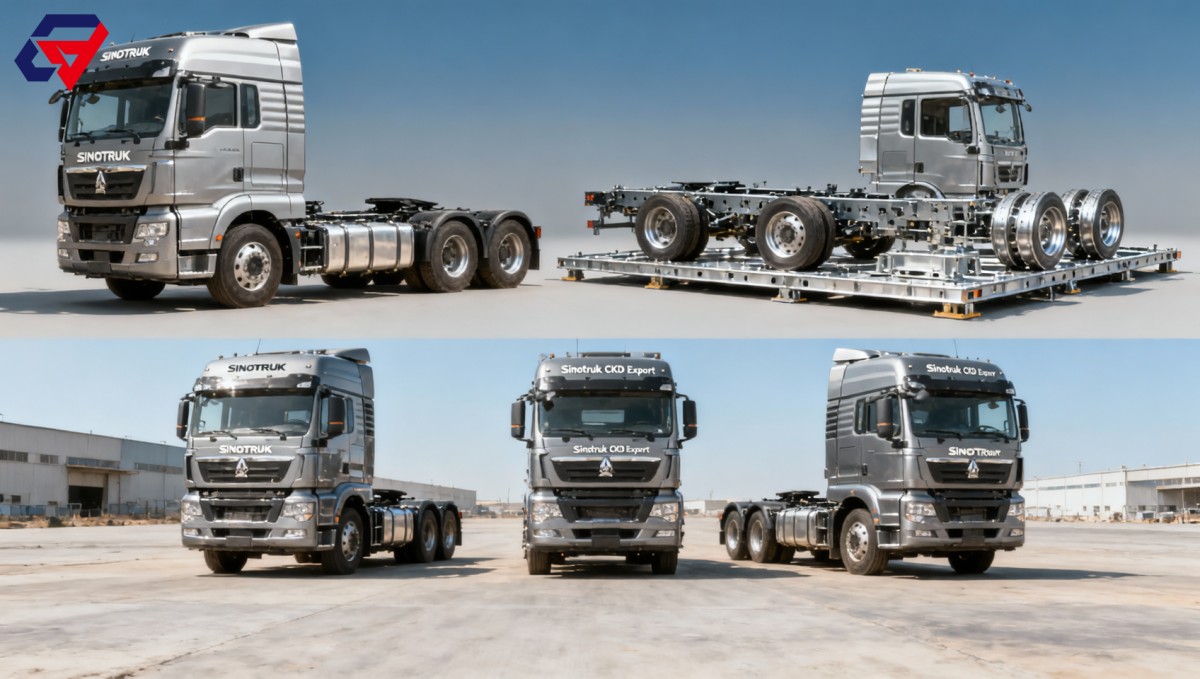
This event underscores how export growth is increasingly tied to embedded industrial collaboration, not just trade volume. It does not indicate a near-term surge in African-built trucks entering global markets, nor does it guarantee rapid localization success. Rather, it highlights an emerging operational threshold: compliance, modularity, and local partnership capacity are now prerequisites for sustained market access — not optional enhancements.
Information Source: Sinotruk investor relations activity disclosure, dated May 21, 2026. No additional sources cited. Pending observation: Whether any of the three African countries issues formal CKD implementation frameworks or public procurement notices in Q3–Q4 2026.
NAVIGATION
Send Us A Message