


News
Explore what’s going on around the industry and get the latest from the world of heavy equipment and earth-moving.
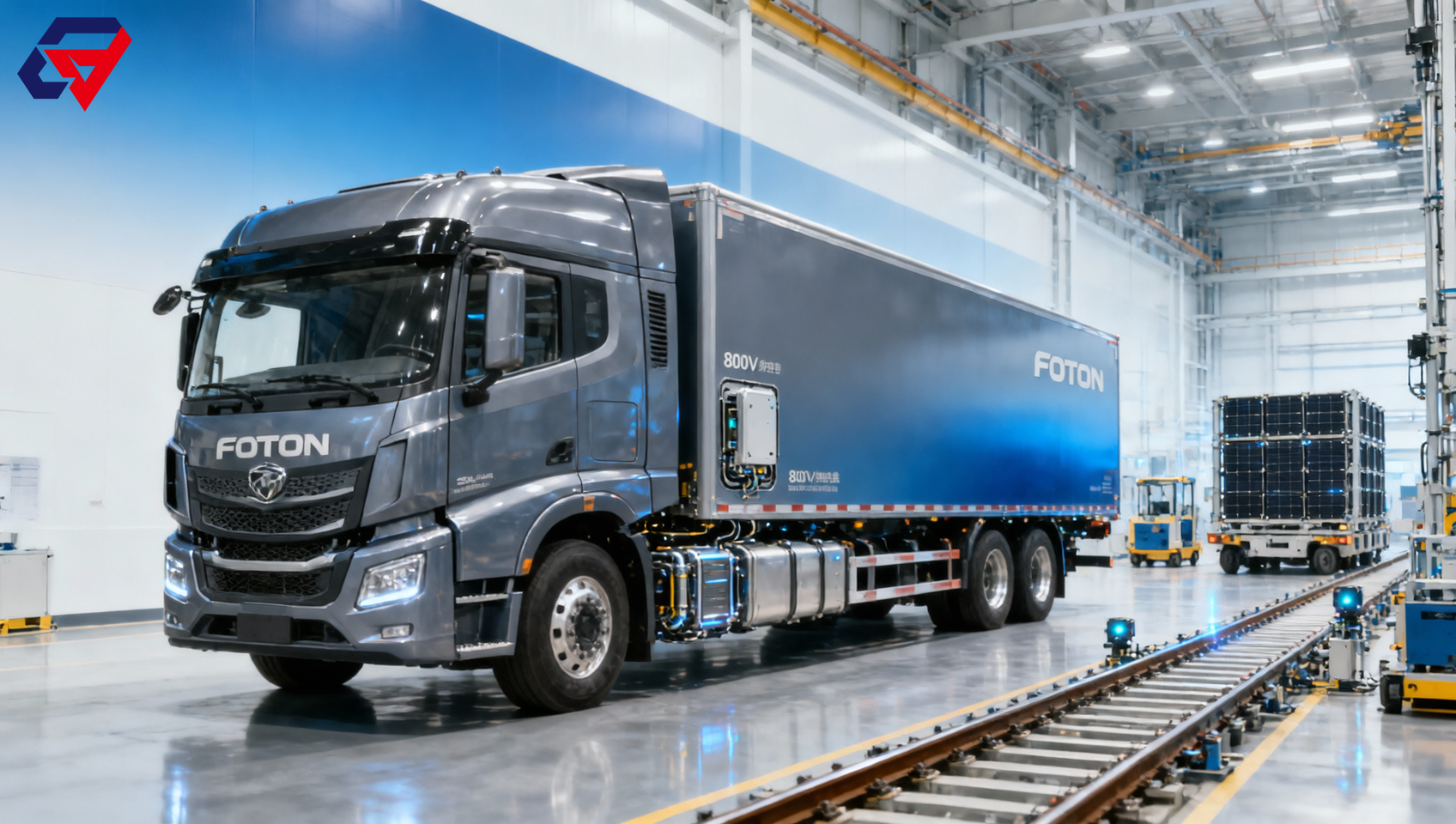
European heavy-duty truck manufacturers are set to conduct their first coordinated on-site assessment of Chinese new energy vehicle (NEV) heavy-truck producers — a development that signals a pivotal shift in cross-border technology recognition and market access dynamics. Though the exact timing remains unspecified, the delegation is expected to travel to China in the near term. This move reflects growing institutional confidence in China’s technical maturity, production scalability, and ecosystem readiness for zero-emission commercial transport — particularly amid tightening EU CO2 standards and the upcoming 2027 Euro VII regulatory framework.
Event Overview
According to a report by China Commercial Vehicle Network dated March 4, 2026, leading European heavy-duty truck OEMs will soon visit China as a unified delegation. They plan to inspect production lines, battery-swap infrastructure deployment, and real-world intelligent driving capabilities at major domestic NEV truck manufacturers — including Foton Auman, Sinotruk Sitrak, and FAW Jiefang.
Impact on Key Industry Segments
Direct Export-Oriented Trading Enterprises: These firms face both opportunity and pressure. The visit may catalyze early-stage CE certification alignment and TIR customs clearance pathway discussions — but actual export ramp-up hinges on harmonized type-approval timelines and after-sales service localization. Near-term impact centers on tender eligibility preparation and documentation readiness for EU conformity assessments.
Raw Material Procurement Enterprises: Suppliers of lithium iron phosphate (LFP) cells, high-nickel cathode materials, and silicon-carbon anode components may see intensified demand scrutiny. European OEMs’ on-site evaluation includes supply chain traceability and ESG compliance verification — meaning procurement entities must now prioritize auditable sourcing records and carbon footprint reporting capability, not just volume or price.
Manufacturing Enterprises: Tier-1 and Tier-2 NEV truck component makers — especially those supplying battery-integrated chassis, 800V thermal management systems, or V2X-enabled ADAS modules — face heightened expectations around process standardization and functional safety validation (e.g., ISO 26262 ASIL-B/C compliance). The delegation’s focus on ‘intelligent driving落地能力’ (real-world deployment capability) implies field performance data — not just lab test reports — will weigh heavily in future partnership evaluations.
Supply Chain Service Providers: Logistics integrators, certification support agencies, and homologation consultants serving NEV exporters stand to gain from increased demand for EU-specific regulatory navigation. However, value differentiation will increasingly depend on demonstrable experience with UNECE R100/R136 adaptations, EN 15194-compliant e-axle testing protocols, and TIR operational training for cross-border EV freight corridors.
Key Focus Areas & Recommended Actions
Accelerate CE Certification Roadmap Alignment
Enterprises should map current product configurations against EN 14782 (braking), EN 15194 (power-assisted cycles — referenced for low-speed urban logistics variants), and draft EN 17507 (heavy-duty electric powertrain safety). Prioritizing modular certification — e.g., certifying battery swap interfaces separately — may shorten time-to-market versus full-vehicle approval.
Prepare for On-Site Supply Chain Due Diligence
European OEMs are expected to review supplier tiering depth, cobalt/nickel origin transparency, and factory-level energy mix disclosures. Companies should pre-audit material declarations (IMDS/CDX), validate renewable energy usage claims with third-party certificates, and compile Tier-2+ supplier engagement summaries.
Document Real-World Intelligent Driving Performance Rigorously
Claims about L2+/L3 functionality must be backed by geotagged operational logs (e.g., disengagement rates per 1,000 km in urban vs. highway settings), cybersecurity audit trails (UNECE WP.29 R155 compliance status), and OTA update validation records — not conceptual architecture diagrams.
Editorial Perspective / Industry Observation
Observably, this delegation is less about immediate procurement and more about de-risking long-term platform convergence. Analysis shows European OEMs are benchmarking not just hardware specs, but system-level interoperability — particularly how Chinese battery-swap networks interface with EU grid flexibility programs and how AI-driven fleet management stacks integrate with existing TMS ecosystems. From an industry perspective, the visit marks a structural inflection: China’s NEV truck sector is transitioning from ‘cost-advantaged supplier’ to ‘co-development partner’ — albeit one still navigating regulatory asymmetry and trust-building thresholds.
Conclusion
This engagement does not guarantee rapid market entry, nor does it imply equivalence in regulatory acceptance. Rather, it confirms that China’s NEV heavy-truck ecosystem has crossed a credibility threshold — one defined by verifiable scale, repeatable deployment, and growing institutional dialogue. The real test lies ahead: whether technical recognition translates into commercially viable, legally compliant, and operationally resilient pathways into Europe’s fragmented but high-value logistics markets.
Source Attribution
Primary source: China Commercial Vehicle Network, March 4, 2026 report. Additional context drawn from EU Commission’s 2025 Heavy-Duty Vehicle CO2 Regulation Implementation Guidelines and UNECE Working Party on Brakes and Running Gear (GRRF) meeting minutes (January 2026). Ongoing monitoring is advised for CE marking guidance updates (CEN/CENELEC TC 301), TIR e-permit pilot expansions, and potential revisions to EU Type Approval Framework Directive 2007/46/EC Annex XIV.
NAVIGATION
Send Us A Message