



News
Explore what’s going on around the industry and get the latest from the world of heavy equipment and earth-moving.

The timing of this event is not explicitly stated in the provided information, but the update points to a concrete shift in shipping conditions now affecting China’s heavy truck exports to South America. Rather than being a routine freight fluctuation, the combined effect of Red Sea rerouting, fewer direct sailings to the east coast of South America, and higher Suez Canal transit charges is changing delivery expectations, procurement timing, and inventory planning across the export chain. For exporters, importers, logistics providers, and downstream buyers, the issue is worth close attention because it affects not only transport cost, but also the execution reliability of cross-border orders.
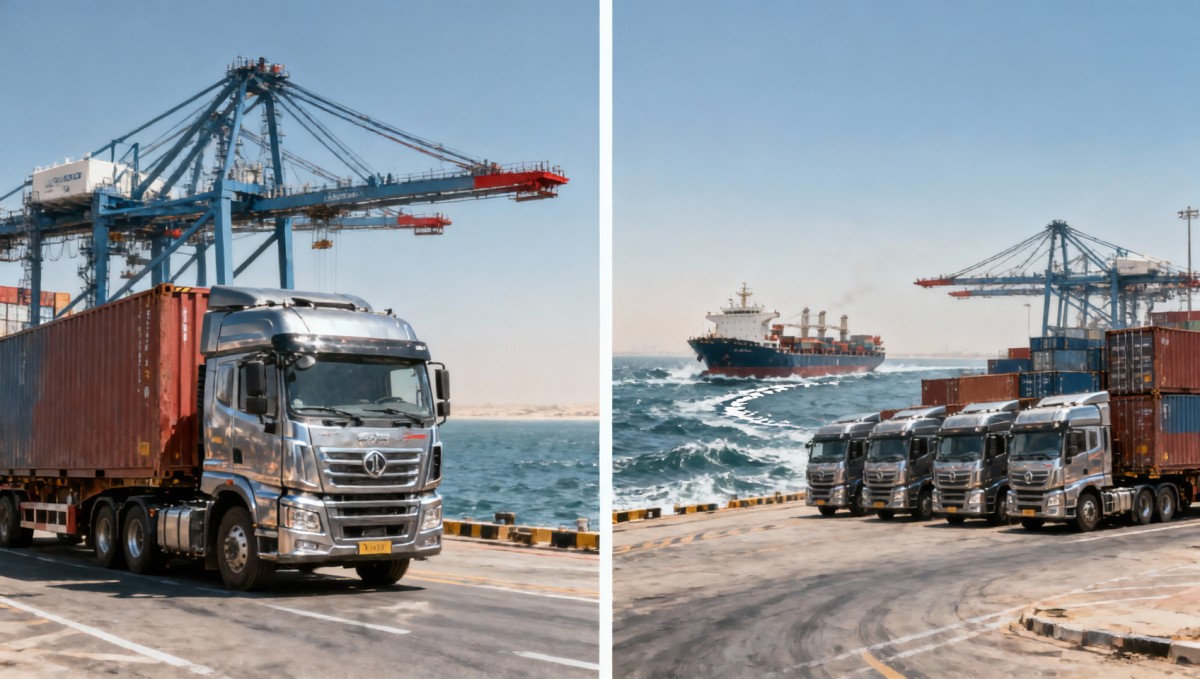
What the current shipping data confirms
According to joint data cited from Alphaliner and the Shanghai Shipping Exchange, in the first week of July 2026, Red Sea rerouting on Asia-Europe services reduced direct sailings to the east coast of South America, including ports such as Santos in Brazil, by 37%. At the same time, Suez Canal transit fees increased by 18%.
Against that backdrop, container freight rates for China’s heavy truck exports to South America rose 41% month on month. Multiple vehicle manufacturers also reported that order delivery windows have generally been pushed back to 14 to 18 weeks. The headline impact described in the provided information is that the average delivery cycle has been extended by 22 days, while importers are being prompted to reassess their third-quarter purchasing rhythm and inventory safety thresholds.
Where the pressure is likely to appear first in the trade chain
Export order execution is becoming harder to schedule
From an industry perspective, heavy truck exporters are likely to feel the impact first in shipment planning and customer commitment management. When direct sailings fall and freight costs rise sharply, previously workable delivery promises may no longer align with available vessel capacity or transit timing. What deserves closer attention is whether export contracts, shipping schedules, and customer-facing delivery commitments need to be reviewed more frequently to reflect the new transport conditions.
Import-side procurement and inventory assumptions are under review
For importers and purchasing teams in South America, the main issue is not only higher logistics cost but also a weaker ability to predict when ordered units will arrive. Analysis shows that once delivery windows shift into a 14 to 18 week range, procurement cycles and stock buffers may need to be recalibrated. In practice, businesses involved in truck distribution, fleet supply, or project-based procurement may need to pay closer attention to order timing, inventory safety thresholds, and the risk of relying on earlier lead-time assumptions.
Logistics and supply chain service providers face stronger documentation and coordination demands
Supply chain service providers may be affected through tighter coordination requirements around booking, routing, and shipment milestones. Observably, when route conditions change because of rerouting and higher canal charges, the operational burden often shifts toward schedule confirmation, customer notification, and document consistency across transport stages. Companies handling export logistics should therefore watch for changes in booking terms, delivery commitments, and any trade documents or transaction records that depend on expected transit timing.
After-sales and downstream delivery planning may also be affected
For businesses linked to post-delivery support, delayed arrival of vehicles can affect handover planning, service readiness, and downstream project schedules. This does not in itself establish a compliance breach, but it does raise the importance of aligning delivery documentation, acceptance timing, and service preparation with revised shipment expectations. Where procurement or tender documents depend on defined delivery windows, market participants should check whether timing assumptions remain realistic under current freight conditions.
Practical points companies should monitor now
Recheck delivery clauses and timing commitments
Analysis shows that the most immediate issue is whether current contractual delivery expectations still match actual shipping conditions. Exporters, importers, and intermediaries should closely review how lead times are described in order documents, quotations, and shipment commitments, especially where earlier assumptions were based on more stable direct sailings.
Watch how procurement schedules and inventory thresholds are adjusted
The provided information already indicates that importers need to reassess third-quarter purchasing rhythm and inventory safety thresholds. It is more appropriate to understand this as an execution-level warning signal rather than a settled new normal. Businesses should therefore monitor whether procurement timing, replenishment windows, and stock assumptions are being formally adjusted in response to longer transit cycles.
Track trade paperwork and tender-facing implications
Where orders are tied to bid documents, supply agreements, or customer delivery schedules, changes in transit time may carry practical consequences for supporting paperwork. Observably, even without a new regulation cited in the provided information, execution standards can tighten when transport volatility affects promised delivery dates. Companies should pay attention to whether any commercial, technical, or shipment-related documents need timing updates or revised wording.
Continue checking for further rule or pricing signals
The current information confirms higher Suez Canal transit fees and the operational effect of Red Sea rerouting, but it does not provide additional official implementation detail beyond those points. For that reason, companies should continue monitoring whether further shipping, routing, or trade execution signals emerge that could affect cost allocation, delivery planning, or customer commitments.
Why this should be read as an execution signal, not just a freight headline
Analysis shows that this development is more meaningful as a trade execution signal than as a standalone logistics story. The confirmed facts do not show a new product regulation, certification rule, or customs measure specific to heavy trucks. However, they do show that route disruption and fee adjustments are already feeding into delivery cycles and procurement decisions. From an industry perspective, that matters because many commercial and operational assumptions in export trade depend on stable shipping windows, even when the formal rule change sits outside the vehicle sector itself.
It is more appropriate to understand this as a landed operational change with broader commercial implications, while still recognizing that the longer-term market response remains something to observe. The key question now is not whether transport conditions have changed, but how quickly those changes begin to reshape order timing, inventory discipline, and delivery-risk allocation across the supply chain.
What this update currently means for the market
At this stage, the update should be read as a clear indication that shipping-rule and route-cost changes are already affecting the practical delivery environment for China’s heavy truck exports to South America. The confirmed impact is visible in freight cost, available sailings, and longer delivery windows. The broader business effect, however, still needs to be assessed through ongoing market execution and feedback.
A neutral reading is that this is neither a temporary headline to dismiss nor a basis for overextended conclusions. It is better understood as a current operational shift that requires closer monitoring of procurement timing, shipment commitments, and supply chain execution discipline.
Basis of this article and points still requiring verification
This article is generated on the basis of the user-provided news title, event timing, and event summary. The specific official source links were not provided in the input, so they still need to be verified on an ongoing basis.
For developments of this kind, relevant source categories often include official notices, statements from regulatory bodies, customs or trade authority information, industry association updates, standard-setting documents, and reporting by authoritative media. Observably, what still requires follow-up includes any further detail on implementation signals, certification or compliance interpretation where applicable, changes in tender documents or delivery terms, additional market feedback, and how companies are adjusting execution in practice.
NAVIGATION
Send Us A Message