



News
Explore what’s going on around the industry and get the latest from the world of heavy equipment and earth-moving.

On June 4, 2026, the Canada Border Services Agency (CBSA) finalized anti-dumping and countervailing measures on truck bodies from China, with anti-dumping duties reaching as high as 257.1% for most exporters and an unspecified countervailing duty also applying in most cases. One named exception in the provided information is Qingdao CIMC, whose countervailing investigation was terminated because the subsidy margin was found to be minimal at 0.9%. For importers, exporters, customs teams, and supply chain managers tied to the North American market, this development deserves close attention because it directly affects landed cost, clearance compliance, and the stability of ongoing sourcing arrangements.
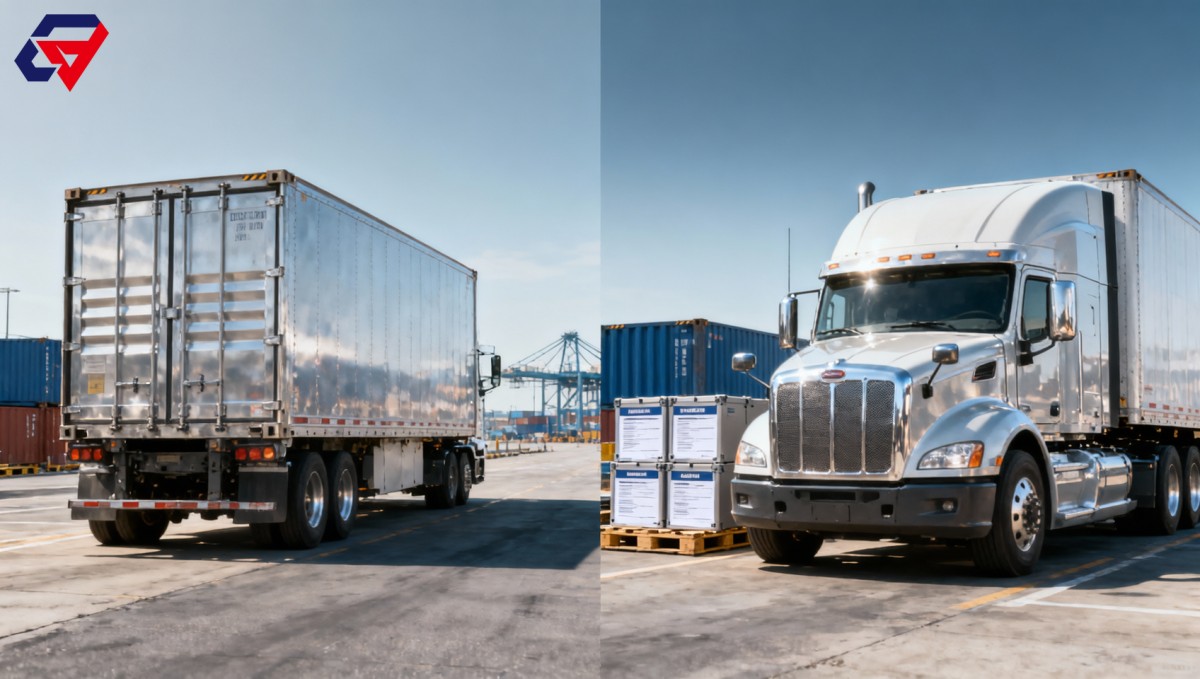
What the June 4 ruling confirms
According to the provided information, the CBSA issued a final anti-dumping and countervailing determination on June 4, 2026 covering truck bodies from China. Most exporters were assigned anti-dumping duties of up to 257.1%, along with an unlisted countervailing duty. The same information states that Qingdao CIMC was not kept in the countervailing case because its subsidy margin was assessed at 0.9%, which was treated as minimal.
The confirmed outcome is therefore not only a tariff issue in principle, but a finalized trade remedy decision that takes effect from the stated date. The supplied summary also makes clear that the ruling has immediate relevance for procurement cost, customs processing, and supply continuity for buyers serving the North American market.
Where the pressure is likely to be felt first
Import purchasing decisions face a direct cost reset
From an industry perspective, importers and buyers are the first group likely to feel the effect, because the ruling changes the cost basis for truck bodies sourced from China. The most immediate business impact is likely to appear in quotation review, supplier comparison, and order viability, especially where procurement plans were built on pre-ruling assumptions.
Customs and compliance functions move to the foreground
Observably, customs compliance teams and trade service providers will need to pay closer attention to how suppliers are identified, how shipment documents are prepared, and how product classification and supporting records are handled. The provided information specifically points to clearance compliance as an affected area, which means documentation discipline and eligibility assessment now become more operationally important.
Supply chain planning may become less stable
For supply chain managers, the issue is not limited to tariff exposure alone. The summary indicates possible effects on supply chain stability, suggesting that sourcing continuity, shipment scheduling, and fallback supplier planning may all require review. This is especially relevant for businesses that depend on a narrow pool of Chinese truck body suppliers for North American demand.
Chinese exporters face a sharper screening process
For exporters, the ruling is also a market-access issue. What deserves closer attention is that overseas buyers are being pushed to reassess supplier qualifications, certification paths, and alternatives. That means commercial discussions may shift away from price alone and toward document readiness, product eligibility, and the credibility of compliance support.
What companies should review now
Check supplier status and case-specific exposure
Analysis shows that companies sourcing from China should first distinguish between suppliers covered by the broader high-duty outcome and any supplier with different treatment in the provided ruling summary. This matters because purchasing decisions, costing, and negotiation positions may vary depending on the supplier involved.
Revisit documentation and certification pathways
The provided information highlights certification pathways as a practical concern. Companies should therefore focus on whether supplier qualifications, supporting records, and compliance materials are sufficient for customs review and customer assurance, rather than treating the ruling only as a pricing issue.
Separate legal outcome from operational execution
It is more appropriate to understand this as both a finalized trade measure and an operational challenge. Even where the legal decision is already in effect, actual business impact will depend on how companies handle landed-cost recalculation, shipment planning, document control, and customer communication.
Prepare alternatives before disruption appears
From a business continuity perspective, overseas buyers may need to reassess alternative sourcing options and internal contingency plans. The key point is not to assume that an existing supplier structure will remain workable under the new duty environment without further review.
Why this reads as more than a short-term pricing issue
As an editorial observation, this development is better understood as a clear trade-policy signal rather than a temporary market fluctuation. The ruling is already final as of June 4, 2026, so the immediate issue is not whether a measure might arrive, but how market participants adapt to a materially different import and compliance environment.
At the same time, it would be premature to treat every downstream consequence as fully settled. Analysis shows that companies still need to watch how buyers, suppliers, and service providers adjust their qualification reviews, certification decisions, and sourcing structures in response to the ruling.
How the market may need to interpret it
In practical terms, this news is most usefully read as a confirmed policy outcome with ongoing operational implications. It points to near-term pressure on cost and customs handling, while also signaling a broader need for North America-facing businesses to examine supplier resilience and compliance preparedness. A cautious reading is more appropriate than a sweeping one: the ruling is definitive, but its full commercial effects will unfold through procurement, clearance, and supply chain decisions.
Basis of this article
This article is based on the user-provided news title, event date, and event summary concerning the CBSA final ruling effective June 4, 2026 on truck bodies from China. For this type of industry update, commonly relevant source categories may include official government notices, company statements, industry association releases, authoritative media reporting, and standard-setting or trade-related documents.
No specific official source link was provided in the input, so the exact original notice link still requires ongoing verification. Any subsequent clarification in official wording, scope interpretation, supplier treatment, certification requirements, or related implementation details should continue to be monitored.
NAVIGATION
Send Us A Message