


News
Explore what’s going on around the industry and get the latest from the world of heavy equipment and earth-moving.
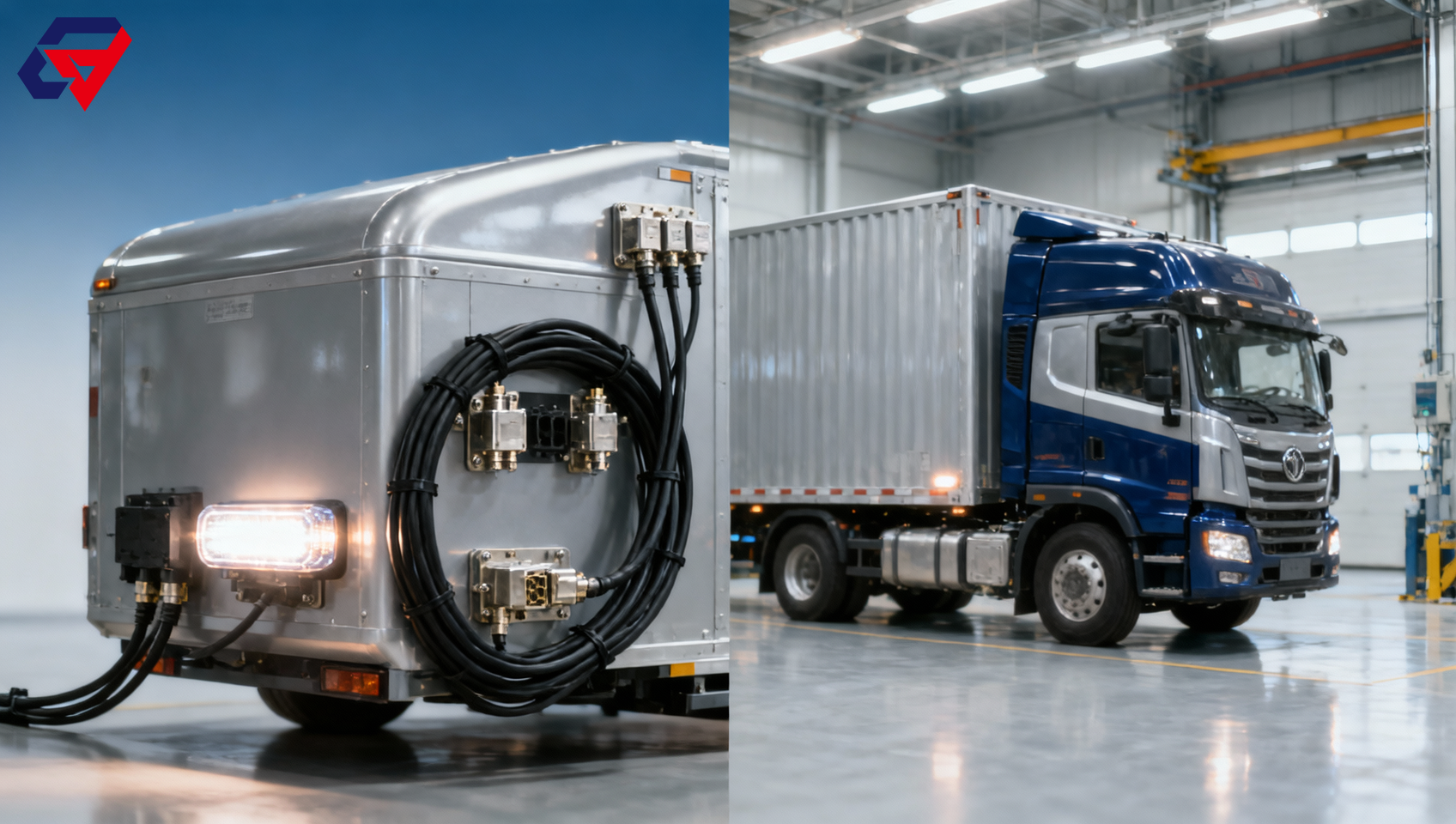
China Heavy Duty Auto Group Jining Commercial Vehicle Co., Ltd. has initiated a recall of 25 box-type transport vehicles produced between December 2024 and March 2026, citing defective side marker lamp wiring that may impair vehicle contour recognition during nighttime operation. The recall—filed with China’s State Administration for Market Regulation (SAMR) on May 9, 2026—carries implications for exporters and after-sales liability in markets with stringent lighting compliance requirements, particularly the Middle East and Southeast Asia. Direct trade enterprises, OEM suppliers, and regulatory compliance teams should monitor this case closely as it signals tightening enforcement of functional safety in exported commercial vehicles.
Event Overview
On May 9, 2026, China Heavy Duty Auto Group Jining Commercial Vehicle Co., Ltd. filed a recall with the SAMR Recall Center concerning 25 units of box-type transport vehicles manufactured from December 2024 to March 2026. The root cause is identified as poor connection in the side marker lamp wiring harness, posing a risk of contour visibility failure during night driving. The recall notice is publicly accessible via the official SAMR platform (samrdprc.org.cn), which also provides an English-language query channel for overseas users.
Industries Affected by This Recall
Direct Export Trading Enterprises
These enterprises are directly exposed to market access risks: vehicles already shipped or pending delivery to the Middle East and Southeast Asia may face customs rejection, re-inspection, or mandatory retrofitting if non-compliant lighting systems are detected during local type-approval or roadworthiness checks. Liability for remediation—including logistics, labor, and parts—may fall on the exporter depending on contractual terms and local regulatory interpretation.
OEM Suppliers & Tier-1 Component Manufacturers
Suppliers providing wiring harnesses, lamp assemblies, or integration services for Jining’s box truck platform may face upstream audit requests or technical verification demands. Even if not named in the recall, their component traceability records and production batch documentation could be subject to review by the OEM or national regulators under China’s Regulations on Defective Automobile Product Recall.
After-Sales & Warranty Service Providers
Authorized service networks—especially those operating in export markets—must prepare for potential field corrective actions. Since the defect relates to wiring integrity rather than part failure, diagnostics and repair protocols will require trained technicians and validated procedures, not just replacement parts. Service providers without documented experience in lighting system compliance validation may face delays in authorization for recall-related work.
What Relevant Enterprises or Practitioners Should Focus On
Monitor Official Updates from SAMR and Destination-Market Authorities
Track both the SAMR’s public recall database and parallel notifications issued by import-regulating bodies in target markets (e.g., UAE’s ESMA, Thailand’s TISI). Differences in defect classification—e.g., whether the issue is treated as a ‘safety-critical’ vs. ‘conformity’ item—will affect enforcement timelines and penalties.
Review Production Batches and Export Documentation for Overlap
Enterprises exporting similar chassis or body configurations should cross-check manufacturing dates, wiring harness supplier IDs, and installation sequences against the recalled batch range (Dec 2024–Mar 2026). Even minor design variants do not exempt units from scrutiny if shared subsystems are involved.
Distinguish Between Regulatory Signal and Operational Impact
This recall affects only 25 units and targets a specific wiring interface—not a systemic platform flaw. However, observably, it reflects growing SAMR emphasis on functional verification of lighting systems beyond basic photometric testing. It is not yet indicative of broad-based model-level recalls, but serves as an early signal for enhanced pre-shipment conformity assurance.
Prepare Technical Documentation and Corrective Action Protocols
Manufacturers and exporters should verify availability of updated wiring diagrams, torque specifications for lamp harness connectors, and technician training materials. Where applicable, draft internal non-conformance reports and update FMEA documents to reflect this failure mode—particularly for export-bound lots undergoing CCC + GCC/ASEAN certification pathways.
Editorial Perspective / Industry Observation
Analysis shows this recall functions less as an isolated quality incident and more as a procedural benchmark: it is one of the first publicly documented cases where SAMR explicitly links a wiring harness interface defect—not component malfunction—to nighttime visibility risk under its functional safety assessment framework. Observably, the inclusion of an English-language overseas query portal signals intent to align domestic recall transparency with international expectations, especially for markets requiring third-party conformity statements. From an industry perspective, this case underscores that lighting system compliance is evolving from static photometry checks toward dynamic integration validation—making harness routing, connector retention force, and environmental sealing newly material criteria in export readiness assessments.

This recall does not represent a systemic failure across Chinese commercial vehicle exports, nor does it imply immediate changes to national certification standards. Rather, it highlights a maturing enforcement posture focused on real-world functional performance—not just lab-measured parameters. For stakeholders, it is better understood as a calibration point: a reminder that incremental improvements in subsystem integration now carry measurable regulatory weight in high-compliance export corridors.
Source: State Administration for Market Regulation (SAMR) Recall Center (samrdprc.org.cn), official recall filing dated May 9, 2026. Note: Ongoing monitoring is advised for any updates to recall scope, technical remedy details, or related guidance issued by SAMR or destination-market authorities.
NAVIGATION
Send Us A Message