



News
Explore what’s going on around the industry and get the latest from the world of heavy equipment and earth-moving.
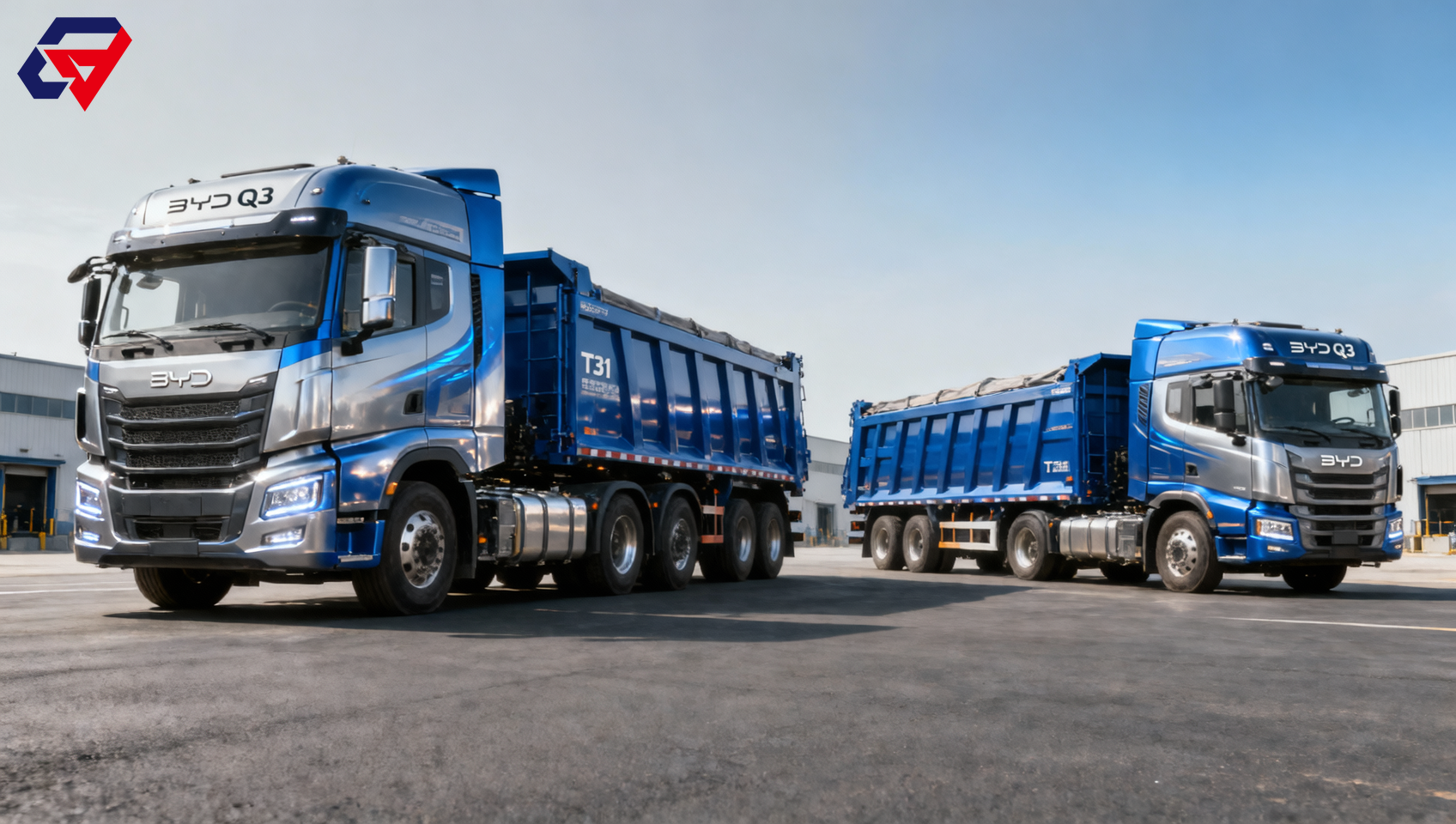
On April 24, 2026, BYD Commercial Vehicles signed a strategic order for 150 new-energy heavy-duty trucks with a logistics client in Hunan Province — marking a concrete step in the deployment of full-scenario green freight solutions across provincial logistics networks and infrastructure projects. This development is especially relevant for stakeholders in heavy-duty transport, logistics infrastructure, cross-border commercial vehicle export, and low-carbon port-to-city supply chain planning.
Event Overview
On April 24, 2026, BYD Commercial Vehicles finalized a contract in Changsha, Hunan, for 150 new-energy heavy-duty trucks. The order includes the Q3 pure-electric tractor and the T31 pure-electric rigid dump truck, intended for intercity trunk-line logistics and urban infrastructure construction operations within Hunan Province. This delivery batch validates BYD’s dual-track heavy-duty product strategy — covering both LNG and battery-electric platforms — through real-world operational verification by a provincial-level logistics group in China.
Industries Affected by Segment
Direct Export Trading Firms
This order signals growing readiness among overseas markets — particularly in Southeast Asia, the Middle East, and Latin America — to adopt standardized, China-developed green heavy-truck deployment models. Export traders active in commercial vehicles should note that such provincial-scale validations serve as de facto technical and service benchmarks for foreign procurement authorities evaluating fleet electrification.
Logistics & Freight Operators (Domestic & Cross-Border)
Regional logistics groups outside Hunan may face increasing pressure to benchmark their own decarbonization roadmaps against this verified use case. The integration of pure-electric tractors and rigid dump trucks into both long-haul and short-haul municipal workflows demonstrates functional interoperability — a key concern for operators assessing total cost of ownership and charging infrastructure compatibility.
Aftermarket & Local Service Providers
The mention of a ‘localized service interface’ implies that future international deployments will require coordinated support networks — including certified technicians, spare parts warehousing, and software-based fleet management integration. Service providers expanding into emerging markets should monitor whether BYD’s Hunan model becomes the baseline for OEM service partnership requirements abroad.
Port & Industrial Park Infrastructure Developers
Since the order is positioned as part of a broader ‘port–industrial park–urban’ low-carbon transport transition framework, developers involved in inland port terminals or eco-industrial parks may need to reassess EV charging capacity planning, depot layout standards, and grid connection specifications — all informed by actual duty-cycle data from this Hunan deployment.
Key Points for Enterprises and Practitioners to Monitor
Track official rollout timelines for overseas adaptation frameworks
Follow BYD Commercial Vehicles’ upcoming announcements on how the Hunan operational architecture — including energy replenishment protocols, maintenance intervals, and telematics integration — will be localized for specific regional regulations (e.g., GCC Type Approval, ASEAN vehicle standards).
Monitor tender criteria shifts in priority markets
Observe whether public-sector tenders in target regions (e.g., Saudi Arabia’s NEOM logistics contracts, Indonesia’s port electrification pilots) begin referencing operational validation metrics — such as uptime, payload retention over charge cycles, or cold-weather performance — derived from this Hunan deployment.
Distinguish between policy signaling and commercial readiness
While the order reflects progress in product validation, it does not indicate immediate scalability of financing models, battery recycling pathways, or second-life battery reuse systems in overseas contexts. Stakeholders should treat this as a technical reference point — not an assurance of turnkey market entry.
Prepare for localized service capability alignment
Commercial vehicle distributors and joint venture partners in Southeast Asia, the Middle East, or Latin America should proactively assess gaps in technician certification, high-voltage repair facilities, and remote diagnostics integration — aligning with the service interface standard implied by this Hunan agreement.
Editorial Observation / Industry Perspective
Observably, this order functions less as a standalone sales milestone and more as a structured field test for replicable green heavy-truck deployment logic. Analysis shows it formalizes a ‘verified use-case → modular service interface → regional adaptation’ pathway — one that reduces technical uncertainty for foreign buyers but does not eliminate regulatory, financial, or infrastructural hurdles. From an industry perspective, its significance lies in establishing a documented, province-level operational reference — not in volume alone. It is currently best understood as a signal of maturing system integration capability, rather than evidence of broad-market commercial traction outside China.
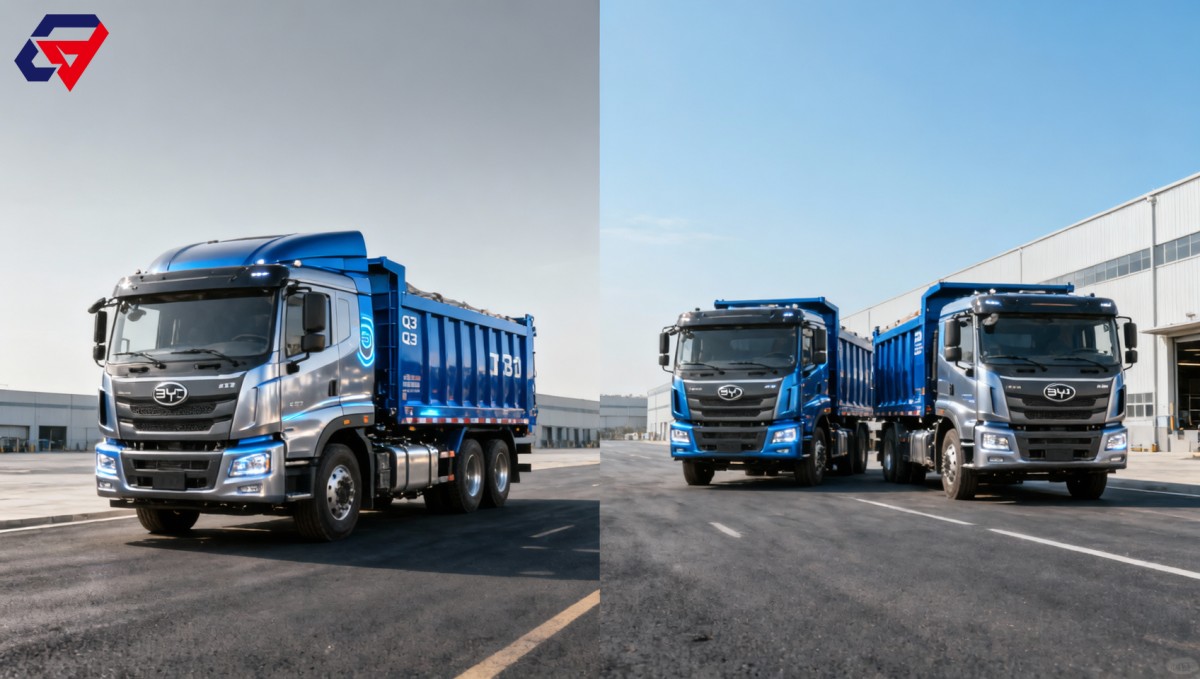
Conclusion: This agreement represents a calibrated expansion of real-world validation for new-energy heavy-duty trucks in complex domestic logistics environments — offering a reference architecture for overseas markets undergoing parallel port-to-city decarbonization efforts. It should be interpreted not as an immediate inflection point in global adoption, but as a tangible benchmark for assessing technical readiness, service scalability, and local adaptation requirements in targeted export corridors.
Information Source: Official announcement by BYD Commercial Vehicles (April 24, 2026); confirmed scope includes 150 units, Q3 and T31 models, Hunan Province deployment, and stated applicability to Southeast Asia, Middle East, and Latin America. Ongoing observation is warranted regarding actual overseas delivery timelines, service partner onboarding, and third-party operational performance reporting — none of which are confirmed at time of publication.
NAVIGATION
Send Us A Message