



News
Explore what’s going on around the industry and get the latest from the world of heavy equipment and earth-moving.

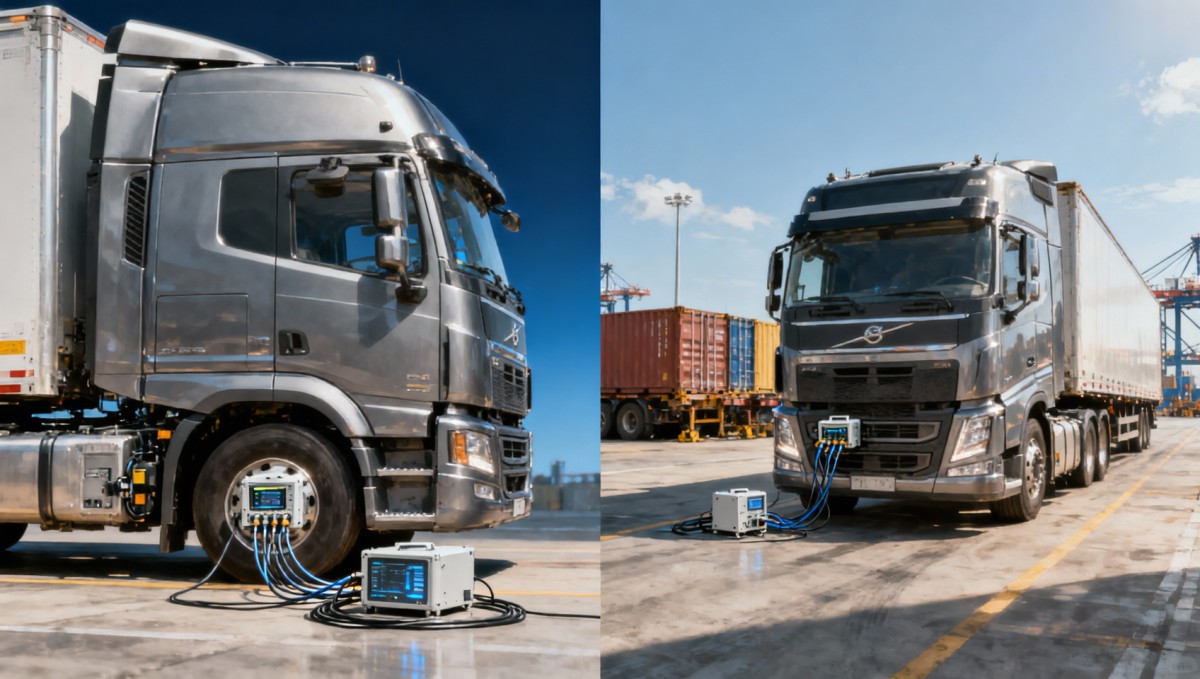
Effective August 1, 2026, Vietnam will require all imported heavy trucks with a GVW of 12 tons or more to be fitted in advance with an ISO 15031-compliant OBD-II remote diagnostic interface and data upload module, with VINASAT certification also required before import approval can be obtained. For heavy truck exporters, component suppliers, compliance teams, and logistics planners, this is a regulatory change worth close attention because it directly links vehicle configuration and certification readiness to market access.
What the Circular Requires
According to Circular No. 18/2026/TT-BGTVT, jointly issued by Vietnam's Ministry of Industry and Trade and Ministry of Transport, the requirement takes effect on August 1, 2026. It applies to all imported heavy trucks with a gross vehicle weight of at least 12 tons.
The rule requires these vehicles to be pre-installed with an OBD-II remote diagnostic interface and a data upload module that complies with ISO 15031. In addition, the vehicles must pass Vietnam's VINASAT certification. Vehicles that do not meet these requirements will not be issued an import license.
Where the Pressure Will Be Felt First
Export vehicle configuration moves to the front of the process
From an industry perspective, manufacturers exporting heavy trucks to Vietnam may be affected first at the product configuration stage. The new requirement is tied to pre-installation, which means compliance can no longer be treated as a late-stage documentation matter. ECU-related setup, diagnostic interface readiness, and module integration will likely become part of the export specification before shipment.
Localization work may expand for compliance and adaptation teams
Analysis shows the rule may raise the workload for teams handling market-specific adaptation. The user-provided information already indicates likely effects on ECU configuration, localization cost, and delivery schedules for Chinese heavy truck manufacturers exporting to Vietnam. In practice, the pressure point is not only hardware installation, but also whether the exported configuration aligns with the certification path required for import clearance.
Supply chain and delivery planning face timing risk
For trading companies, shipment coordinators, and supply chain service providers, the key issue is timing. If a truck is shipped without the required module installation or without certification readiness, the risk is no longer limited to rework cost; the vehicle may fail to obtain an import license. That makes compliance sequencing and document preparation more commercially sensitive than before.
What Companies Should Track Now
Check whether Vietnam-bound models already match the new hardware requirement
What deserves closer attention is whether existing export models for Vietnam already include an ISO 15031-compliant OBD-II remote diagnostic interface and data upload module as a standard or optional configuration. If not, the gap is not theoretical; it directly affects import eligibility after the effective date.
Separate technical readiness from license readiness
Observably, the rule contains both a technical requirement and a certification requirement. Installing a module is only one part of the issue. Companies should distinguish between having the correct in-vehicle configuration and being able to demonstrate compliance through the required VINASAT certification process, because import licensing depends on both.
Reassess lead times for orders close to the effective date
For sales, operations, and customer coordination teams, orders scheduled around or after August 1, 2026 deserve a closer review. The user-provided information indicates that delivery cycles may be affected, so contract timing, shipment windows, and customer communication should be checked against the new compliance steps.
Prepare supplier and documentation coordination earlier
For procurement and program management teams, this rule may shift attention upstream to module suppliers, ECU-related configuration partners, and compliance documentation workflows. It is more appropriate to understand this as a cross-functional execution issue rather than a narrow regulatory notice, especially where multiple suppliers contribute to the final export vehicle specification.
Why This Looks Like More Than a Short-Term Filing Change
Analysis shows this is not just an administrative adjustment at the border. The requirement connects import approval to onboard diagnostic and remote data-related hardware that must be installed before the vehicle enters the market. That gives the measure operational weight across engineering, certification, and export delivery.
At the same time, it is still more appropriate to understand the development as a defined regulatory signal rather than a basis for broad market conclusions. The confirmed facts establish a new compliance threshold for imported heavy trucks in Vietnam, but the wider commercial impact on exporters, suppliers, and service providers will still depend on how each company adapts its product and certification workflow.
How to Read the Development at This Stage
At this stage, the most balanced reading is that Vietnam has set a clear access condition for imported heavy trucks from August 1, 2026 onward. The immediate significance lies in compliance execution: pre-installation, certification, and import licensing are now directly linked. For industry participants, the issue is less about headline reaction and more about whether product configuration, supporting documents, and delivery planning are aligned in time.
In that sense, this should be read as a concrete regulatory change with practical short-term preparation needs, while its longer-term implications for export competitiveness and localization cost still require continued observation.
Basis of This Article
This article is based on the user-provided news title, event date, and event summary concerning Vietnam's new requirement for imported heavy trucks to carry pre-installed OBD-II remote diagnostic modules from August 1, 2026.
For developments of this kind, relevant source types typically include official government notices, corporate compliance disclosures, industry association updates, authoritative media reporting, and standards-related documents. A specific official source link was not provided in the input, so the underlying text and any subsequent implementation details should continue to be verified. Continued attention should focus on any further official clarification, certification guidance, and execution details that affect import licensing and delivery schedules.
NAVIGATION
Send Us A Message