



News
Explore what’s going on around the industry and get the latest from the world of heavy equipment and earth-moving.
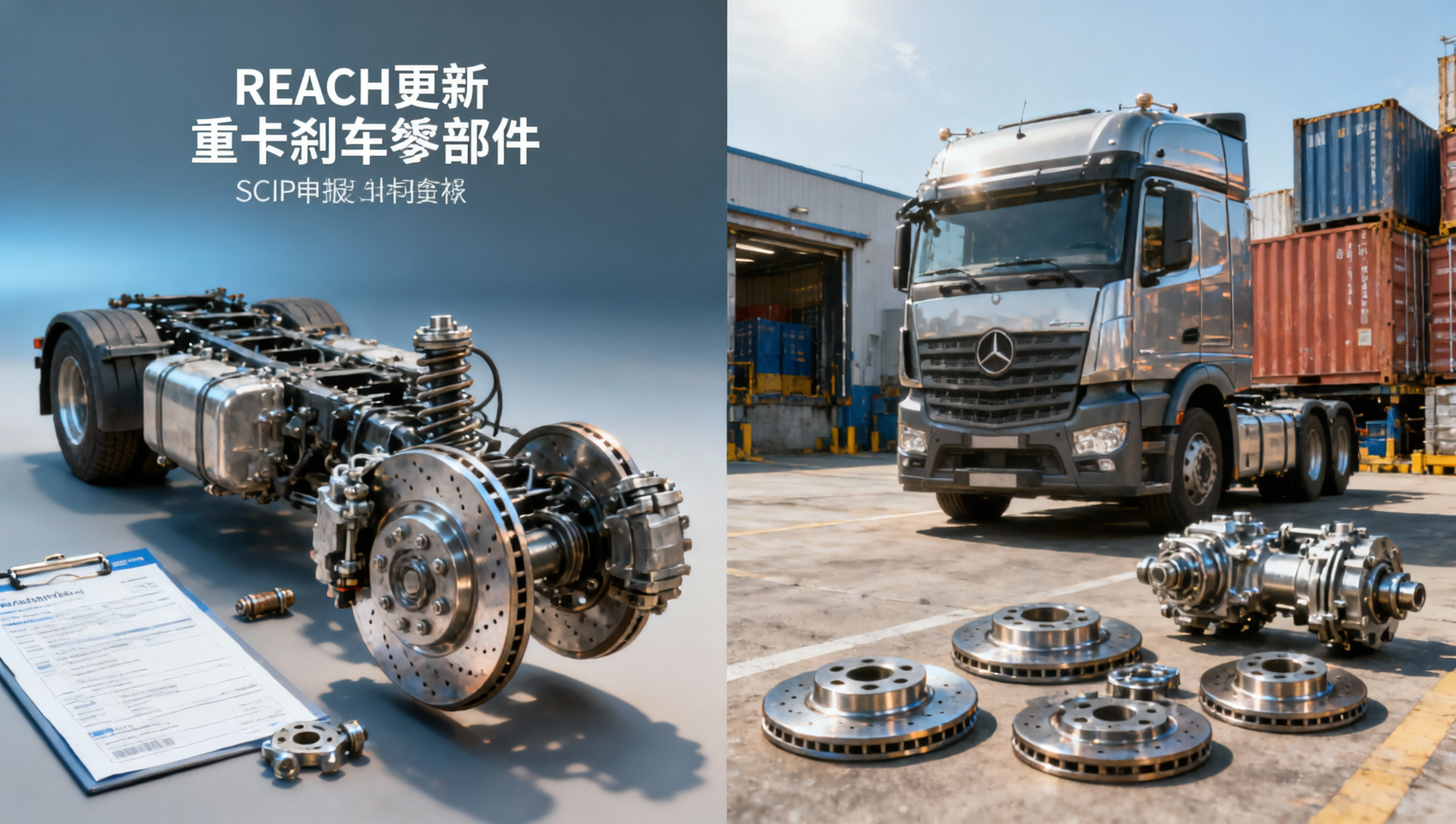
On July 11, 2026, the European Chemicals Agency updated the SVHC Candidate List by adding three phenolic resin derivatives used in commercial vehicle brake linings. Based on the information provided, this means heavy-duty truck braking system components containing these substances, including complete vehicles and spare parts exported to the EU, must complete SCIP database notification from October 1, 2026. The development deserves close attention from Chinese brake suppliers, vehicle exporters, and European distributors because the gap between the list update and the compliance date directly affects customs clearance, product availability, and preparation time across the supply chain.
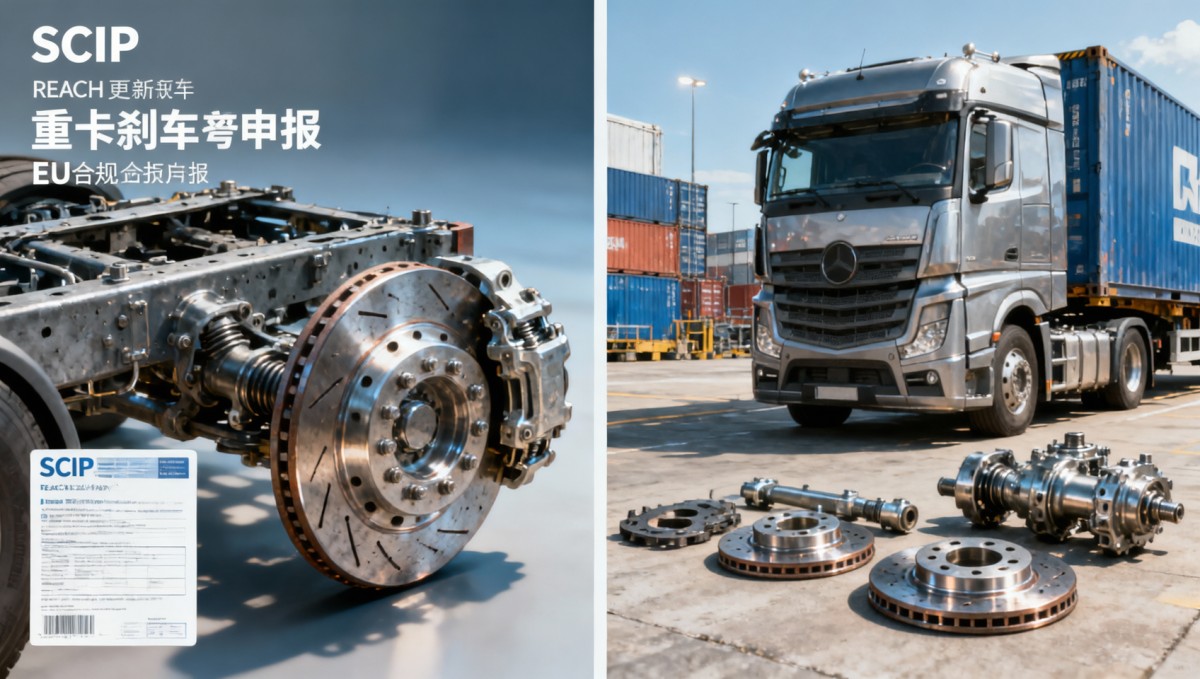
What Has Been Confirmed So Far
The confirmed facts are limited but commercially significant. ECHA updated the SVHC Candidate List on July 11, 2026, and the update added three phenolic resin derivatives used in commercial vehicle brake linings. According to the provided summary, from October 1, 2026, heavy-duty truck braking system components that contain these substances and are exported to the EU must be notified in the SCIP database.
The scope described in the input covers both complete vehicles and replacement parts. The compliance consequence stated in the same summary is also clear: failure to complete the required SCIP notification may lead to customs rejection and product withdrawal from the market.
Why the Impact Extends Beyond One Product Category
Brake component exporters face an immediate documentation issue
From an industry perspective, the most direct impact falls on companies exporting brake-related components for heavy-duty trucks. Their exposure is not limited to product formulation itself; it also sits in document readiness, shipment timing, and the ability to confirm whether the listed substances are present in affected brake system parts.
Vehicle exporters need to review assembly-level compliance
For exporters of complete heavy-duty vehicles, the issue is broader than one standalone part. If braking system components within the vehicle contain the listed substances, the compliance obligation described in the input applies to the exported vehicle as part of the overall product placed into the EU market. What deserves closer attention is how assembly-level exports depend on part-level substance information being available in time.
European distributors may face sell-through and listing pressure
European distributors and aftermarket channels are also within the affected business chain because the summary specifically mentions the risk of market withdrawal. This means the concern is not only inbound customs clearance but also whether products already prepared for sale, distribution, or replacement demand can remain commercially viable if SCIP-related compliance has not been completed.
Supply chain coordination becomes a timing problem
Observably, the short compliance preparation window matters to multiple parties at once: Chinese manufacturers need product substance visibility, exporters need submission readiness, and EU-side distributors need confidence that imported goods will not be blocked or removed. The issue is therefore both regulatory and operational.
What Companies Should Watch Now
Confirm which brake system items fall within the affected scope
Companies should first identify which heavy-duty truck braking system components, complete vehicle configurations, and spare parts may contain the newly listed substances. The practical concern is not abstract policy awareness but product-by-product screening tied to EU-bound shipments.
Separate list inclusion from submission completion
Analysis shows that the key operational distinction is between a substance being newly added to the SVHC Candidate List and the separate need to complete SCIP notification before export from the stated date. Businesses should avoid treating awareness of the update as equivalent to compliance completion.
Recheck supplier declarations and technical files
For manufacturers and exporters, supplier-facing verification becomes a priority. Current declarations, material information, and technical files related to brake linings and braking system components should be reviewed for consistency with the new listing and with the SCIP notification requirement described in the input.
Align customer communication with delivery planning
Because the stated risks include customs rejection and market withdrawal, customer communication should be tied to delivery commitments. Exporters, OEMs, and distributors need a shared understanding of which shipments may require updated compliance handling before October 1, 2026, especially where replacement parts and complete vehicles are both involved.
How This Development Is Best Understood
Analysis shows that this is more than a routine list update for affected brake products, because the provided summary links the SVHC change directly to a near-term SCIP notification obligation and explicit commercial risks. At the same time, it is more appropriate to understand this as a concrete compliance trigger rather than as a full forecast of long-term market outcomes.
Observably, the short-term issue is execution: identifying affected products, validating substance presence, and preparing submissions within the available timeframe. As a longer-term signal, the update suggests that chemical compliance for automotive components remains closely tied to market access in the EU, but the input does not support broader claims beyond that.
What This Means for the Industry Right Now
At this stage, the development is best read as an actionable regulatory change with immediate relevance for heavy-duty truck brake components entering the EU market. The confirmed impact is not a generalized shift across the entire automotive sector, but a specific compliance requirement that can disrupt trade if not handled in time. A neutral reading is that companies in the affected chain should treat the period before October 1, 2026 as a preparation window rather than a passive observation period.
Basis of This Article and Ongoing Verification
This article is based on the user-provided news title, event date, and event summary. The confirmed input states that ECHA updated the SVHC Candidate List on July 11, 2026, added three phenolic resin derivatives used in commercial vehicle brake linings, and that from October 1, 2026, affected heavy-duty truck braking system components exported to the EU must complete SCIP notification.
For this type of industry update, relevant source categories typically include official regulatory notices, company compliance statements, industry association updates, authoritative media reporting, and standard or regulatory documentation. No specific official source link was provided in the input, so the precise official publication path still requires follow-up verification. Continued attention should focus on any further official wording, scope clarification for affected components, and implementation details relevant to complete vehicles and spare parts.
NAVIGATION
Send Us A Message