



News
Explore what’s going on around the industry and get the latest from the world of heavy equipment and earth-moving.
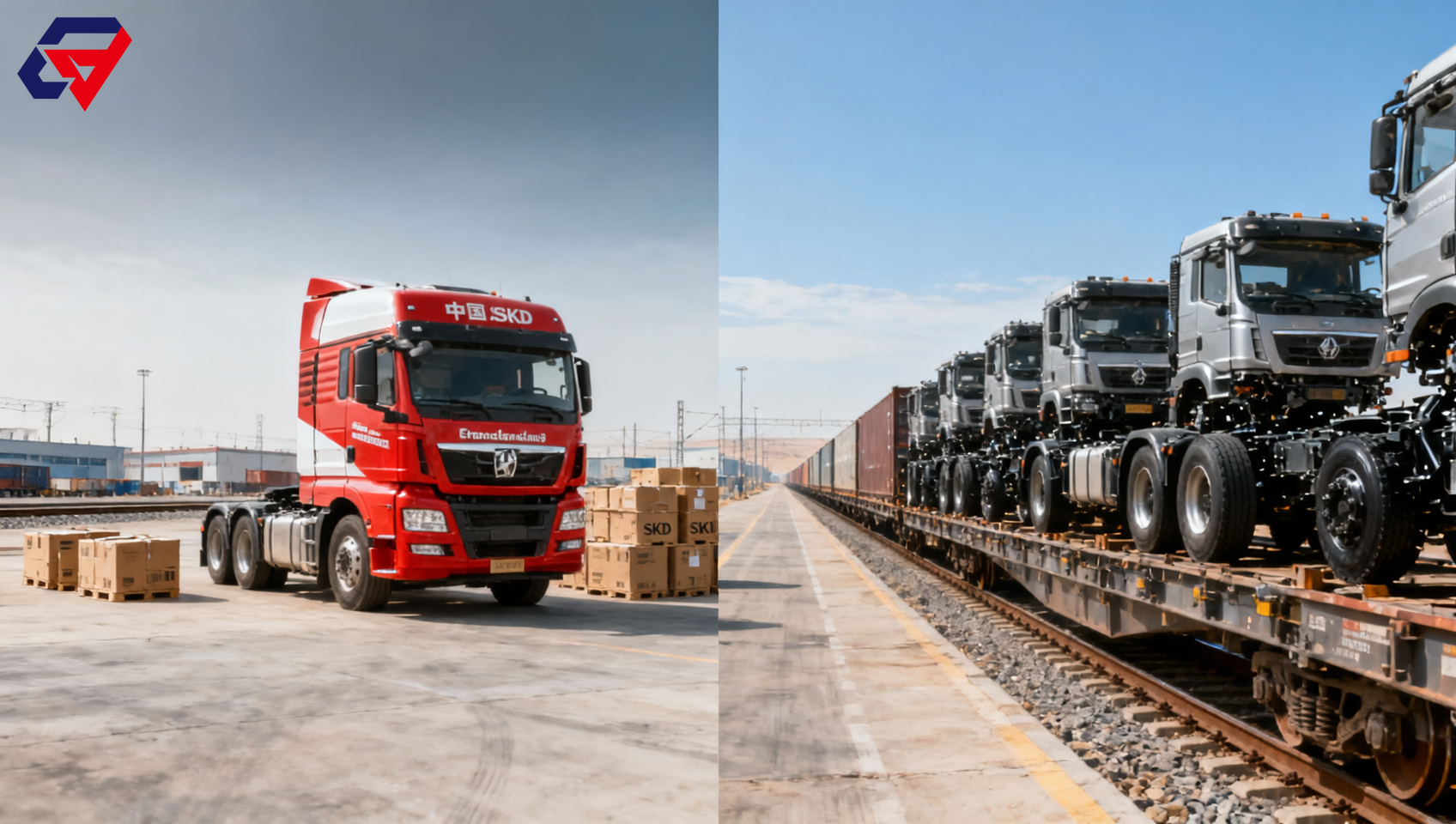
Amid ongoing Red Sea shipping disruptions, Chinese heavy-duty truck exporters have pivoted to an integrated land-sea logistics model—combining rail transport with bonded transshipment—to mitigate soaring freight costs and regulatory risks on key export routes to Europe and the Middle East.
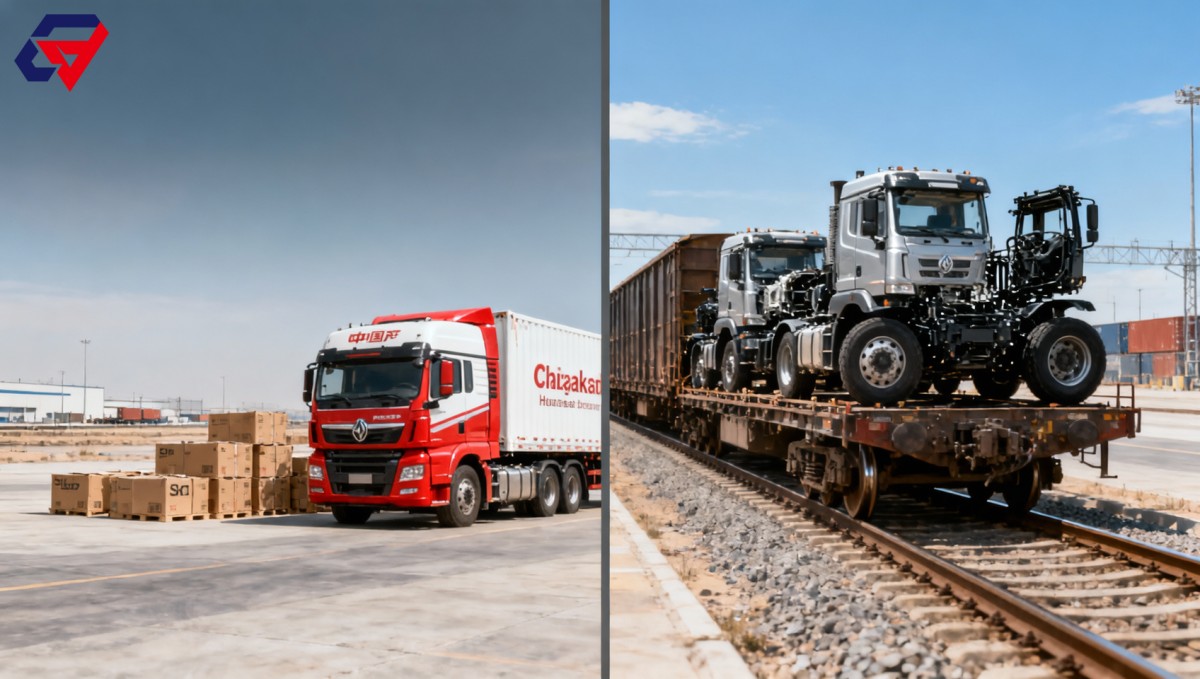
Event Overview
According to Shanghai Shipping Exchange data released on May 19, the spot rate for 40-foot containers dedicated to heavy-duty trucks on the Shanghai–Rotterdam route rose 12.3% week-on-week to USD 6,850 per TEU. This surge is primarily attributed to extended vessel delays on the Suez Canal route, where schedule reliability has deteriorated to a 41% delay rate due to rerouting around the Red Sea. In response, manufacturers including Shaanxi Automobile Group (Shaanxi Auto) and Foton Daimler have jointly partnered with China-Europe Railway platforms to establish bonded transshipment hubs in Khorgos (Kazakhstan) and Brest (Belarus). These hubs enable a delivery model featuring rail transport of knock-down (KD) kits, local assembly, and regional certification—reducing total lead time by 22 days versus traditional sea freight and helping avoid potential EU anti-circumvention investigations. Initial orders under this model have been confirmed by distributors in the Middle East and Eastern Europe.
Industries Affected
Direct Exporters (OEMs & Distributors)
Heavy-duty truck OEMs and their overseas channel partners face direct pressure from volatile ocean freight rates and extended delivery cycles. The new land-sea-bonded model shifts cost structure from variable ocean surcharges toward fixed rail tariffs and localized assembly overhead—but also introduces new compliance requirements related to customs valuation, origin rules, and post-assembly certification. For exporters, impact manifests as revised pricing strategies, tighter inventory planning, and increased coordination with inland logistics partners.
Raw Material & Component Procurement Entities
Suppliers of chassis frames, axles, cabs, and powertrain modules must adapt to segmented production flows: some components now ship in advance to bonded hubs for just-in-time assembly, while others remain staged at domestic plants for final integration. This bifurcation increases demand visibility complexity and may trigger earlier purchase commitments or dual-sourcing arrangements—particularly for parts subject to export controls or dual-use classification.
Manufacturing & Assembly Operators
Local assembly facilities in Kazakhstan and Belarus are not full-scale factories but certified semi-knocked-down (SKD) or KD assembly lines. Their role centers on mechanical integration, functional testing, and homologation support—not R&D or high-value machining. From an operational standpoint, this requires calibrated workforce training, adherence to host-country technical standards (e.g., ECE R100 for electric vehicles), and real-time traceability of component origins to satisfy EU market access conditions.
Logistics & Supply Chain Service Providers
Integrated logistics providers—including rail operators, bonded warehouse managers, and cross-border customs brokers—are seeing rising demand for end-to-end visibility across multimodal legs (domestic rail → CIS border crossing → inland bonded zone → local road delivery). Unlike pure ocean or rail forwarding, this model demands synchronized documentation handling (e.g., ATA Carnet for temporary admission of tooling, ATR.1 for EU-origin content), digital cargo tracking interoperability, and familiarity with bonded regime reporting obligations in third countries.
Key Considerations and Recommended Actions
Evaluate Bonded Hub Eligibility and Certification Pathways
Companies should verify whether their target transit jurisdictions (e.g., Kazakhstan, Belarus) offer bonded status compatible with SKD/KD assembly and confirm which vehicle certifications (e.g., UN ECE, GOST-R, GCC) can be completed locally without re-exporting for testing.
Reassess Origin Determination Under Preferential Rules
Under current EU trade frameworks, assembled units may not qualify for ‘originating’ status unless sufficient value addition occurs locally. Firms must conduct origin audits ahead of shipment—especially when importing critical subassemblies (e.g., engines, transmissions) from non-EU sources—to preempt anti-circumvention scrutiny.
Stress-Test Multimodal Schedule Reliability
While rail reduces average transit time, it introduces new dependencies: border clearance efficiency at Khorgos, rolling stock availability on the Brest–Warsaw corridor, and seasonal weather impacts on Central Asian rail infrastructure. Companies should build in buffer windows and map alternative routing options (e.g., via Poland or Lithuania) before committing to firm delivery dates.
Align IT Systems Across Jurisdictions
Real-time visibility hinges on interoperable data exchange between ERP systems (domestic), TMS platforms (rail operator), and customs management software (host country). Early integration pilots—especially for electronic cargo manifest submission and bonded inventory reconciliation—are strongly advised.
Editorial Perspective / Industry Observation
Observably, this shift reflects more than a tactical freight hedge—it signals a structural recalibration of how Chinese automotive exporters conceptualize ‘market proximity’. Rather than treating transit countries as passive corridors, firms are now investing in localized value-add capabilities that blur the line between logistics node and quasi-manufacturing base. Analysis shows that such models gain traction only when three conditions converge: predictable bonded regime enforcement, scalable certification reciprocity among partner markets, and stable intergovernmental rail agreements. Current developments in Central Asia suggest early-stage viability—but scalability remains contingent on diplomatic alignment and infrastructure investment continuity.
Conclusion
This land-sea-bonded pathway does not replace maritime exports; rather, it diversifies risk exposure and creates a parallel, regulation-resilient channel for time-sensitive or politically sensitive shipments. It is better understood as a strategic option set—not a wholesale transition—and its long-term relevance will depend less on short-term freight spikes and more on sustained policy coherence across Eurasian trade corridors.
Source Attribution
Data sourced from Shanghai Shipping Exchange (May 19, 2024); operational details confirmed via public statements by Shaanxi Auto and Foton Daimler; bonded hub implementation verified through China-Europe Railway Express Coordination Office disclosures. Ongoing monitoring is recommended for updates on EU Commission’s review of anti-circumvention measures targeting Chinese EV and commercial vehicle exports, as well as Kazakhstan’s draft amendments to Customs Code Article 217 governing bonded assembly regimes.
NAVIGATION
Send Us A Message