



News
Explore what’s going on around the industry and get the latest from the world of heavy equipment and earth-moving.
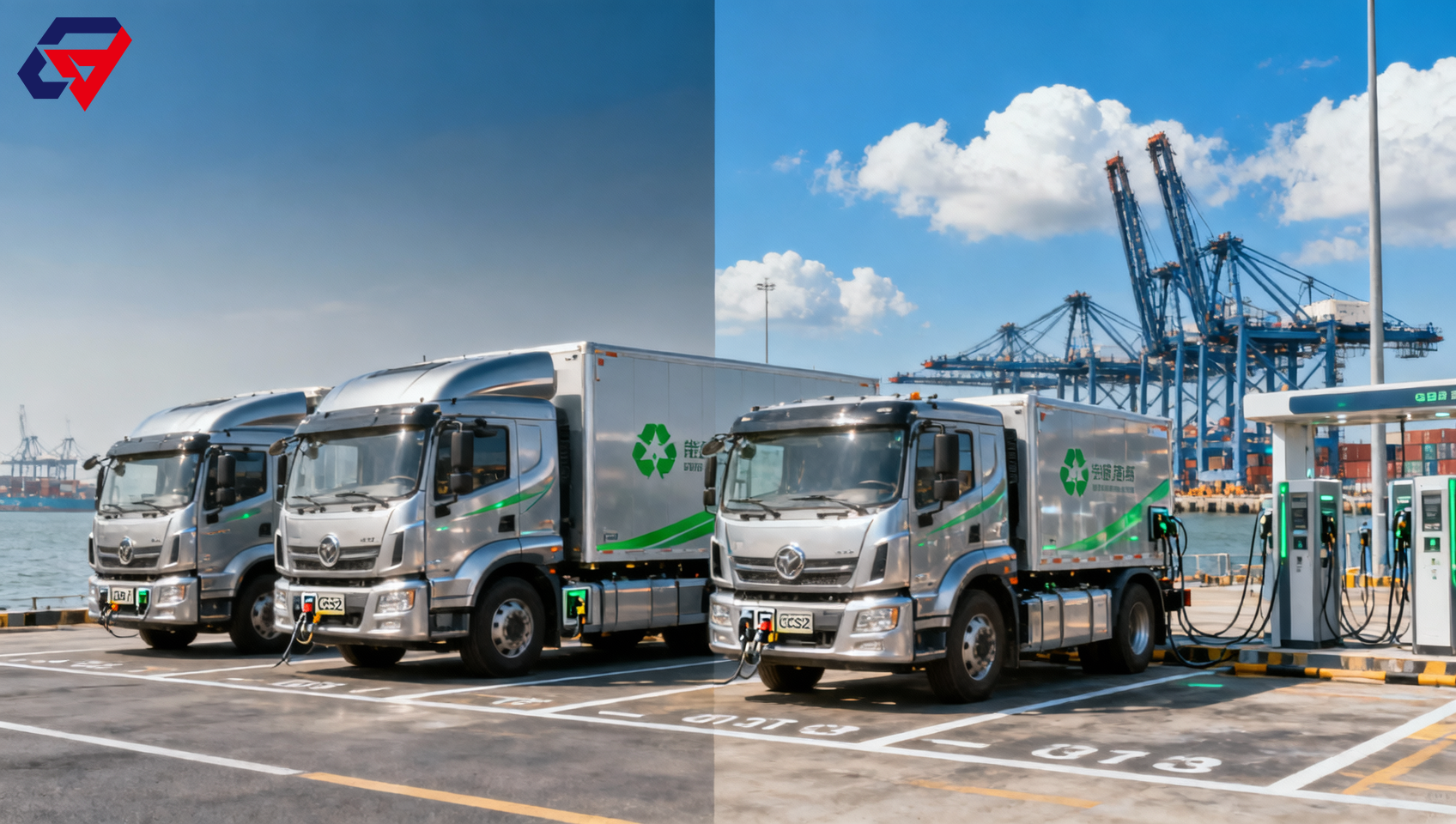
China has initiated construction of dedicated charging and battery-swapping hubs for new-energy heavy-duty trucks at three major foreign trade ports — Ningbo, Qingdao, and Guangzhou — following the joint issuance of the Support Scheme for Green Freight Infrastructure along International Logistics Corridors by the Ministry of Transport and the General Administration of Customs on May 7, 2026. The first phase is scheduled to enter operation in Q3 2026. This development directly impacts international freight forwarders, cross-border logistics operators, export-oriented manufacturers, and importers relying on port-to-warehouse short-haul transport — particularly those engaged in China–ASEAN and China–Europe rail-linked supply chains.
Event Overview
On May 7, 2026, China’s Ministry of Transport and the General Administration of Customs jointly issued the Support Scheme for Green Freight Infrastructure along International Logistics Corridors. The scheme announces the launch of dedicated charging and battery-swapping infrastructure for new-energy heavy-duty trucks at Ningbo Port, Qingdao Port, and Guangzhou Port. The first-phase facilities are set to begin operations in Q3 2026. The hubs will support both GB/T and international standards (CCS2 and ChaoJi), and will be integrated with the China–ASEAN and China–Europe Railway Express cross-border transport scheduling platforms.
Impact on Specific Industry Segments
Direct Trading Enterprises (Importers/Exporters)
These enterprises face reduced dwell time for overseas importers collecting cargo at Chinese ports — especially when using imported or EU-spec EV heavy-duty trucks. Compatibility gaps between charging interfaces have previously caused delays in post-clearance short-haul dispatch. With standardized, multi-standard charging access now embedded in key gateways, delivery predictability improves for time-sensitive consignments.
Supply Chain Service Providers (Freight Forwarders, 3PLs, Cross-Border Trucking Operators)
Operators managing last-mile or port-to-rail transfer legs must adapt fleet planning and scheduling logic. The integration with China–ASEAN and China–Europe Railway Express platforms implies real-time coordination between rail arrival windows and EV truck availability. Downtime due to incompatible charging protocols — a known bottleneck in current green-haul pilots — is expected to decline, affecting service-level agreements and KPI tracking.
Manufacturers & Assemblers Exporting EV Trucks or Battery Systems
Companies supplying EV heavy-duty trucks or batteries to China’s port logistics sector may see accelerated validation cycles for dual-standard (GB/T + CCS2/ChaoJi) compliance. However, this does not yet signal broad domestic adoption mandates — the initiative targets only specific port-based short-haul use cases, not nationwide fleet electrification.
What Relevant Enterprises or Practitioners Should Focus On
Monitor official implementation guidelines and interface certification timelines
The scheme outlines intent, but technical specifications, certification pathways for CCS2/ChaoJi compatibility, and operational SLAs remain pending. Stakeholders should track subsequent notices from the Ministry of Transport or provincial port authorities — especially regarding interoperability testing requirements and timeline adjustments for Q3 2026 go-live.
Assess exposure to ASEAN and China–Europe rail-linked port terminals
Impact is geographically and operationally constrained: only Ningbo, Qingdao, and Guangzhou are included in Phase I, and integration is explicitly tied to China–ASEAN and China–Europe Railway Express scheduling systems. Companies operating outside these corridors or relying on other ports (e.g., Shanghai, Shenzhen) should not assume immediate spillover benefits.
Distinguish policy signal from near-term operational readiness
While the May 2026 announcement signals strategic prioritization of green port logistics, Q3 2026 deployment remains an initial rollout — not full-scale coverage. Early adopters should verify hub commissioning status per port before adjusting vehicle procurement or subcontractor contracts.
Prepare contingency plans for transitional interface mismatches
Even with multi-standard support, field-level interoperability issues (e.g., communication protocol handshakes, billing system alignment) may persist during early operation. Logistics managers should confirm fallback options — such as temporary diesel-assisted shuttles or certified third-party swap providers — until stable uptime is verified.
Editorial Perspective / Industry Observation
Observably, this initiative functions primarily as a targeted infrastructure signal — not a market-wide mandate. It reflects a deliberate, corridor-specific approach to de-risking cross-border green logistics, rather than a broad electrification acceleration. Analysis shows that its value lies less in immediate capacity expansion and more in establishing technical and procedural precedents: standardizing interface compatibility across regulatory boundaries, aligning energy infrastructure with multimodal scheduling platforms, and reducing jurisdictional friction in transnational short-haul segments. From an industry perspective, it is better understood as a pilot framework with scalability potential — one whose success will likely inform future expansions to inland dry ports or additional maritime gateways.
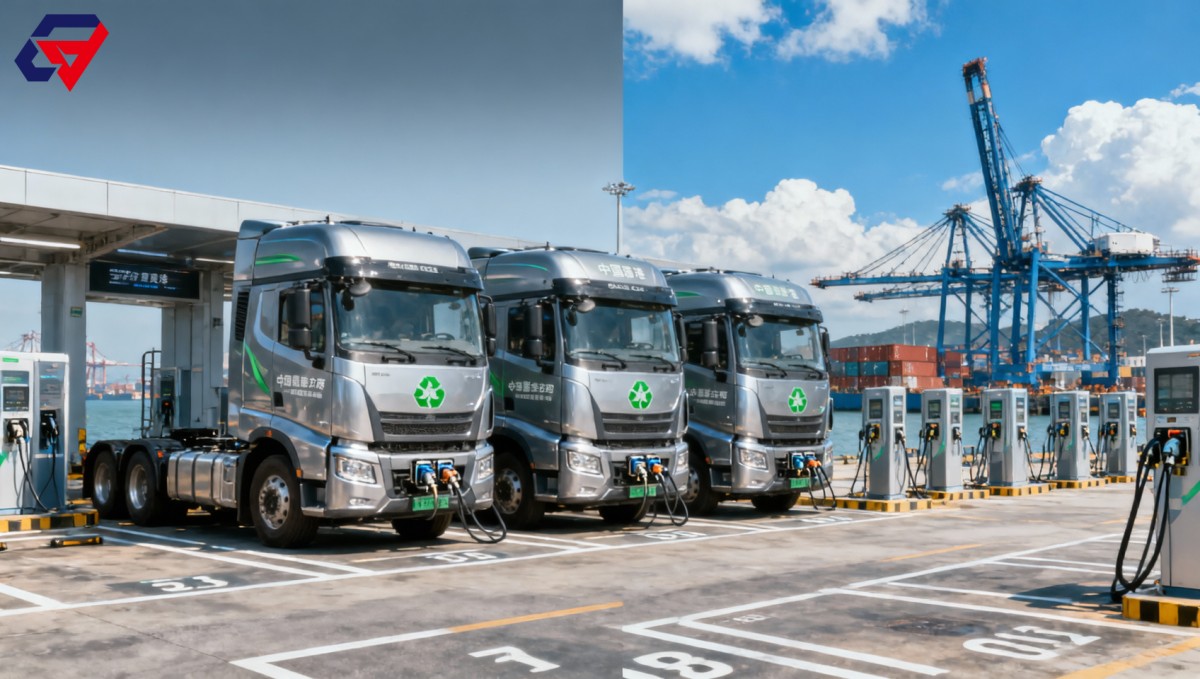
This development matters because it begins to close a critical gap: energy infrastructure that moves at the pace of global trade schedules, not just domestic policy calendars. Yet it remains narrowly scoped — both geographically and functionally — and should not be interpreted as evidence of imminent nationwide EV truck adoption mandates or rapid obsolescence of existing diesel fleets in port logistics.
Information Source: Official document issued jointly by China’s Ministry of Transport and the General Administration of Customs on May 7, 2026 — titled Support Scheme for Green Freight Infrastructure along International Logistics Corridors. Note: Technical implementation details, certification procedures, and exact Q3 2026 commissioning dates remain subject to further official announcements and require ongoing monitoring.
NAVIGATION
Send Us A Message