



News
Explore what’s going on around the industry and get the latest from the world of heavy equipment and earth-moving.
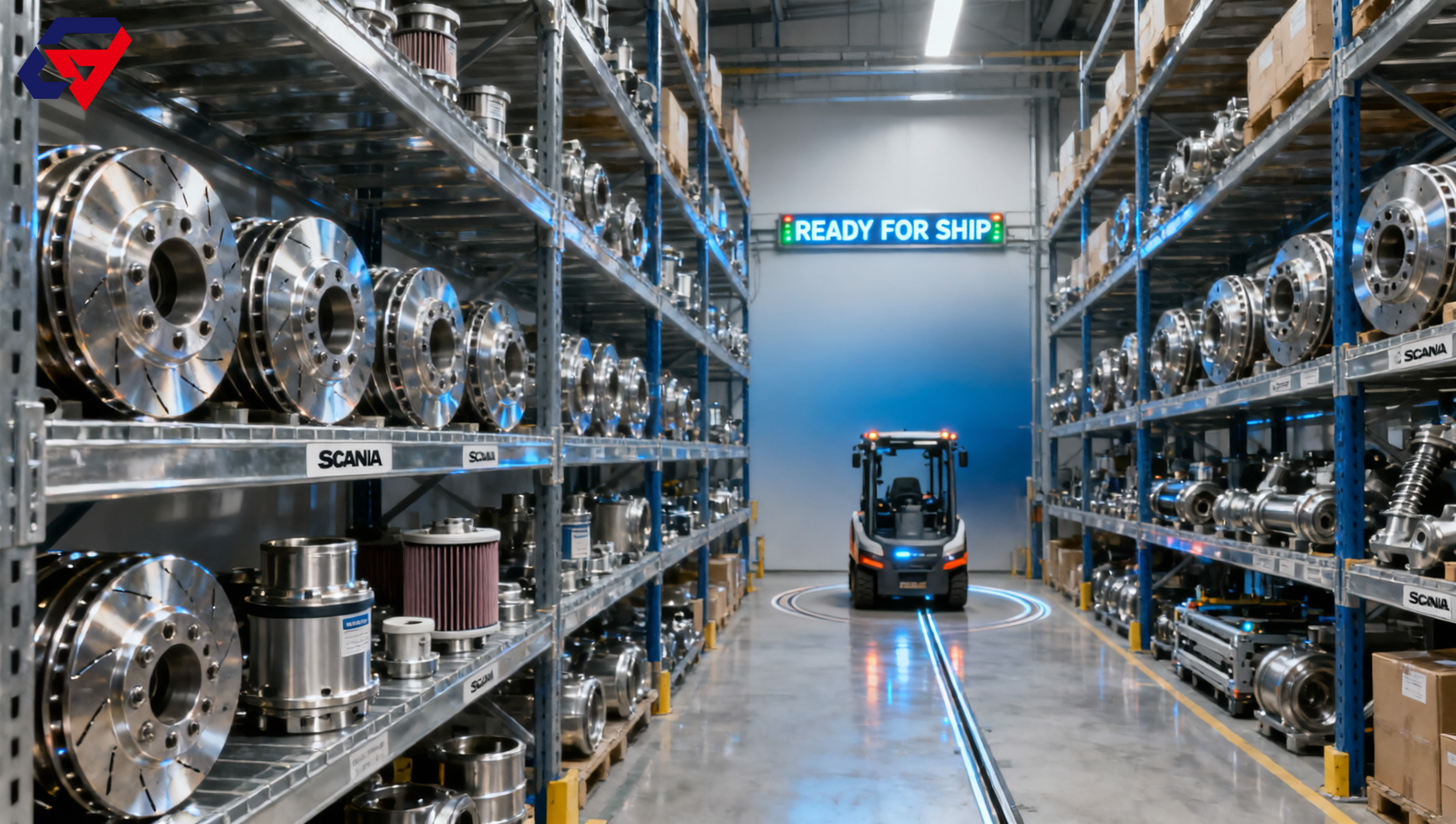
On April 22, 2026, NEXT ERA Heavy-Duty Trucks activated its independently operated China Parts Center — a development with tangible implications for international distributors, aftermarket service providers, and logistics operators serving emerging heavy-truck markets. The move signals a structural shift in parts availability assurance for imported heavy vehicles, particularly in regions where service infrastructure remains fragmented or geographically dispersed.
Event Overview
On April 22, 2026, NEXT ERA Heavy-Duty Trucks officially launched its China-based zero-component center. All parts distributed through this hub meet Scania’s global quality certification standards. The center operates in real-time coordination with NEXT ERA’s national service network in China and is pre-positioned one month ahead of bulk vehicle deliveries. Its stated objective is to enable overseas customers to receive vehicles with immediate access to certified spare parts — a ‘parts-ready-at-delivery’ model.
Impact on Specific Industry Segments
Importers and Distributors
Importers and distributors handling NEXT ERA vehicles — especially those operating in the Middle East and Latin America — face reduced uncertainty in after-sales support planning. Because parts are now centrally staged and quality-validated in China prior to shipment, inventory forecasting, warranty provisioning, and service-level agreement (SLA) commitments become more predictable. This directly affects working capital allocation and risk pricing for long-tail markets.
Aftermarket Service Providers & Authorized Workshops
Workshops and independent service centers supporting NEXT ERA fleets in import markets may experience improved first-time fix rates and shorter vehicle downtime — provided they integrate with the new parts dispatch protocol. However, access to the hub’s inventory and ordering interface remains contingent on formal alignment with NEXT ERA’s service network governance. The impact is therefore conditional, not automatic.
Logistics & Cross-Border Fulfillment Operators
Fulfillment partners managing parts distribution from China to regional hubs must adapt to tighter scheduling windows and standardized quality documentation requirements. The ≤28-day delivery target implies stricter adherence to cut-off times, customs pre-clearance readiness, and harmonized labeling aligned with Scania-certified specifications — not just NEXT ERA branding.
What Stakeholders Should Monitor and Act On
Track official rollout scope and eligibility criteria
Confirm whether the ≤28-day standard applies universally across all part SKUs or only to high-turnover items (e.g., brake pads, filters, suspension bushings). NEXT ERA has not disclosed SKU-level coverage; stakeholders should monitor official communications for tiered availability schedules.
Verify integration pathways for non-China-based service networks
Distributors outside China must determine how their local warehousing and dispatch systems will interface with the new hub — including API access, order minimums, lead-time buffers, and return protocols for unused certified parts. Early alignment reduces operational friction post-launch.
Distinguish between announced capability and actual throughput capacity
The activation date marks operational commencement, not necessarily full-scale capacity. Observably, initial volumes may be capped to validate quality control and logistics handoffs. Stakeholders should treat early performance data — not launch announcements — as the benchmark for planning.
Prepare documentation and compliance workflows for Scania-certified parts
Since all parts carry Scania’s global quality certification, importers and customs agents must ensure that commercial invoices, certificates of conformity, and packing lists explicitly reference Scania’s certification framework — not just NEXT ERA’s internal specs — to avoid clearance delays.
Editorial Observation / Industry Perspective
Analysis shows this initiative is less about expanding NEXT ERA’s manufacturing footprint and more about reengineering parts availability assurance — converting an unpredictable, reactive supply chain into a scheduled, quality-gated one. It functions primarily as an operational signal: a deliberate effort to de-risk procurement decisions in markets where total cost of ownership (TCO) sensitivity outweighs upfront price. From an industry standpoint, it reflects growing pressure on premium commercial vehicle brands to embed service readiness into the sales contract — not treat it as a post-purchase add-on. That said, its broader applicability hinges on scalability beyond current pilot markets and transparency in performance reporting.
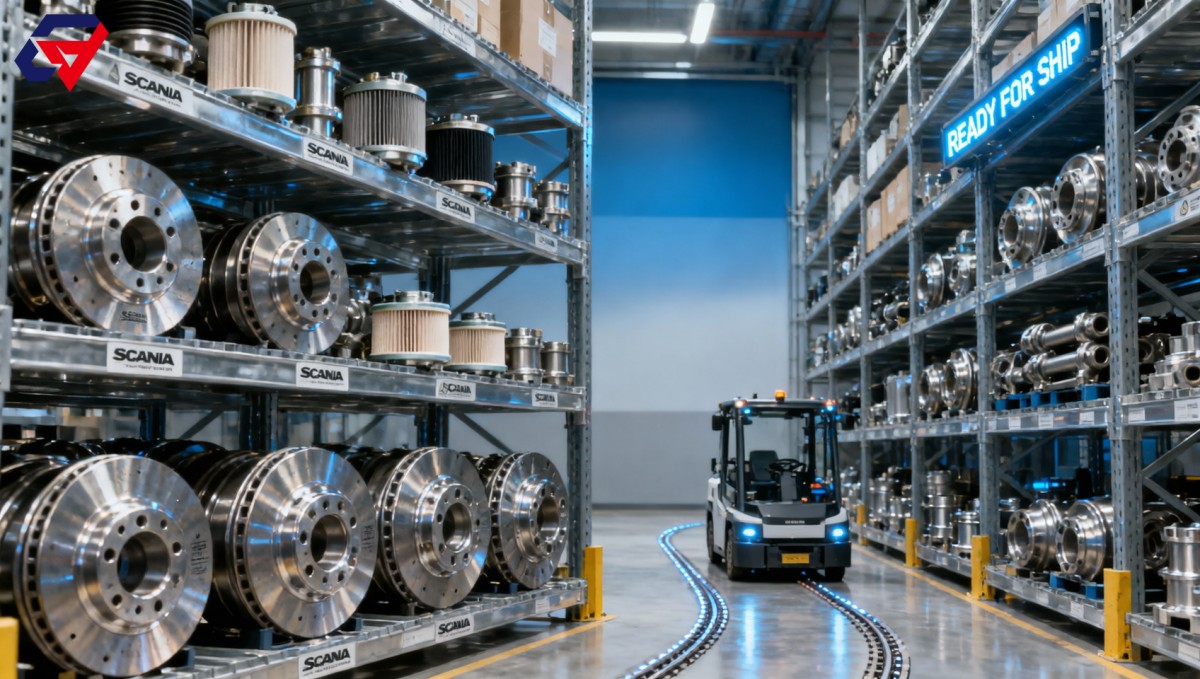
Conclusion: This development does not represent a wholesale overhaul of global heavy-truck parts logistics, but rather a targeted recalibration focused on delivery certainty and TCO predictability for specific customer segments. It is best understood not as a new standard for the entire industry, but as a contractual enabler — one that shifts some operational risk from end-market partners back to the OEM’s upstream supply infrastructure. Continued observation is warranted on whether similar models emerge among peers targeting comparable geographies.
Information Source: Official announcement by NEXT ERA Heavy-Duty Trucks, dated April 22, 2026. No third-party verification or performance metrics have been published to date. Ongoing monitoring of actual delivery cycle data and SKU-level availability remains necessary.
NAVIGATION
Send Us A Message