



News
Explore what’s going on around the industry and get the latest from the world of heavy equipment and earth-moving.
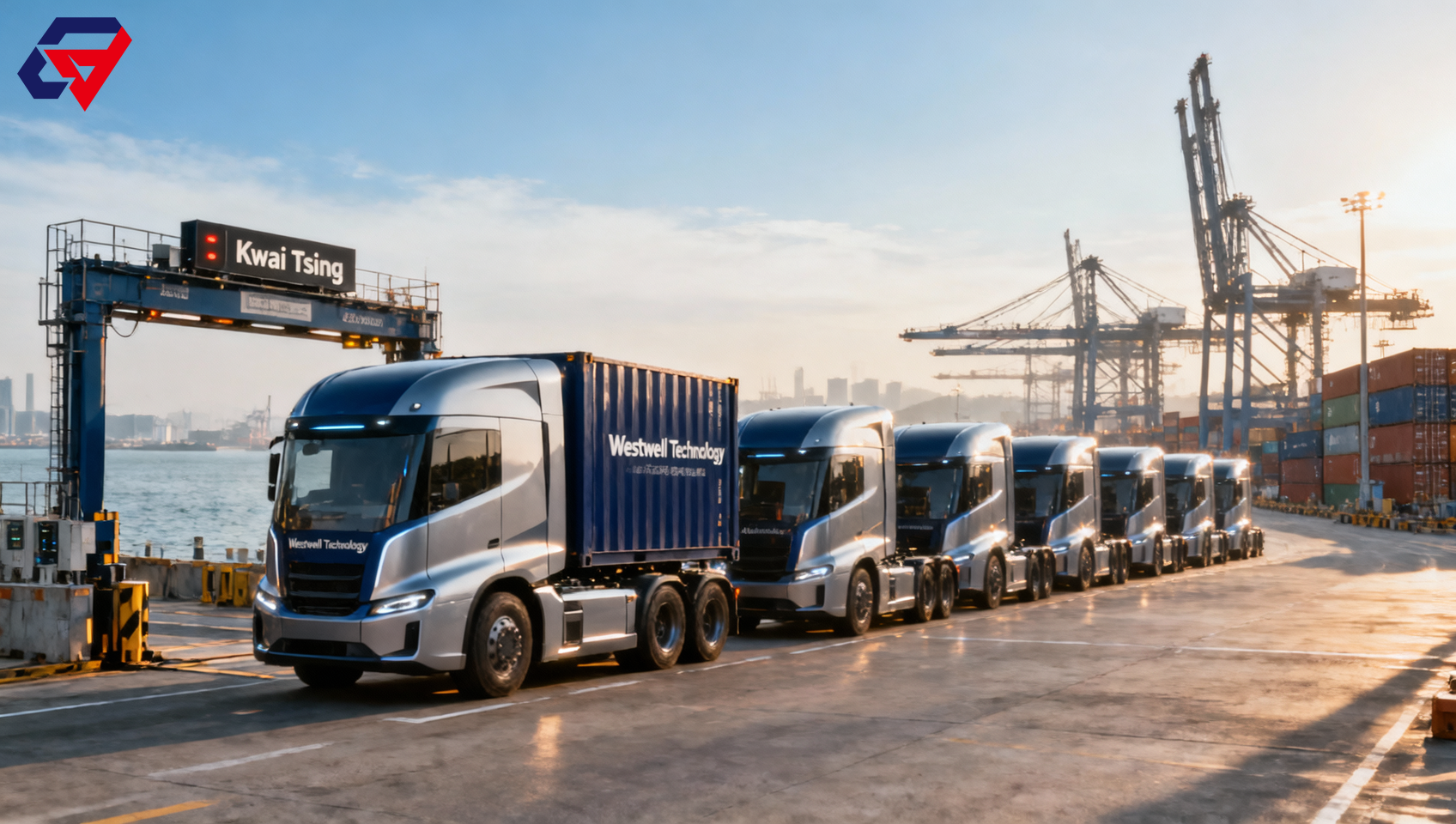
On April 21, 2026, the Kwai Tsing Container Terminal in Hong Kong officially deployed six driverless heavy-duty trucks (AT) developed by China’s Westwell Technology — the first such autonomous vehicles to enter operational service in Hong Kong. This development is particularly relevant for cross-border logistics providers, international importers relying on Hong Kong as a transshipment hub, and supply chain stakeholders serving Southeast Asia and the Middle East — where predictable, time-bound delivery of Chinese exports has long been constrained by manual labor dependencies and shift-based port operations.
Event Overview
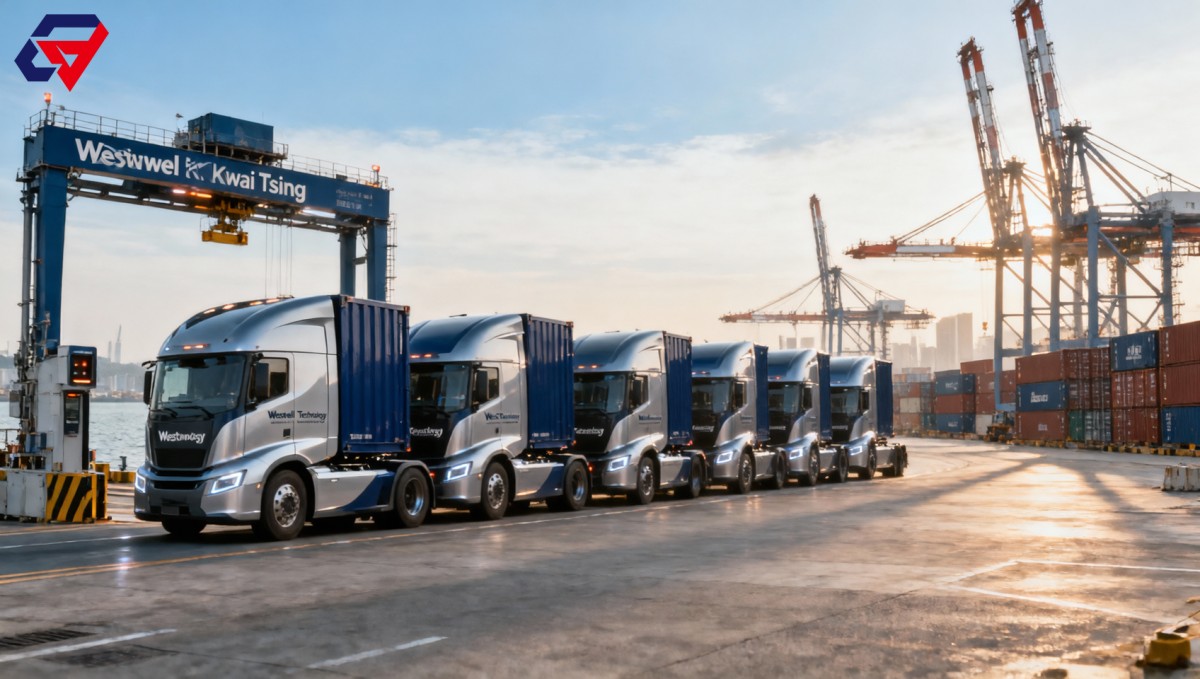
On April 21, 2026, six autonomous heavy-duty trucks (AT), manufactured by Westwell Technology and featuring no driver cabins, began 24-hour mixed-operation service at Kwai Tsing Container Terminal in Hong Kong. The system is integrated with the terminal’s central management system and AI-powered yard monitoring infrastructure, enabling seamless coordination with conventional manned vehicles.
Industries Affected
Direct Trading Enterprises
Importers and exporters handling China–Hong Kong–overseas cargo flows may experience reduced response latency for container pickup and delivery. Since the ATs operate around the clock and integrate with terminal scheduling systems, order-to-gate cycle times for export shipments could tighten — especially for time-sensitive consignments destined for transshipment via Hong Kong.
Supply Chain Service Providers
Firms offering inland haulage, customs brokerage, or bonded warehousing near Kwai Tsing may face revised service-level expectations. With more consistent vehicle availability and shorter container dwell times, clients may begin requesting tighter appointment windows or real-time gate slot visibility — increasing pressure on digital integration capabilities.
Manufacturers Relying on Just-in-Time Export Schedules
Export-oriented manufacturers — particularly those shipping finished goods to markets in Southeast Asia or the Middle East through Hong Kong — could benefit from improved predictability in vessel connection timing. Shorter container turnaround at the terminal reduces the risk of missed vessel cut-offs, though actual impact depends on upstream factory readiness and documentation processing speed.
Distribution & Logistics Operators Serving Regional Hubs
Logistics operators managing regional consolidation centers that feed into Hong Kong’s transshipment lanes may observe increased demand for synchronized inland transport planning. As terminal throughput becomes more stable, delays previously absorbed in yard dwell time may shift upstream — making synchronization between factory dispatch, trucking, and terminal gate entry more operationally critical.
What Relevant Businesses or Practitioners Should Monitor and Do Now
Track official scalability announcements from the Hong Kong Marine Department and terminal operator
The current deployment covers only six units in one terminal. Expansion plans — including fleet size, additional terminals (e.g., Stonecutters), or regulatory approvals for unattended night operations — will determine whether this remains a pilot or evolves into systemic capacity uplift.
Assess exposure to Hong Kong-dependent transit windows for key export markets
For businesses routing goods to Vietnam, Thailand, UAE, or Saudi Arabia via Hong Kong, map current average container dwell time and vessel connection reliability. Even modest reductions (e.g., 6–12 hours) in yard dwell can meaningfully improve on-time departure rates — but only if other handoff points (e.g., customs clearance, document submission) remain aligned.
Distinguish between infrastructure readiness and operational adoption
AI yard monitoring and system integration are confirmed; however, actual 24/7 utilization rates, maintenance downtime, and human–machine handover protocols remain unreported. Early adopters should treat current performance as indicative — not guaranteed — until at least three months of publicly verifiable uptime and incident data become available.
Review internal scheduling tools for compatibility with terminal API-driven slot allocation
Since the AT system connects to the terminal’s central management platform, future gate appointment systems may prioritize or require API-based booking. Firms using manual or legacy TMS platforms should assess integration readiness — not as a marketing upgrade, but as an operational prerequisite for maintaining access to priority slots.
Editorial Perspective / Industry Observation
Observably, this rollout functions less as a fully scaled transformation and more as a calibrated signal: it confirms Hong Kong’s commitment to digitizing core port infrastructure while testing regulatory and operational boundaries for autonomous freight movement in high-density maritime environments. Analysis shows that the immediate impact lies not in volume displacement — six trucks represent a negligible share of total terminal movements — but in the precedent set for interoperability, system integration, and regulatory tolerance. From an industry perspective, this is best understood as a threshold event: the first verified instance where autonomous heavy vehicles operate within a live, regulated port ecosystem alongside conventional traffic — under conditions that matter to global trade corridors.
It is not yet a benchmark for replication elsewhere, nor does it imply imminent automation of inland trunk routes. Rather, it marks the point where autonomous logistics transitions from closed-test validation to observable, context-specific operational coexistence — a milestone requiring sustained observation, not immediate strategic overhaul.
Current deployment remains narrow in scope but high in symbolic and technical significance. Industry stakeholders should monitor follow-up metrics — not just fleet count, but mean time between interventions, API adoption rate among carriers, and changes in average container dwell time reported by HKMT — as truer indicators of functional impact than headline unit numbers.
Conclusion
This initiative reflects an incremental, infrastructure-led step toward greater predictability in China–Hong Kong–overseas container logistics — not a sudden disruption. Its value lies in demonstrable system integration and regulatory alignment, not scale. For now, it is better understood as a stress test of port digitalization readiness than as a near-term productivity lever. Stakeholders are advised to track implementation fidelity over expansion speed — and to treat enhanced delivery predictability as conditional upon end-to-end process synchronization, not terminal automation alone.
Source Attribution
Main source: Official announcement by Kwai Tsing Container Terminal and Westwell Technology, dated April 21, 2026.
Areas requiring ongoing observation: Fleet expansion timeline, regulatory approval status for extended operating hours, and third-party verification of dwell time reduction metrics.
NAVIGATION
Send Us A Message