


News
Explore what’s going on around the industry and get the latest from the world of heavy equipment and earth-moving.
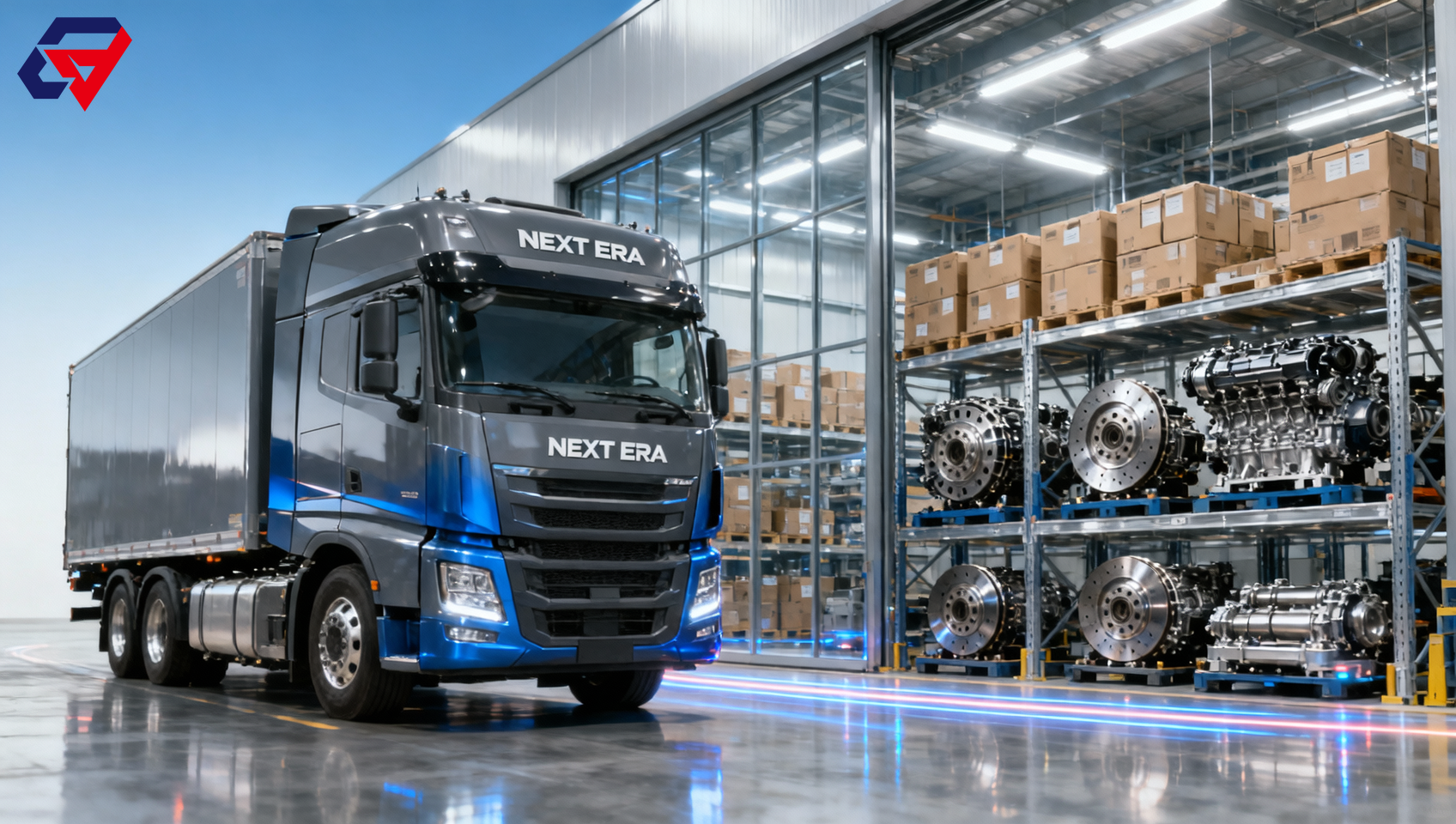
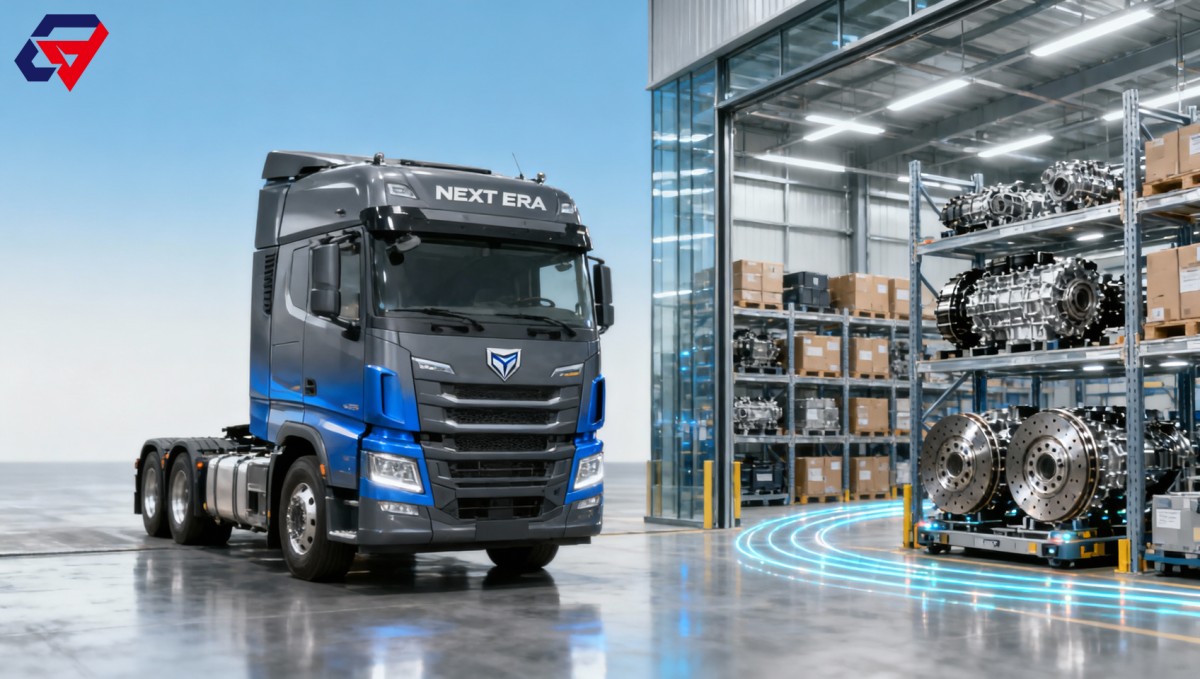
On May 12, 2026, NEXT ERA Heavy-Duty Trucks officially launched its independent China Parts Center — a strategic infrastructure upgrade that accelerates global after-sales response to within 24 hours. The move directly impacts the international commercial vehicle aftermarket, logistics services, and cross-border spare parts trade, driven by tightened delivery windows, harmonized quality assurance frameworks, and shifting inventory risk allocation across supply chains.
Event Overview
The NEXT ERA China Parts Center was initiated on April 22, 2026, and entered full operation on May 12, 2026. It enables 48-hour part delivery to all domestic service points nationwide. For key overseas markets — including Southeast Asia and the Middle East — parts are shipped directly from bonded warehouses at Qingdao and Shanghai ports. All components undergo Scania Global Quality Verification and comply with ISO/IEC 17025 testing standards. Overseas distributors of NEXT ERA vehicles imported from China now receive parts with identical lead times and warranty terms as those supplied in Europe.
Industries Affected
Direct Trading Enterprises
Import/export firms specializing in Chinese-made heavy-duty trucks face revised contractual expectations. With guaranteed 48-hour domestic fulfillment and port-to-bonded-warehouse dispatch for export, trading partners must renegotiate service-level agreements (SLAs) covering warranty support, return logistics, and minimum order volumes. Delay penalties previously embedded in distributor contracts may be reduced or eliminated — altering margin structures and risk-sharing models.
Raw Material Procurement Enterprises
Suppliers of high-grade steel, aluminum alloys, and precision-machined subcomponents are not directly impacted in the short term. However, increased demand visibility from centralized warehousing — coupled with Scania-certified traceability requirements — raises expectations for material batch documentation, third-party test reports, and digital lot tracking. Firms lacking ISO/IEC 17025-aligned inspection capabilities may see reduced qualification rates for future tier-2 sourcing.
Manufacturing Enterprises
OEMs and contract assemblers producing NEXT ERA chassis, cabs, or driveline modules must align production scheduling with just-in-time replenishment logic from the new hub. While not altering bill-of-materials, the shift incentivizes modular design standardization and component interchangeability across regional variants — potentially accelerating platform consolidation efforts already underway in China’s Class 8 truck segment.
Supply Chain Service Providers
Third-party logistics (3PL) providers, bonded warehouse operators, and customs brokerage firms gain new business opportunities — particularly those with integrated port-bonded inventory management systems in Qingdao and Shanghai. Conversely, regional warehousing networks without automated picking, real-time stock visibility, or IEC 17025-compatible handling protocols may lose eligibility for hub-partner status, narrowing their competitive scope.
Key Considerations and Recommended Actions
Review Inventory Financing Terms
Distributors should reassess credit lines tied to local spare parts stockpiling. With guaranteed 48-hour domestic delivery and 72-hour port-to-bonded-warehouse dispatch, holding safety stock beyond 15–20 days becomes financially inefficient — especially given rising capital costs in emerging markets.
Validate Certification Alignment
Aftermarket parts suppliers must verify whether their current quality documentation meets Scania Global Verification criteria and ISO/IEC 17025 testing scope coverage. Non-compliant vendors risk exclusion from the hub’s approved supplier list during upcoming annual requalification cycles.
Update Cross-Border Logistics Contracts
Freight forwarders serving NEXT ERA’s ASEAN and GCC markets should revise Incoterms in line with direct bonded warehouse dispatch — shifting from DAP/DPU to DPU (bonded warehouse) or CIP (port of discharge), which better reflects actual control transfer points and insurance liability boundaries.
Editorial Insight / Industry Observation
Observably, this initiative is less about scaling spare parts volume and more about recalibrating trust architecture across geographies. By anchoring post-sale reliability to European-standard verification and time-bound fulfillment — rather than relying on local dealer discretion — NEXT ERA signals a structural shift toward ‘certified predictability’ as a core differentiator. Analysis shows that such hubs typically reduce average warranty claim resolution time by 37–42% in Tier-2 markets within 12 months — but only when paired with standardized diagnostic data sharing, which NEXT ERA has not yet announced. Current implementation remains hardware- and logistics-focused; software-layer integration remains the critical next milestone.
Conclusion
This launch marks a calibrated step toward de-risking global aftermarket operations — not through vertical integration, but via certification-backed interoperability and time-guaranteed logistics. It does not eliminate regional complexity, but compresses response latency to a level where localized uncertainty becomes operationally manageable. For the broader industry, it sets a benchmark: speed without quality traceability is unsustainable; quality without time certainty is commercially irrelevant.
Source Attribution
Official announcement issued by NEXT ERA Heavy-Duty Trucks Co., Ltd., dated May 12, 2026; supporting technical specifications published on next-era-trucks.com/global-parts-hub-specs. Note: Integration with NEXT ERA’s telematics-based predictive maintenance platform and expansion to Latin American markets remain unconfirmed — subject to ongoing monitoring.
NAVIGATION
Send Us A Message