



News
Explore what’s going on around the industry and get the latest from the world of heavy equipment and earth-moving.
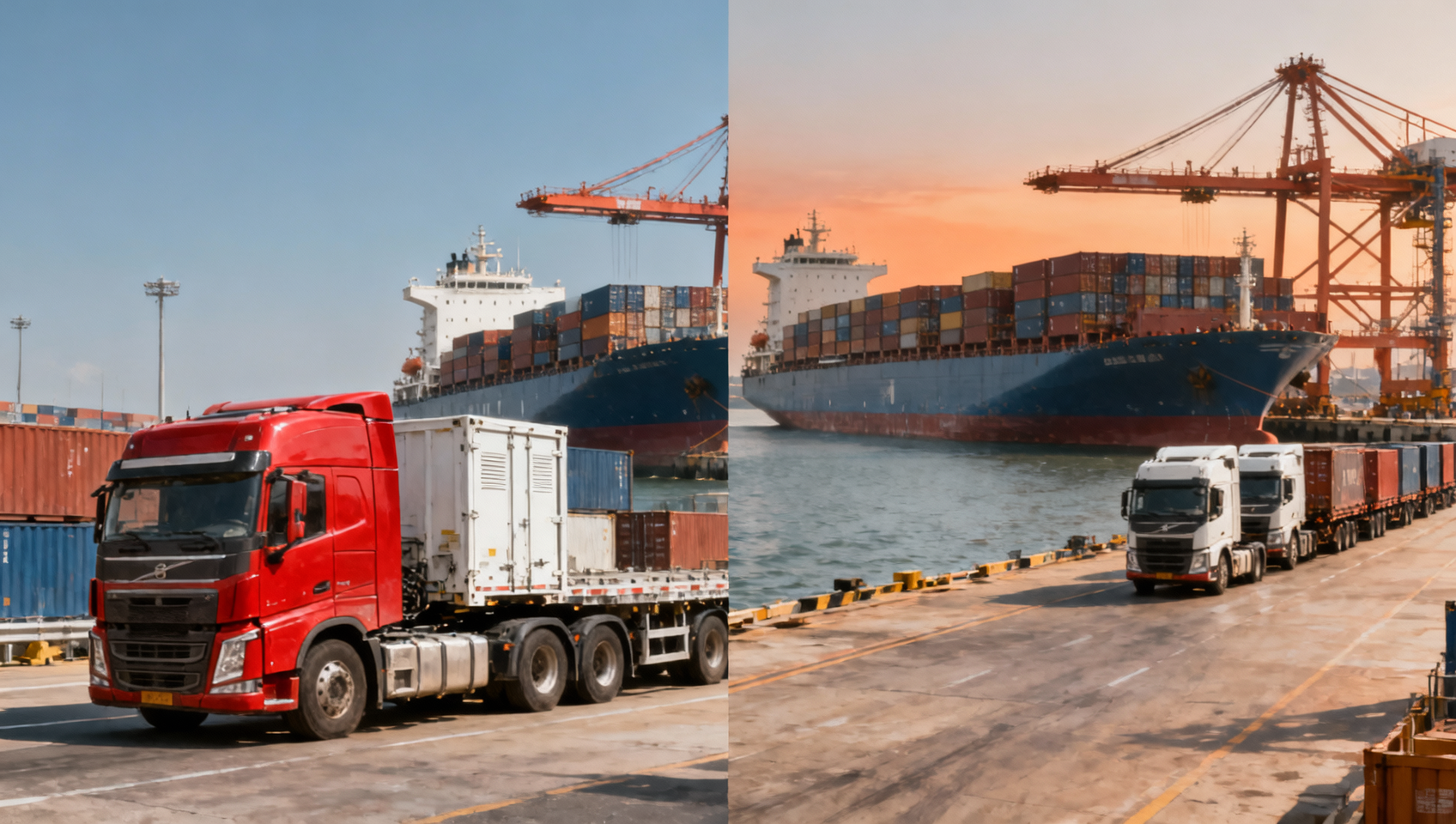
The timing of this development is not specified in the source input, but the latest slot notices referenced for the Shanghai-to-Jeddah heavy truck trade point to a material change in delivery execution rather than a routine freight fluctuation. For exporters, buyers, supply chain operators, and after-sales planning teams, the key issue is that a longer and less predictable sea route is now intersecting with port-yard congestion and customs delay, creating a practical trade-compliance and delivery risk that may affect contract timing, documentation readiness, procurement scheduling, and local fulfillment arrangements.

What the Latest Shipping Notices Confirm
According to the latest slot announcements cited from Maersk and COSCO Shipping, rerouting around the Cape of Good Hope on the Asia-Europe corridor has become a normalized operating arrangement under the current Red Sea situation.
For heavy truck vehicle shipments by ro-ro vessel from Shanghai Port to Jeddah Islamic Port in Saudi Arabia, the average voyage time has increased to 38 days. With yard congestion at Jeddah Port and customs clearance delays added, the overall delivery cycle has reached 52 days, which is 19 days longer than the 2025 average referenced in the input.
The same input also states that multiple Chinese heavy truck exporters have already activated contingency plans for local KD assembly in the Middle East to ease delivery pressure.
Where the Pressure Is Likely to Appear First
Export execution is becoming more document-sensitive
From an industry perspective, exporters are likely to feel the first impact in shipment planning and delivery commitments. When sailing time extends and port-side delay is added, any mismatch in customs paperwork, commercial documents, technical files, or delivery terms can translate more directly into missed handover windows. What deserves closer attention is not only transport duration itself, but whether existing export documentation and customer-facing delivery promises still match the revised route reality.
Procurement and inventory planning may need longer buffers
For buyers, distributors, and project-based procurement teams, the practical effect is a wider gap between ordering and usable delivery. Analysis shows that a longer transit cycle can affect replenishment timing, vehicle launch schedules, tender execution, and spare-parts coordination. In this context, companies should pay closer attention to lead-time assumptions written into purchase planning, inbound scheduling, and supplier communication records.
Supply chain service providers face stronger coordination demands
Shipping agents, logistics coordinators, and port-related service providers may be affected through more complex handoff management. Observably, once rerouting, yard congestion, and customs delay occur together, coordination risk shifts from a single freight issue to a multi-stage execution issue. This makes tracking accuracy, milestone visibility, and the completeness of supporting shipment files more important for day-to-day performance.
Local assembly planning raises a separate compliance watchpoint
The move by some exporters toward Middle East KD assembly is itself a signal worth watching. Analysis shows that once delivery pressure pushes companies toward localized assembly arrangements, attention may also shift toward how technical documentation, parts traceability, product consistency, after-sales responsibility, and any destination-market compliance expectations are managed in practice. The input does not provide implementation details, so this should be treated as an emerging response path rather than a confirmed operating outcome across the market.
Practical Points Companies Should Track Now
Review whether current delivery terms still reflect actual transit conditions
Companies involved in exports to Jeddah should reassess whether internal lead times, customer commitments, and shipping assumptions still align with a 52-day overall cycle. This is especially relevant where contract delivery dates, acceptance timing, or downstream service scheduling were built around shorter route expectations.
Check the completeness and timing of trade and technical paperwork
Analysis shows that longer end-to-end transit makes document discipline more important, particularly where customs clearance delays are already part of the delivery chain. Enterprises should therefore pay closer attention to the consistency of shipment files, product-related technical materials, and any transaction documents that could affect handover, clearance, or local receiving arrangements.
Watch how KD assembly plans affect quality and service responsibilities
Where exporters are considering or initiating KD assembly responses, what deserves closer attention is how product records, assembly instructions, quality traceability, and after-sales obligations will be managed across borders. The source input confirms that such plans have been activated by multiple exporters, but it does not confirm a uniform execution model, so companies should continue monitoring how this response is implemented in actual trade operations.
Follow market-facing documents and execution language closely
For companies participating in bids, fleet supply programs, or distribution contracts, it is more appropriate to review whether tender files, delivery clauses, service commitments, and supplier coordination mechanisms need updating as transport conditions change. The current information does not establish a new formal rule, but it does indicate that operating assumptions in trade execution may already be shifting.
Why This Looks More Like an Execution Signal Than a Formal Rule Change
Observably, this development is best read as a live execution signal in trade and logistics conditions, rather than as a newly issued law, regulation, or formal certification rule. The normalized rerouting pattern, combined with congestion and customs delay, shows how operating conditions can begin to function like an effective market rule even without a newly published regulatory text in the input.
From an industry perspective, that distinction matters. Companies do not yet have a confirmed new policy framework in the material provided here, but they do have evidence that route conditions are altering delivery reliability and prompting operational responses such as KD assembly planning. That is why continued attention should focus on implementation language, market feedback, and any later formalization in trade, customs, certification, tender, or customer acceptance practices.
How This Development Is Best Understood for Now
The current information points to a shipping and delivery environment in which route disruption has moved beyond a short-term exception for the Shanghai-to-Jeddah heavy truck trade. The confirmed facts support a neutral conclusion: delivery cycles have lengthened materially, and some exporters are already adjusting fulfillment models in response.
It is more appropriate to understand this development as an already visible operational change with possible downstream effects on compliance handling, procurement timing, and service execution, while the broader rule implications still require continued observation rather than fixed conclusions.
Basis of This Article and What Still Needs Verification
This article is generated from the user-provided news title, event timing, and event summary. The input does not provide a specific official source link, so any official publication trail, regulator notice, or primary document should be further verified on an ongoing basis.
For this type of development, relevant source categories would typically include carrier notices, official announcements, customs or trade authority information, industry association updates, standard-setting documents, and reporting by authoritative media. Further observation is still needed regarding later official wording, execution criteria, customs handling practice, tender-document adjustments, market feedback, and how exporters implement local KD assembly responses in practice.
NAVIGATION
Send Us A Message