



News
Explore what’s going on around the industry and get the latest from the world of heavy equipment and earth-moving.
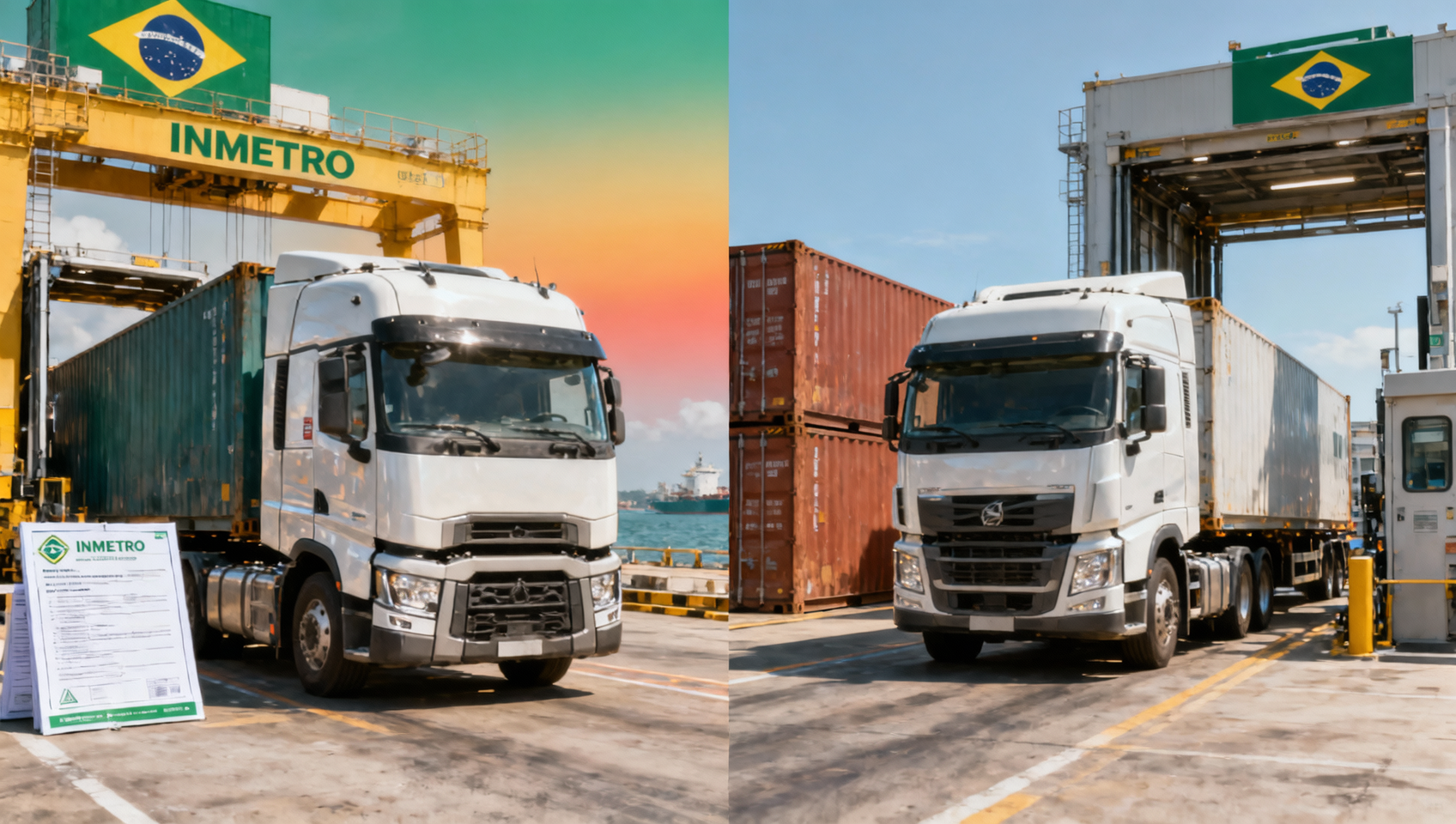
Starting August 1, 2026, Brazil will treat INMETRO certification as a mandatory market-entry requirement for imported heavy trucks with a GVW of 16 tons or more. The change matters not only for exporters, but also for import planning, customs clearance, technical documentation, delivery timing, and certification preparation across the heavy truck trade chain. For companies shipping into Brazil, the immediate issue is no longer whether certification is relevant, but whether compliance is in place before the vehicle reaches customs.
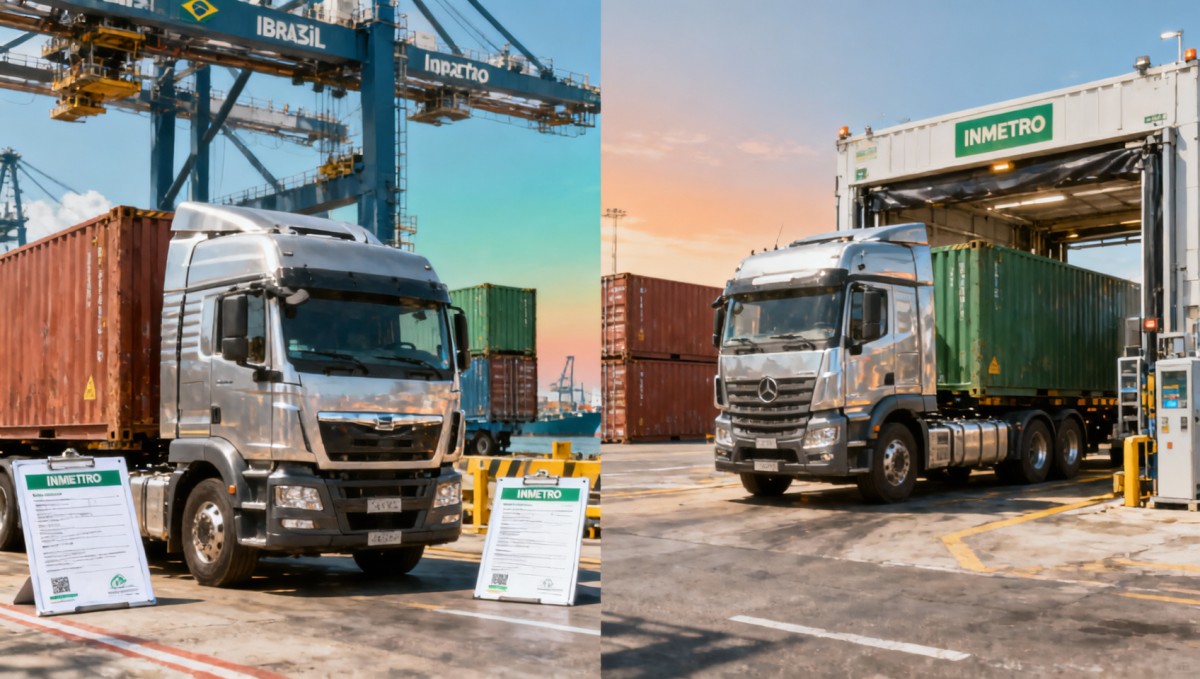
What the New Brazilian Requirement Confirms
According to Notice No. 142/2026 issued by Brazil’s National Institute of Metrology, Standardization and Industrial Quality (INMETRO) on July 19, 2026, all imported heavy trucks with GVW ≥ 16t must, from August 1, 2026, obtain INMETRO type certification and bear the mandatory conformity mark, Marca de Conformidade.
The requirement covers 12 core standards, including emissions under PROCONVE L7, braking, lighting, and EMC for electronic systems. Vehicles that do not hold the required certification will be refused by Brazilian customs.
The information provided also makes clear that this policy directly affects the compliance entry path and certification timeline for Chinese heavy truck exporters serving the Brazilian market.
Where the Pressure Will Be Felt First
Export transactions now depend on pre-shipment compliance readiness
For exporters, the rule change shifts certification from a supporting requirement to a direct condition of import acceptance. Analysis shows that the impact is likely to be most visible in shipment scheduling, model selection, technical file preparation, and coordination with Brazil-facing customers. What deserves closer attention is whether the truck model intended for export can complete the required type certification process and carry the conformity mark before customs clearance becomes relevant.
Procurement and order planning may need earlier technical screening
For buyers, distributors, and procurement teams involved in Brazil-bound heavy trucks, the change affects purchasing decisions at the specification stage rather than only at delivery. From an industry perspective, the rule creates a stronger need to verify whether a vehicle configuration falls within the affected category and whether supporting compliance materials for emissions, braking, lighting, and electronic systems are aligned with the stated standards.
Certification and testing service providers will become more central to delivery timelines
For certification-related firms and testing institutions, the policy raises the practical importance of timing, document completeness, and technical consistency across the covered standards. Observably, businesses relying on external certification support will need closer coordination between product teams, exporters, and compliance service providers, because customs rejection changes certification delays from an administrative issue into a direct trade risk.
What Companies Should Track Now
Review affected models against the mandatory certification threshold
Companies supplying heavy trucks to Brazil should first identify which imported models meet the GVW ≥ 16t threshold and therefore fall within the mandatory certification scope. This is a practical screening step tied directly to market access.
Recheck technical documents and conformity evidence
Because the notice refers to 12 core standards and specifically names PROCONVE L7, braking, lighting, and EMC, companies should pay close attention to the consistency of technical files, test-related materials, and model-level compliance records. The input does not provide detailed documentary requirements, so this should be treated as an area requiring continued verification rather than assumed completion.
Adjust delivery and customs planning around certification timing
The rule links certification status to customs acceptance. Analysis shows that this makes certification timing a delivery issue as much as a regulatory one. Exporters, importers, and supply chain teams should therefore examine whether shipment windows, customs arrangements, and handover commitments assume certification is already complete.
Watch for further clarification in execution language
The notice establishes the mandatory requirement and the customs consequence, but the input does not provide detailed operational guidance on implementation practice. What deserves closer attention is whether later official wording, transaction documents, or market-facing requirements refine the execution standard for certification review and import acceptance.
Why This Looks Like an Immediate Execution Signal
Observably, this development is more than a general policy direction. It is tied to a defined effective date, a mandatory certification route, and a clear customs consequence for non-certified vehicles. That makes it more appropriate to understand this as an executed compliance signal rather than a remote policy discussion.
At the same time, analysis shows that the market still needs to watch how the requirement is interpreted in practice. The confirmed facts establish the certification obligation and rejection risk, but companies still need to monitor how certification scope, review expectations, and transaction-level documentation are reflected in actual trade execution.
How the Market Should Read This Change
For the heavy truck trade into Brazil, the significance of this update lies in the fact that certification now sits directly at the border between market access and customs refusal. The rule does not simply add another technical reference; it changes the order in which compliance, shipment, and delivery planning must be handled.
A neutral reading is that the measure should currently be treated as a landed compliance change with immediate operational relevance, while some implementation details still warrant follow-up observation. Companies exposed to Brazil-bound heavy truck business should read it primarily as a market-entry requirement that can affect certification lead time, transaction planning, and delivery certainty.
Basis of This Article and What Still Needs Verification
This article is generated based on the user-provided news title, event date, and event summary. For developments of this kind, relevant source categories typically include official notices, publications from regulatory authorities, customs or trade administration information, industry association updates, standard-setting documents, and reporting from authoritative trade media.
No specific official source link was provided in the input, so the underlying official publication link still needs to be verified on an ongoing basis. Further observation should focus on any additional policy detail, certification implementation language, changes in bidding or procurement documents, market feedback, and how affected companies carry the requirement into actual export execution.
NAVIGATION
Send Us A Message