



News
Explore what’s going on around the industry and get the latest from the world of heavy equipment and earth-moving.
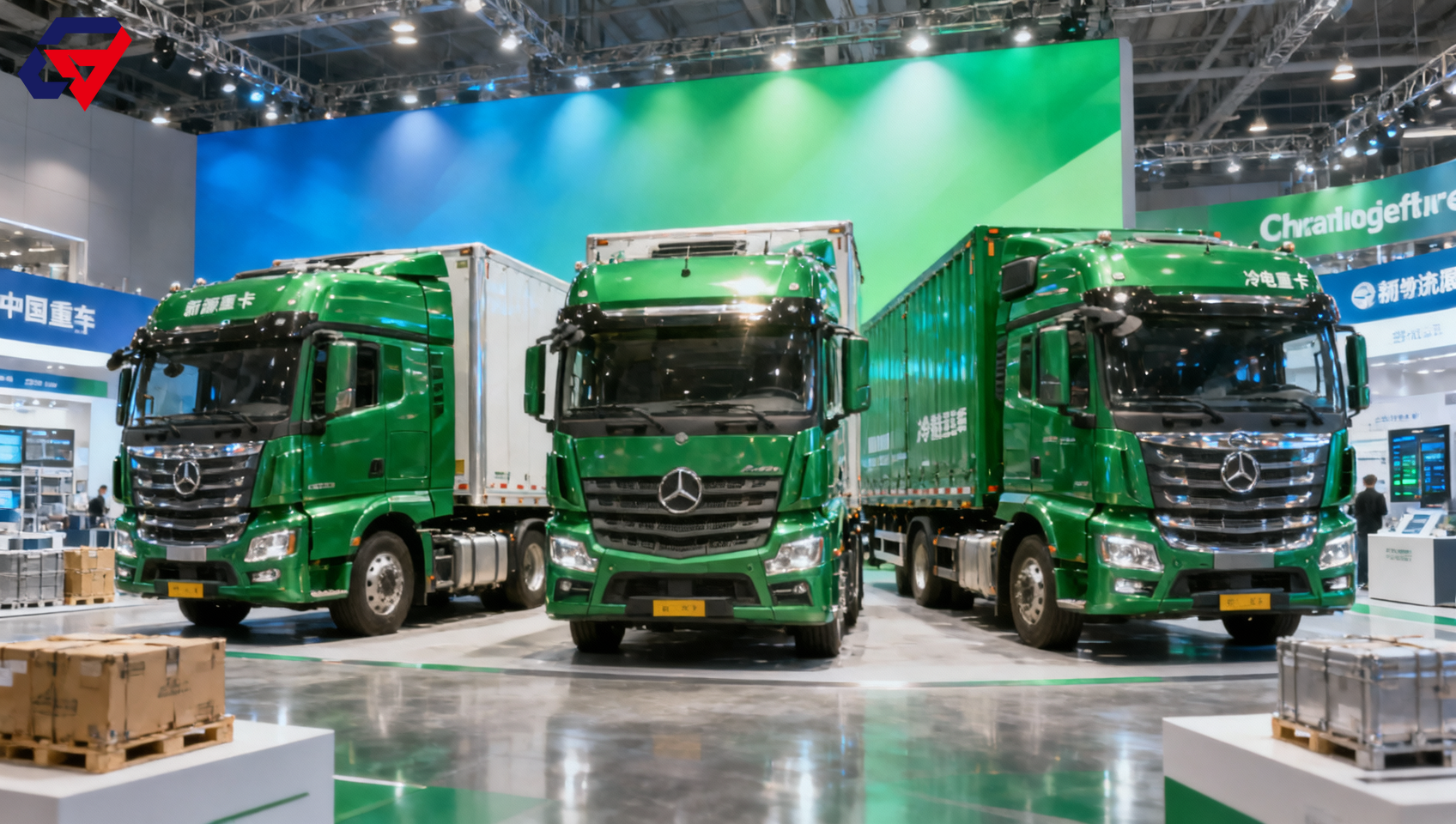
From June 24 to 26, 2026, the Asian Logistics Biennale opened at the Shanghai New International Expo Centre with a new focus that deserves close industry attention: a dedicated Green Capacity Going Global zone in Hall W5. The event matters not only because Chinese new-energy heavy trucks became a visible point of interest for overseas buyers, but also because discussions on site extended beyond vehicles to financing and after-sales support, making this relevant for exporters, importers, logistics operators, service providers, and cross-border supply chain teams.
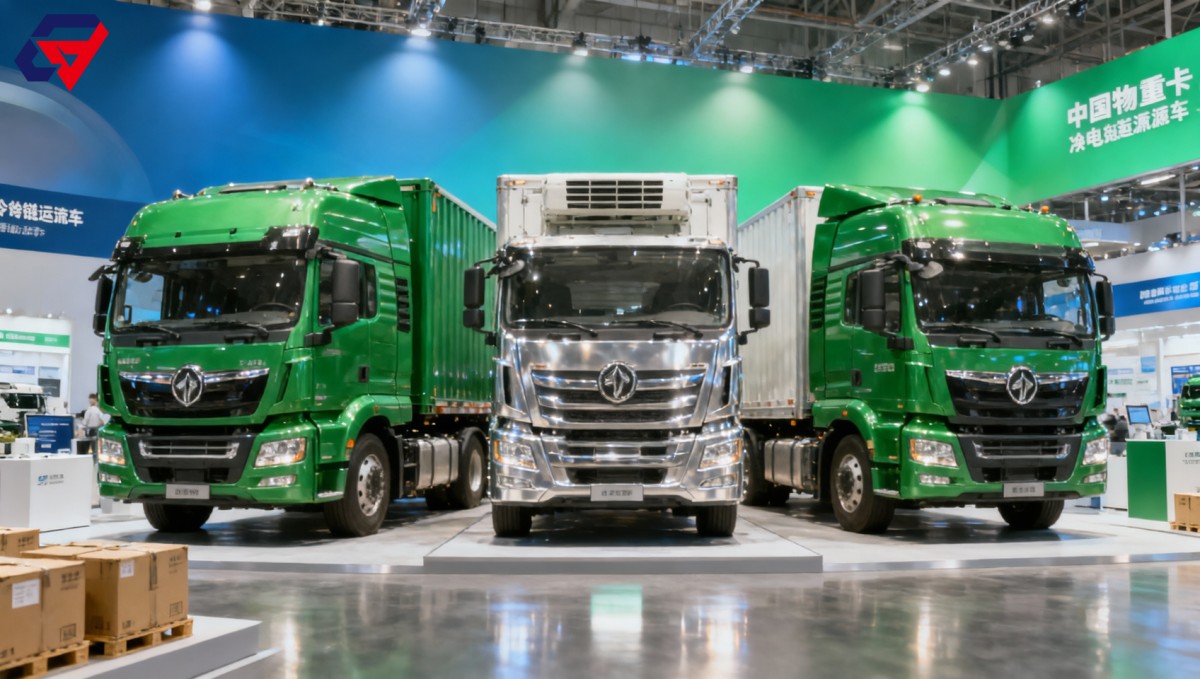
A new export-focused display at the show
According to the provided event information, the 2026 Asian Logistics Biennale is being held from June 24 to 26 at the Shanghai New International Expo Centre. The exhibition has set up a Green Capacity Going Global zone in Hall W5 for the first time.
The zone brings together several truck models presented as suitable for operating conditions in Southeast Asia, the Middle East, and Latin America, including the Auman Galaxy 16N gas truck, the HOWO TX cold-chain heavy truck, and the NEXT ERA battery-swapping heavy truck.
The event also drew importers from more than 30 countries, who inspected vehicles on site and discussed financing and after-sales support plans. The event summary indicates that this reflects a shift in China’s new-energy heavy truck exports from selling products alone toward offering solutions.
Why different market participants may pay attention
Exporters and vehicle manufacturers are being judged on delivery beyond the truck itself
From an industry perspective, the most immediate impact falls on companies directly involved in exporting complete vehicles. The on-site focus on financing and after-sales support suggests that overseas demand is not limited to product specifications. What deserves closer attention is whether exporters can present a usable package around the vehicle, especially when targeting markets with different operating conditions.
Importers and procurement teams may place more weight on service readiness
For overseas buyers and procurement decision-makers, the event signals that supplier evaluation may increasingly include service arrangements alongside vehicle selection. Analysis shows that procurement discussions may become more closely tied to supportability, rather than ending at inspection or model comparison.
Logistics and supply chain service providers may see a broader role
For service providers around cross-border delivery, after-sales coordination, and commercial support, the development is relevant because the event summary explicitly points to solution-based conversations. Observably, the business opportunity is not only in moving units, but in supporting the transaction and post-sale operating chain tied to those units.
What companies should track next
Watch how solution-based offerings are described
Companies following this segment should pay attention to how future official statements, exhibition communications, or enterprise disclosures describe financing and after-sales structures. The key issue is not the label itself, but whether solution-oriented export language becomes more specific in actual business communication.
Focus on market-fit by operating scenario
The vehicles highlighted at the show were presented as matching conditions in Southeast Asia, the Middle East, and Latin America. For manufacturers, distributors, and trade teams, this makes operating scenario alignment a practical point to monitor in product positioning, customer communication, and order follow-up.
Prepare documentation and execution around service commitments
Because discussions included after-sales support and financing, related companies may need to review whether their customer-facing materials, delivery commitments, and supplier coordination are clear enough for cross-border deals. Analysis shows that execution credibility may matter as much as product visibility when buyers are comparing export options.
Separate exhibition momentum from confirmed orders
What deserves closer attention is the difference between high interest at an exhibition and completed commercial conversion. For market participants, this means tracking whether interest expressed through vehicle inspection and negotiations later translates into structured cooperation, while avoiding premature assumptions.
What this signal suggests at this stage
Observably, this development is better read as an industry signal than as proof of a finished market outcome. The dedicated Hall W5 zone and the presence of importers from more than 30 countries indicate that overseas attention toward Chinese new-energy heavy trucks is becoming more organized in an exhibition setting. At the same time, analysis shows that the more important message is the change in transaction logic: the conversation appears to be moving from vehicle export alone toward a broader package that includes finance and post-sale support.
That said, it is more appropriate to understand this as an evolving direction that still requires follow-up observation. The event shows strong interest and clearer market positioning, but the longer-term significance depends on how these discussions are carried into actual cross-border business execution.
How to read this development rationally
The most balanced reading is that the 2026 Asian Logistics Biennale has made visible a practical change in how Chinese new-energy heavy trucks are being presented to overseas markets. The notable point is not only that buyers came to inspect vehicles, but that related support arrangements entered the discussion at the same time.
For the industry, this is less a short-lived exhibition detail and more a sign worth tracking over time. It does not yet confirm a final market result, but it does suggest that export competition may increasingly depend on who can connect product, financing, and after-sales support into a workable overseas offer.
Basis of this article
This article is generated based on the user-provided news title, event date, and event summary. The confirmed facts used here come from the provided information on the 2026 Asian Logistics Biennale, the Green Capacity Going Global zone in Hall W5, the vehicle models highlighted, the participation of importers from more than 30 countries, and the stated shift from selling products to selling solutions.
For this type of industry update, common source categories usually include official event announcements, company announcements, industry association information, authoritative media coverage, and standard-setting or sector documents. A specific official source link was not provided in the input, so further verification is still needed. If this topic continues to develop, the next points to watch are how official communications define solution-based export offerings and whether exhibition-stage discussions progress into concrete business implementation.
NAVIGATION
Send Us A Message