



News
Explore what’s going on around the industry and get the latest from the world of heavy equipment and earth-moving.
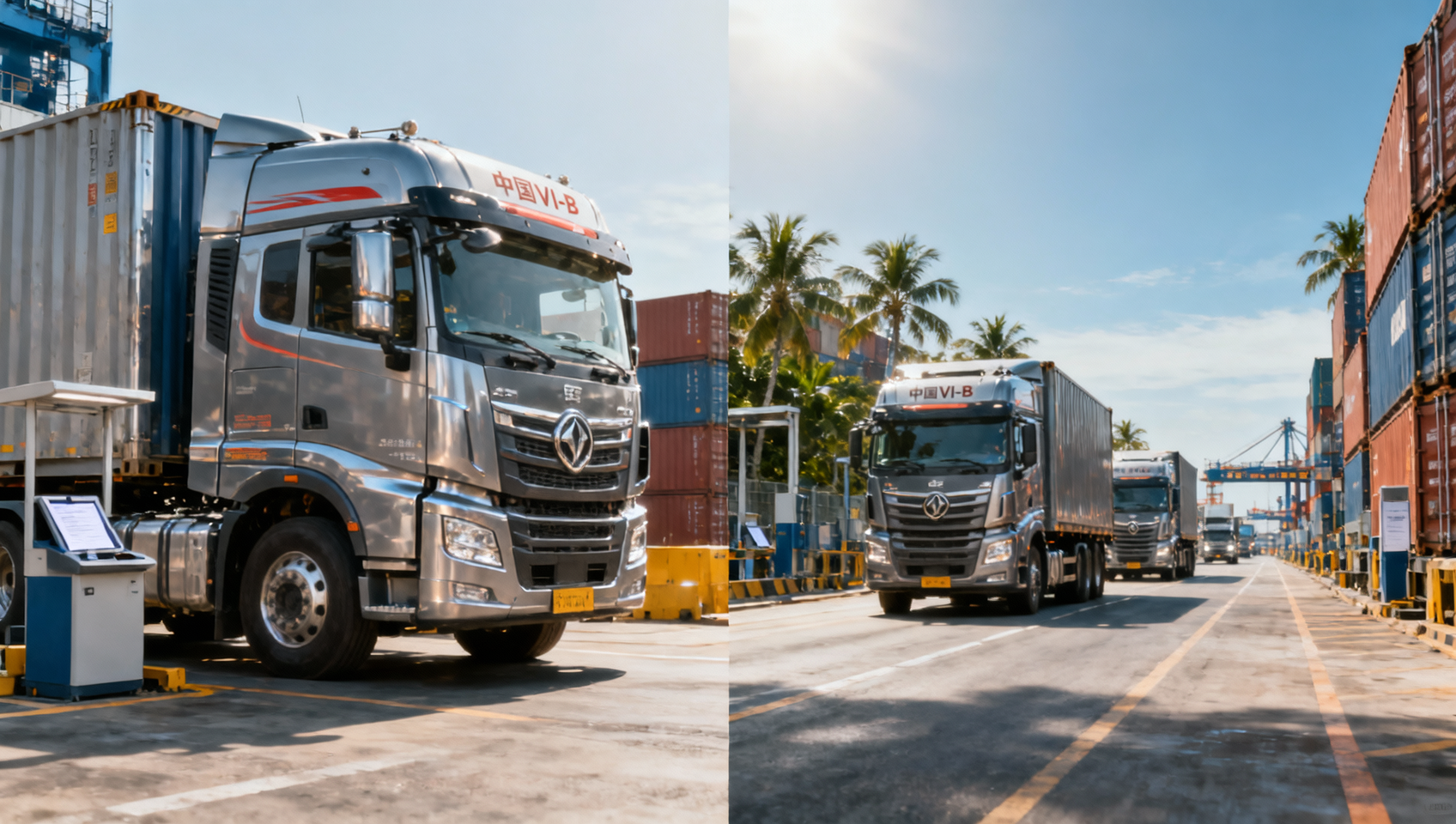
The exact timing of the event was not specified in the input, but the disclosed development centers on a July 27, 2026 memorandum signed by the ASEAN Secretariat together with the transport ministries of Thailand, Vietnam, Indonesia, and Malaysia. The core change is that valid China VI-B certification for heavy-duty trucks will be accepted for market entry in these four Southeast Asian markets without secondary local testing, a move that matters for truck exporters, compliance teams, cross-border logistics providers, distributors, and fleet procurement decisions because it directly affects approval time and cost at the point of market access.

What the memorandum confirms
According to the provided information, the ASEAN Secretariat and the transport ministries of Thailand, Vietnam, Indonesia, and Malaysia signed the Memorandum on Coordinated Implementation of ASEAN Commercial Vehicle Emission Standards on July 27, 2026. The memorandum formally recognizes the validity of China VI-B type test reports and the effectiveness of the Ministry of Ecology and Environment announcement catalog for eligible heavy-duty truck products.
The practical result described in the input is that heavy-duty truck products holding valid China VI-B certification may enter the above markets without undergoing a second round of testing. The same input states that this arrangement is expected to shorten customs clearance cycles by 15 to 20 days and reduce local compliance costs by about 23%.
Where the immediate business impact may appear
For truck exporters and vehicle manufacturers
From an industry perspective, the most direct impact is likely to fall on exporters and manufacturers of heavy-duty trucks that already hold valid China VI-B certification. The affected business links are market entry preparation, certification filing, shipment scheduling, and distributor coordination. What deserves closer attention is whether internal product documentation, certification validity status, and catalog matching are ready to support smoother customs and registration processes.
For distributors and channel operators in the four markets
Distributors may be affected because the removal of secondary testing can alter launch timing, inventory planning, and model rollout decisions. The operational effect is less about product promotion and more about execution: lead times may change, model availability may improve, and documentation review may become a more important gate than local retesting. Observably, channel partners will need to focus on how local acceptance is applied in practice at import and registration stages.
For compliance, customs, and supply chain service providers
Service providers involved in homologation support, customs clearance, freight coordination, and delivery planning may see changes in workflow priorities. If testing duplication is reduced, the key tasks shift toward certificate validation, document consistency, and timeline control across borders. The influence is therefore concentrated in filing accuracy, handoff timing, and communication between exporters and destination-market counterparts.
For fleet buyers and commercial users
Fleet operators and other end buyers may not be the first link affected, but they could still feel the effect through shorter delivery windows and possible changes in model availability. Analysis shows that procurement teams should watch whether reduced compliance friction translates into more predictable lead times rather than assume immediate changes in total ownership costs or operating conditions.
What companies should verify now
Check the boundary between policy recognition and operational execution
The memorandum signals formal recognition, but companies should pay close attention to how this recognition is implemented in actual import, filing, and registration procedures in each market. The distinction between a signed memorandum and day-to-day operational acceptance is a practical issue, especially for businesses planning near-term shipments.
Review certification files and supporting documentation
Since the recognized basis includes China VI-B type test reports and the relevant Ministry of Ecology and Environment catalog, companies should verify that the certification status of each export model is valid, current, and internally consistent across commercial and technical documents. Any mismatch in documentation could still delay execution even if secondary testing is no longer required.
Reassess delivery schedules and customer commitments
The provided information points to a 15 to 20 day reduction in customs clearance time and an approximately 23% reduction in local compliance cost. Companies involved in sales, procurement, and delivery should treat these figures as planning inputs, then review whether shipment windows, contract timing, and customer communication need adjustment to reflect a potentially faster entry process.
Track official wording and subsequent clarifications
What deserves closer attention is whether subsequent official notices, implementation rules, or administrative explanations further define scope, product coverage, or procedural details. For companies working across multiple ASEAN markets, ongoing monitoring matters because business execution depends on how the recognition framework is applied in each destination.
Why this matters beyond a single customs shortcut
Analysis shows that this development is not just about saving time on duplicate testing. It also signals a more practical approach to certification recognition for commercial vehicles across the affected markets. At the same time, it is more appropriate to understand this as a policy and market-access signal rather than as a completed, market-wide outcome. The memorandum establishes a direction, but the full commercial effect still depends on implementation, documentation discipline, and how consistently authorities apply the recognition mechanism.
How this news is best understood at this stage
At this stage, the announcement is best read as a meaningful operational change with longer-term strategic implications. In the short term, the clearest effects are on compliance workflow, entry timing, and local certification cost. In the longer view, the more important signal is that cross-recognition of heavy-duty truck emissions certification is becoming a live issue in Southeast Asian market access. A neutral reading is that the development is actionable for current planning, but still requires continued observation before being treated as a fully settled regional standard practice.
Basis of this article and points for follow-up
This article is based on the user-provided news title, the stated event timing information, and the supplied event summary. The input did not provide a specific official source link, so the exact official publication path still needs continued verification. For this type of industry update, commonly relevant source categories include official government announcements, corporate disclosures, industry association updates, authoritative media reporting, and standard-setting documents.
Further follow-up should focus on whether additional official explanations are released, how the recognition arrangement is applied in actual customs and compliance procedures, and whether the implementation language remains consistent across Thailand, Vietnam, Indonesia, and Malaysia.
NAVIGATION
Send Us A Message