


News
Explore what’s going on around the industry and get the latest from the world of heavy equipment and earth-moving.
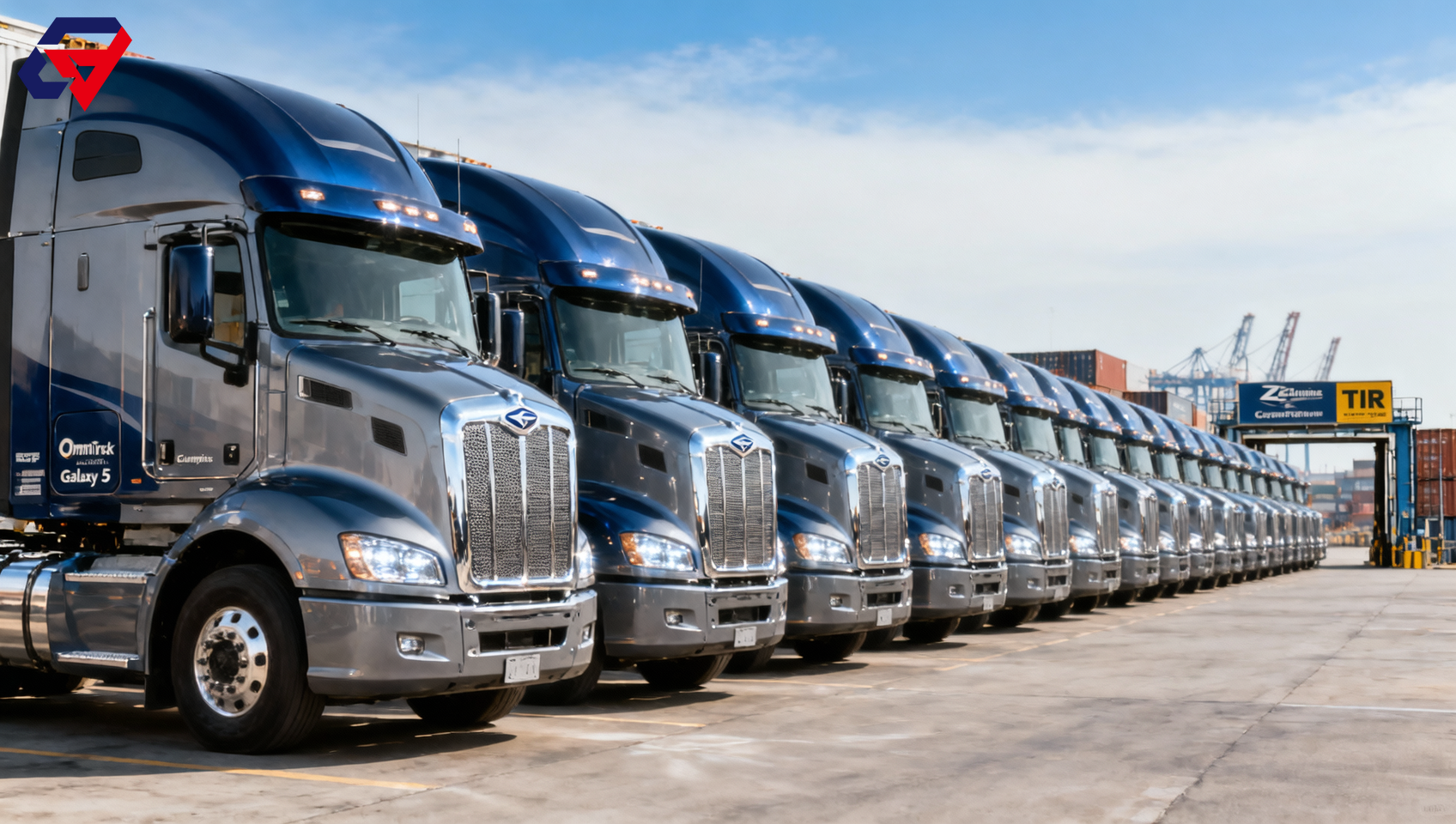
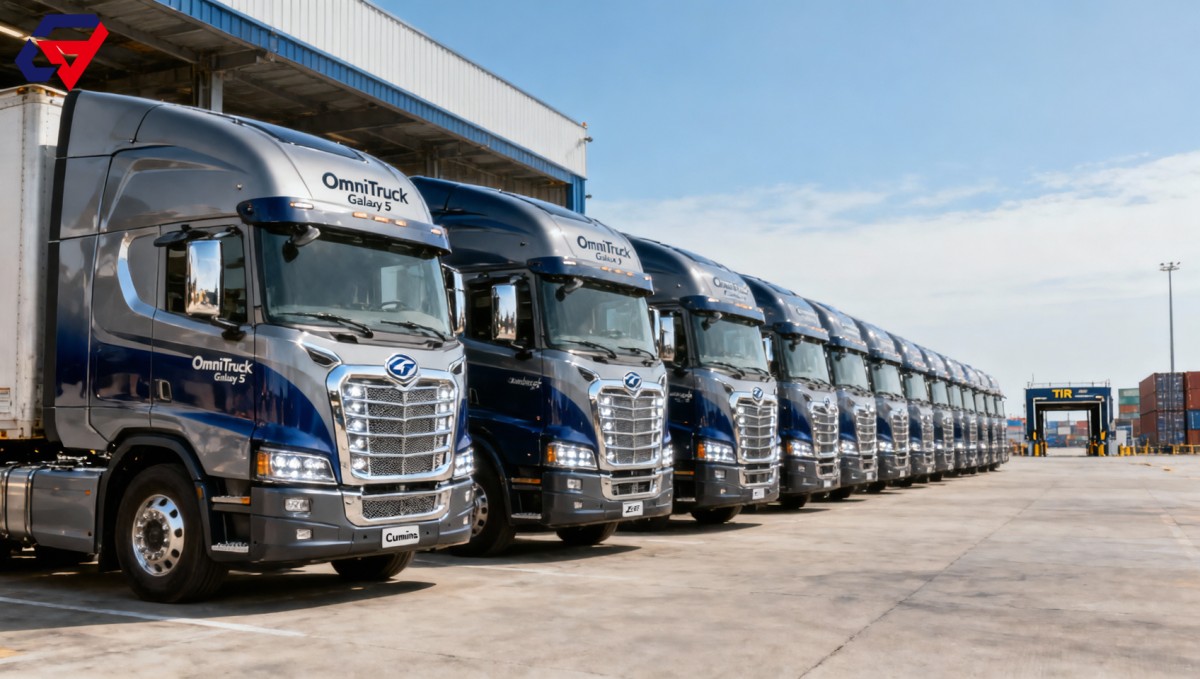
On April 28, 2026,福田 Ommani delivered its third batch of 30 Galaxy 5 fuel-powered tractor trucks to Qingdao Runshengchi Logistics for deployment on the TIR international road transport corridor. This delivery signals growing attention from cross-border logistics operators, equipment procurement managers, and infrastructure-supporting service providers — particularly those engaged in China–Central Asia land freight under the Belt and Road Initiative (BRI). It reflects a tangible shift toward standardized, certified, and operationally resilient heavy-duty trucking solutions aligned with international regulatory and environmental expectations.
Event Overview
On April 28, 2026, Foton Auman delivered 30 units of the Galaxy 5 fuel tractor trucks to Qingdao Runshengchi Logistics. This constitutes the third batch under an ongoing supply arrangement. The vehicles are designated for use on the TIR (Transports Internationaux Routiers) international road transport route. The Galaxy 5 is equipped with a Cummins Foton 580-horsepower engine and ZF automatic transmission. It has passed pre-certification testing under the EU’s Whole Vehicle Type Approval (WVTA) framework and is adapted for climate conditions and long-haul operational demands across Central Asian countries.
Impact on Specific Industry Segments
Direct Trade Enterprises
Enterprises engaged in direct export-import trade between China and Central Asian countries may face revised transit timelines and cost structures as TIR-compliant fleets scale up. Impact manifests primarily in reduced border dwell time (due to standardized documentation and vehicle certification) and improved predictability of inland transit duration — especially where prior reliance on non-standardized or domestically registered units created customs bottlenecks.
Supply Chain Service Providers
Firms offering cross-border haulage coordination, customs brokerage, or fleet management services must adapt to tighter compliance requirements tied to TIR-authorized vehicles. Impact includes increased demand for technical documentation support (e.g., TIR carnets, WVTA-related conformity statements), maintenance network readiness in transit corridors, and real-time tracking integration compatible with international regulatory reporting protocols.
Heavy-Duty Vehicle Procurement & Leasing Entities
Organizations responsible for procuring or financing commercial vehicles for international operations now confront a de facto benchmark: EU-aligned type approval plus regional climatic adaptation. Impact centers on procurement criteria evolution — e.g., shifting from horsepower-only evaluation to inclusion of certification status, transmission automation level, and documented performance under extreme ambient temperature ranges.
What Relevant Enterprises or Practitioners Should Focus On
Monitor official updates on TIR implementation scope in China
While TIR convention accession by China entered force in 2016, domestic operational rollout remains phased. Current deliveries signal deeper integration at key ports and corridors; stakeholders should track announcements from China’s Ministry of Transport and the China Road Transport Association regarding expanded TIR-approved routes and authorized operators.
Assess fleet compatibility with upcoming BRI-aligned equipment standards
This delivery reflects early adoption of vehicles meeting both EU WVTA pre-certification and Central Asian environmental/operational requirements. Practitioners should evaluate whether existing or planned procurement pipelines include comparable validation pathways — especially for routes extending into Kazakhstan, Uzbekistan, and Kyrgyzstan, where climate resilience and regulatory alignment are increasingly weighted in tender evaluations.
Verify maintenance and parts support coverage along TIR corridors
Automated transmissions and high-output engines require specialized service capacity. Enterprises deploying such vehicles should confirm availability of certified technicians and genuine components at key nodes — including Xinjiang border crossings and major logistics hubs in Central Asia — before scaling deployments.
Editorial Perspective / Industry Observation
Observably, this delivery is less a one-off commercial transaction and more a marker of institutional convergence: national transport policy, international regulatory frameworks (TIR/WVTA), and OEM product development are aligning around interoperable heavy-truck platforms. Analysis shows that Chinese OEMs are no longer merely exporting volume but responding to upstream procurement criteria set by logistics operators serving multilateral trade corridors. It is currently best understood as a signaling event — indicating directional intent rather than full-scale standardization — yet it warrants sustained attention because subsequent batches, route expansions, or certification upgrades could accelerate adoption thresholds across peer operators.
From an industry standpoint, this reflects a maturing phase in BRI infrastructure enablement: hardware is increasingly being selected not just for cost or power output, but for verifiable compliance, serviceability across jurisdictions, and lifecycle manageability in heterogeneous regulatory environments.
Conclusion:
This delivery represents a concrete step in the operational calibration of China’s domestic heavy-truck manufacturing base to internationally recognized cross-border logistics standards. It does not signify immediate market-wide transformation, but rather confirms an emerging procurement logic among forward-looking logistics operators — one prioritizing regulatory readiness, climatic adaptability, and systemic maintainability over isolated performance metrics. Currently, it is more appropriately understood as an early indicator of evolving equipment selection criteria within BRI-linked land freight ecosystems — not as a completed industry shift.
Source Attribution:
- Confirmed delivery details and vehicle specifications sourced from official announcement by Foton Auman (April 28, 2026).
- TIR Convention status and China’s accession timeline referenced via World Customs Organization (WCO) public database.
- EU WVTA framework definition and scope drawn from European Commission Regulation (EU) 2018/858.
- Note: Ongoing monitoring is recommended for updates on formal TIR route expansion approvals by Chinese authorities — this remains a dynamic area requiring verification beyond current public disclosures.
NAVIGATION
Send Us A Message