



News
Explore what’s going on around the industry and get the latest from the world of heavy equipment and earth-moving.

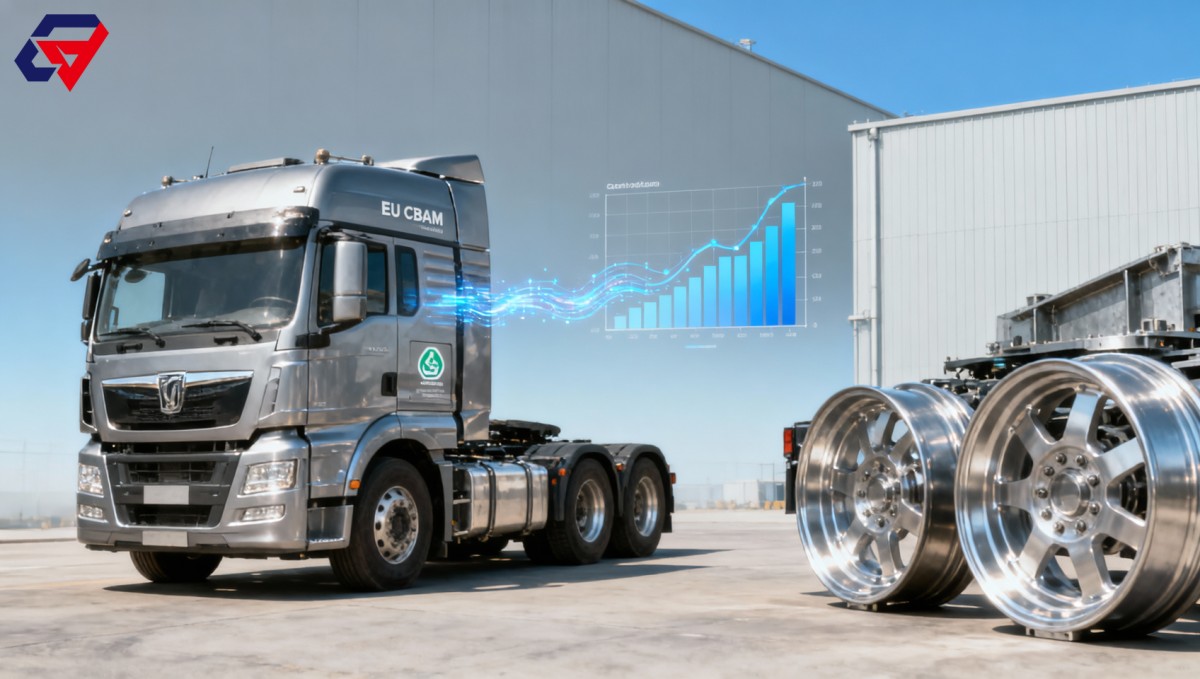
On 3 May 2026, the European Commission published updated implementing rules for the Carbon Border Adjustment Mechanism (CBAM), extending its transitional reporting requirements to commercial motor vehicles—including heavy-duty trucks—effective 1 October 2026. Exporters must submit third-party-verified lifecycle carbon footprint reports covering raw material extraction, component manufacturing, vehicle assembly, and logistics. This development directly affects Chinese heavy-duty truck exporters and their upstream supply chain partners, raising compliance timelines and certification costs while accelerating pressure for cross-tier green collaboration.
Event Overview
The European Commission formally issued revised CBAM implementation rules on 3 May 2026. As confirmed in the official publication, commercial motor vehicles—including heavy-duty trucks—are added to the CBAM transitional reporting scope starting 1 October 2026. Under the new requirement, exporters must provide verified carbon footprint data spanning the full lifecycle: from primary material production (e.g., steel and aluminum smelting), through parts manufacturing and final vehicle assembly, to international transport to the EU. No exemptions or phased rollouts beyond the stated date have been announced.
Which Subsectors Are Affected
Direct Exporters of Commercial Vehicles
Manufacturers and trading companies exporting heavy-duty trucks to the EU will face mandatory reporting obligations from 1 October 2026. Impact arises from the need to collect, verify, and submit granular emissions data across multiple tiers—not just at the final assembly stage. Compliance requires integration with suppliers’ environmental data systems and engagement with accredited verification bodies, increasing administrative burden and lead time for shipment clearance.
Raw Material Suppliers (e.g., Steel, Aluminum Producers)
Producers of key structural materials used in heavy-duty truck chassis, cabs, and axles are indirectly but significantly affected. Although not direct CBAM declarants, their emissions data—particularly from energy-intensive smelting processes—must be included in downstream exporters’ lifecycle reports. This triggers demand for product-specific, ISO 14067-compliant carbon declarations and may necessitate facility-level monitoring upgrades.
Component Manufacturers (e.g., Axles, Brakes, Powertrain Systems)
Suppliers of critical subsystems must now provide traceable, verified carbon data per part category or batch. The requirement applies regardless of whether components are sold directly to EU-bound assemblers or via tiered distribution. Impact manifests in documentation overhead, potential audit readiness gaps, and growing requests for data sharing agreements with OEMs and export intermediaries.
Logistics & Freight Forwarding Providers
International transport providers handling EU-bound heavy-duty vehicle shipments must supply verified fuel consumption and emissions data aligned with the CBAM-defined logistics boundary (i.e., port-to-port or factory-to-port). While not responsible for full lifecycle reporting, their operational data becomes a mandatory input—and subject to third-party verification—under the exporter’s consolidated submission.
What Relevant Enterprises or Practitioners Should Focus On and How to Respond Now
Monitor Official Guidance Updates Through EU CBAM Transitional Registry Channels
The European Commission is expected to release technical guidance documents, sector-specific methodologies, and approved verification body lists ahead of the 1 October 2026 deadline. Exporters and suppliers should register with the EU CBAM Transitional Registry and subscribe to official notifications—not rely solely on national trade associations or secondary summaries.
Prioritize Data Readiness for High-Volume Export SKUs and Key Material Inputs
Rather than attempting full supply chain coverage immediately, enterprises should identify top three export models by EU volume and their most carbon-intensive upstream inputs (e.g., hot-rolled steel coils, forged aluminum wheels). Focus initial verification efforts on these priority items to meet first-reporting deadlines without overextending internal resources.
Distinguish Between Reporting Obligations and Future Financial Liability
This extension applies only to the transitional reporting phase (2026–2033); no CBAM financial adjustment (i.e., certificate purchases) is required for vehicles until after 2033, per current legal text. Enterprises should avoid premature investment in CBAM certificate procurement infrastructure and instead allocate budget toward data collection systems and verifier engagement.
Initiate Supplier Engagement Protocols Now—Not After Notification
Given typical supplier response lag and verification lead times (often 8–12 weeks), exporters should draft standardized carbon data request templates—including required format, boundary definitions, and verification scope—and begin outreach to Tier 1 and Tier 2 suppliers before Q3 2026. Early alignment reduces last-minute bottlenecks during pre-declaration validation.
Editorial Perspective / Industry Observation
Observably, this CBAM expansion signals a deliberate shift from sectoral carbon accounting to value-chain accountability—especially for complex manufactured goods. Analysis shows the inclusion of heavy-duty trucks reflects the EU’s intent to close policy gaps where embedded emissions in finished goods previously escaped scrutiny under existing ETS or reporting frameworks. From an industry perspective, it is more accurately understood as a regulatory signal than an immediate operational constraint: while reporting begins in October 2026, enforceable penalties or certificate obligations remain years away. However, the data infrastructure and supplier coordination built now will determine competitiveness beyond 2030—not only for EU access, but increasingly for other markets adopting similar border mechanisms.
Current more relevant interpretation is that this rule change tests readiness—not compliance. It reveals which enterprises already possess interoperable environmental data systems, verified supplier disclosures, and cross-functional decarbonization governance. Those lacking such foundations will face steep learning curves well before any financial liability takes effect.
Conclusion
This CBAM extension does not introduce immediate tariffs or fees for heavy-duty truck exports, but establishes a binding data infrastructure requirement with cascading implications across global automotive supply chains. Its significance lies less in short-term cost impact and more in its role as a structural catalyst—reshaping how manufacturers, material producers, and logistics providers define, measure, and share emissions accountability. For stakeholders, the current phase is best understood as a preparatory window: one requiring focused data mapping, selective verification, and proactive supplier dialogue—not broad-scale transformation.
Information Sources
Primary source: European Commission CBAM Implementing Regulation (C(2026) 2891 final), published 3 May 2026. Further technical guidance and sectoral methodology documents are pending and will be tracked via the EU CBAM Transitional Registry portal. No additional implementation details beyond the 1 October 2026 reporting start date have been confirmed as of publication.
NAVIGATION
Send Us A Message