



News
Explore what’s going on around the industry and get the latest from the world of heavy equipment and earth-moving.
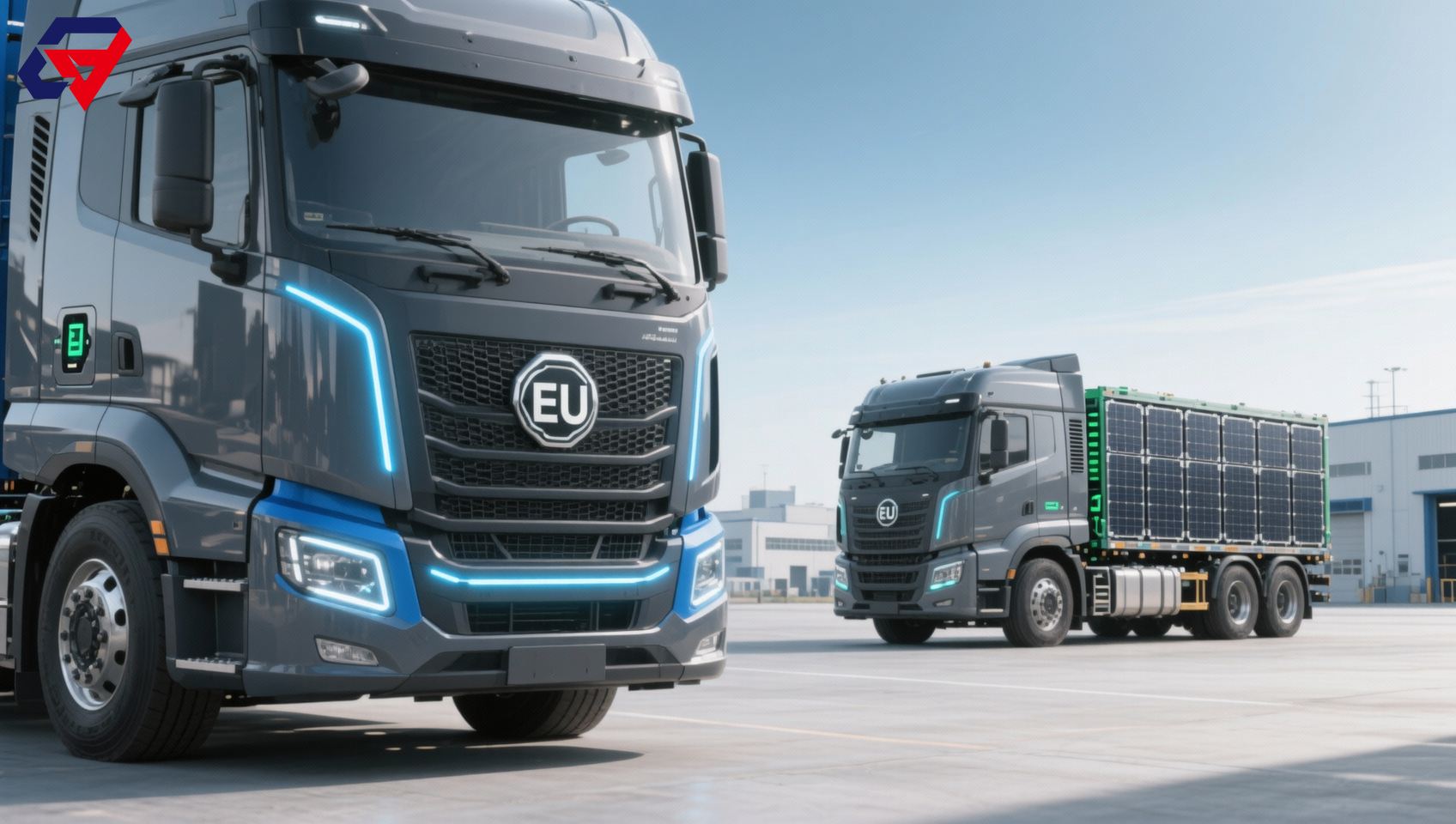
Starting 1 May 2026, the EU’s new Battery Regulation (EU 2023/1542) will impose mandatory lifecycle carbon footprint declaration and third-party certification for traction batteries used in heavy-duty electric trucks exported to the EU. This requirement directly affects Chinese heavy-duty vehicle OEMs, battery system integrators, and powertrain suppliers — making it a critical compliance checkpoint for market access.
Event Overview
As of 1 May 2026, Regulation (EU) 2023/1542 will extend its carbon footprint reporting and verification mandate to commercial traction batteries — specifically those powering battery-electric heavy-duty vehicles (HDVs). The rule applies to all battery systems integrated into HDV整车 or powertrain assemblies placed on the EU market. To complete CE type-approval and customs clearance, exporters must submit a carbon footprint declaration verified by an EU-authorized body, aligned with EN 15804+A2. No such declaration means no CE conformity assessment acceptance.
Which Subsectors Are Affected
Direct Exporters (HDV OEMs & Powertrain Suppliers)
These entities face immediate regulatory exposure: CE type-approval for HDV models sold in the EU will now require certified battery carbon footprint data as a prerequisite. Delays in obtaining valid declarations may halt vehicle homologation, delay deliveries, and trigger contractual penalties with EU fleet customers.
Battery System Integrators & Pack Manufacturers
As the responsible economic operators under the regulation, they must provide verified carbon footprint data for each battery type supplied to HDV OEMs. This includes traceability across cell sourcing, module assembly, pack integration, and end-of-life assumptions — all subject to audit by authorized verifiers.
Raw Material & Cell Suppliers
While not directly obligated to issue declarations, upstream suppliers are operationally critical: their GHG emission data (e.g., electricity mix for cathode production, cobalt refining emissions) forms the foundational input for downstream footprint calculations. Lack of transparent, auditable data may constrain integrators’ ability to meet deadlines.
Supply Chain & Certification Service Providers
Third-party verification bodies accredited under EU schemes — and supporting service providers (e.g., LCA software vendors, data collection platforms) — will see increased demand for EN 15804+A2-aligned assessments. However, current availability of EU-authorized verifiers with HDV battery expertise remains limited, especially outside Europe.
What Enterprises and Practitioners Should Focus On Now
Monitor official EU guidance on scope interpretation
Analysis shows the regulation’s application to “heavy-duty vehicles” is defined via UNECE R136 and EU Regulation (EU) 2018/858. However, exact boundaries for hybrid vs. full-BEV powertrains, or exemptions for retrofitted units, remain subject to pending Commission guidelines. Stakeholders should track updates from the European Commission’s Joint Research Centre (JRC) and notified bodies.
Prioritize battery types bound for EU HDV programs
Observably, not all battery SKUs will be impacted equally. Companies should identify which cell chemistries, pack configurations, and vehicle platforms are slated for EU launch between Q3 2025–Q2 2026 — and initiate footprint modeling and verifier engagement for those specific variants first.
Distinguish policy signal from operational readiness
From industry perspective, the 2026 deadline signals long-term decarbonization expectations — but actual enforcement capacity (e.g., verifier accreditation timelines, customs inspection protocols) is still evolving. Early-stage submissions may face iterative feedback rather than outright rejection; however, relying on this carries compliance risk.
Prepare upstream data collection and internal alignment
Current more suitable approach is to map existing battery supply chain GHG data sources (e.g., supplier questionnaires, utility grid factors, transport logistics), assign internal ownership for LCA documentation, and conduct dry-run assessments using EN 15804+A2 methodology — even before engaging external verifiers.
Editorial Perspective / Industry Observation
This regulation is less a sudden barrier and more a structural recalibration of export compliance for electrified commercial transport. Observably, it formalizes carbon accounting as a core component of product certification — not just an ESG reporting exercise. Analysis suggests it functions primarily as a forward-looking signal: while enforcement mechanisms are still maturing, the requirement reflects the EU’s broader trajectory toward embedded carbon standards across industrial products. Industry attention should therefore focus less on ‘passing a test’ and more on building verifiable, auditable carbon data infrastructure that supports both regulatory compliance and competitive differentiation.
Conclusion
The 2026 EU battery carbon footprint mandate marks a material shift in how heavy-duty EV value chains engage with international climate policy. It does not introduce new environmental performance limits per se, but instead institutionalizes transparency and accountability across the battery lifecycle. Currently, it is best understood not as an isolated compliance hurdle, but as an early indicator of how carbon-integrated product regulation will scale across mobility sectors — requiring sustained technical and procedural adaptation, rather than one-time remediation.
Information Sources
Main source: Regulation (EU) 2023/1542 of the European Parliament and of the Council of 10 July 2023 on batteries and waste batteries. Official Journal of the European Union, L 203/1. Implementation timeline confirmed in Annex XII and delegated act provisions. Pending aspects — including final list of EU-authorized verifiers and detailed guidance on HDV-specific boundary definitions — remain under observation.
NAVIGATION
Send Us A Message