


News
Explore what’s going on around the industry and get the latest from the world of heavy equipment and earth-moving.
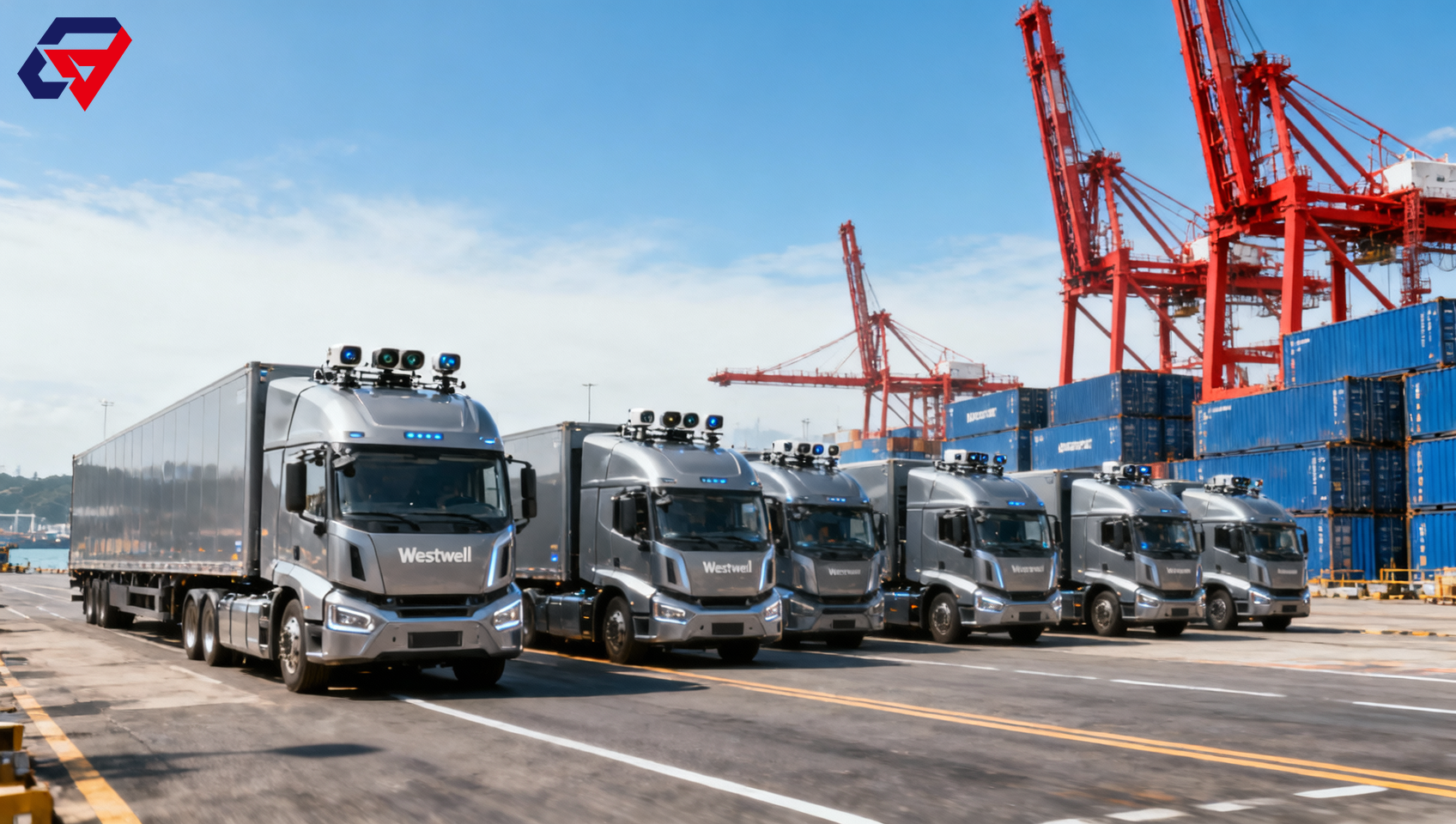
On April 21, 2026, six driverless autonomous trucks (ATs) developed by China-based Westwell Technology entered commercial operation at Hong Kong International Container Terminal (HIT) in Kwai Chung. This marks the first full-scenario, real-vessel commercial validation of China’s L4-level autonomous heavy-duty truck solution at a high-throughput international port hub — with implications for global port operators, logistics integrators, and import distributors.
Event Overview
On April 21, 2026, Hong Kong International Container Terminal officially commenced operations with six cabin-less autonomous trucks manufactured by Westwell Technology. The vehicles operate 24/7 in mixed-traffic mode alongside manned vehicles, integrated into the terminal’s Transport Management System (TMS) and AI-powered yard monitoring system. They have completed over 3,000 hours of on-site port testing, supporting centimeter-level positioning, binocular vision-based obstacle detection, and emergency response protocols.
Impact on Specific Industry Segments
Port Operators & Terminal Service Providers
These operators face direct operational implications: the deployment validates interoperability between Chinese-made autonomous systems and legacy terminal infrastructure. Impact manifests in three areas — integration timelines for third-party AT fleets, revised safety certification benchmarks for mixed-traffic environments, and recalibration of labor-cost modeling for 24/7 yard operations.
Global Logistics Integrators
Integrators managing transshipment or regional distribution networks through Hong Kong must assess how autonomous yard movement affects dwell time predictability and handover SLAs. The verified 24/7 capability may shift contractual expectations around gate-in/gate-out windows and exception handling for container repositioning.
Import Distributors (Especially APAC-Focused)
Distributors relying on Hong Kong as a regional consolidation hub may experience reduced variability in container availability and yard-to-truck handover latency. The impact is most tangible for time-sensitive consignments (e.g., perishables, high-value electronics), where consistent yard throughput directly influences downstream delivery reliability.
Maritime Equipment & Automation Suppliers
Suppliers of TMS, yard management software, or vehicle-to-infrastructure (V2I) communication modules now have a reference case for compatibility testing with Westwell’s stack. This does not imply technical standardization, but signals growing demand for open-API readiness in port automation ecosystems.
What Relevant Enterprises or Practitioners Should Monitor and Act On
Track official scalability announcements from HIT and Westwell
Current deployment covers six units; watch for public statements on fleet expansion targets, timeline commitments, or geographic replication plans (e.g., Yuen Long or Tsing Yi terminals). These indicate whether this remains a pilot or transitions to phased infrastructure upgrade.
Assess integration requirements for existing TMS and yard control systems
If your organization operates or supplies terminal software, verify API documentation and data schema alignment with Westwell’s published interface specifications — particularly for real-time vehicle status, path planning requests, and emergency override signaling.
Distinguish between regulatory approval and operational readiness
Hong Kong’s Marine Department has not issued new autonomous vehicle regulations specific to container terminals. The current operation relies on existing port safety frameworks and internal HIT governance. Do not conflate technical validation with formal regulatory endorsement.
Review contingency planning for mixed-traffic yard coordination
For carriers or drayage providers operating within Kwai Chung, confirm whether HIT will require updated driver training modules, revised lane assignment protocols, or new incident reporting workflows when sharing yard space with autonomous units.
Editorial Perspective / Industry Observation
Observably, this deployment is less a standalone technology milestone and more a signal of maturing operational readiness for Chinese-developed autonomous trucking systems in complex, regulated maritime environments. Analysis shows it reflects progress in system integration — not just vehicle autonomy — particularly in real-time coordination with legacy TMS and AI monitoring layers. From an industry perspective, it is best understood not as immediate market disruption, but as a benchmark for evaluating ‘plug-and-play’ feasibility in future port automation tenders. Continued attention is warranted not for speed of adoption, but for how replicable the integration model proves across differing port governance models (e.g., concession-based vs. state-operated terminals).
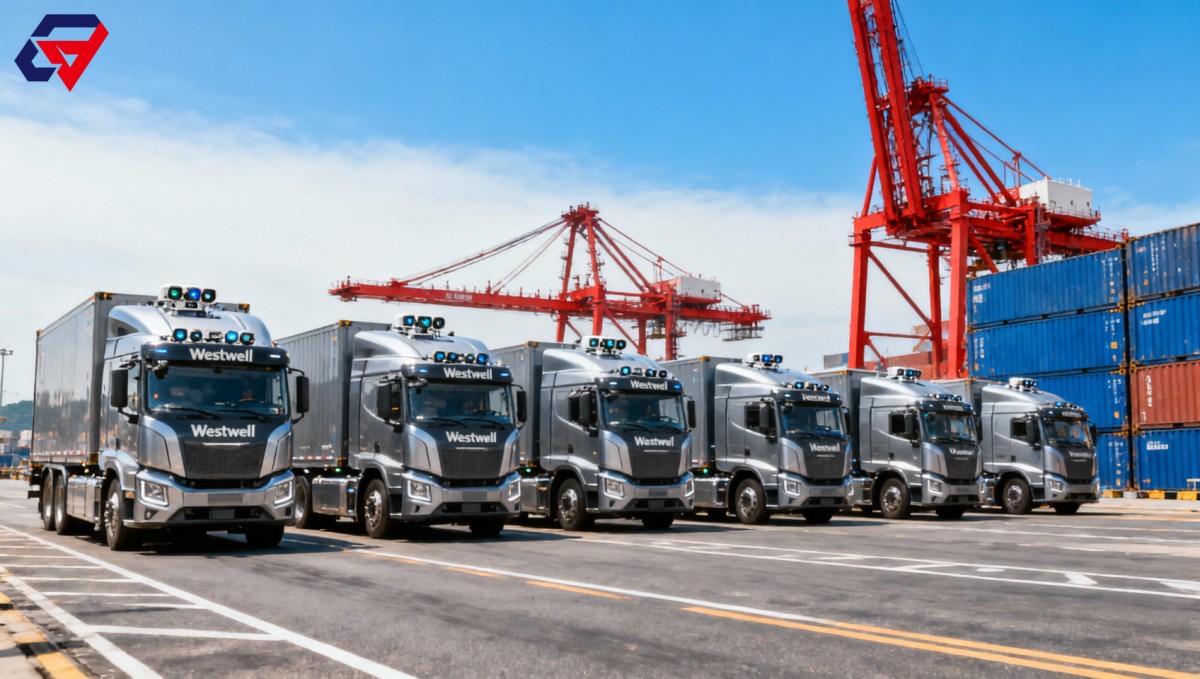
Conclusion: This event confirms that China-origin L4 autonomous heavy-duty truck solutions have achieved verifiable, real-world performance under international port conditions — but only within a tightly scoped, operator-managed environment. It is currently more indicative of technical viability than systemic scalability. Stakeholders are better served treating it as a reference point for infrastructure compatibility assessment rather than a trigger for strategic pivot.
Source: Public announcement by Hong Kong International Container Terminal (HIT), dated April 21, 2026; technical specifications confirmed via Westwell Technology press release (same date). Note: Long-term fleet expansion scope, cross-terminal replication plans, and regulatory pathway developments remain subject to ongoing observation.
NAVIGATION
Send Us A Message