



News
Explore what’s going on around the industry and get the latest from the world of heavy equipment and earth-moving.
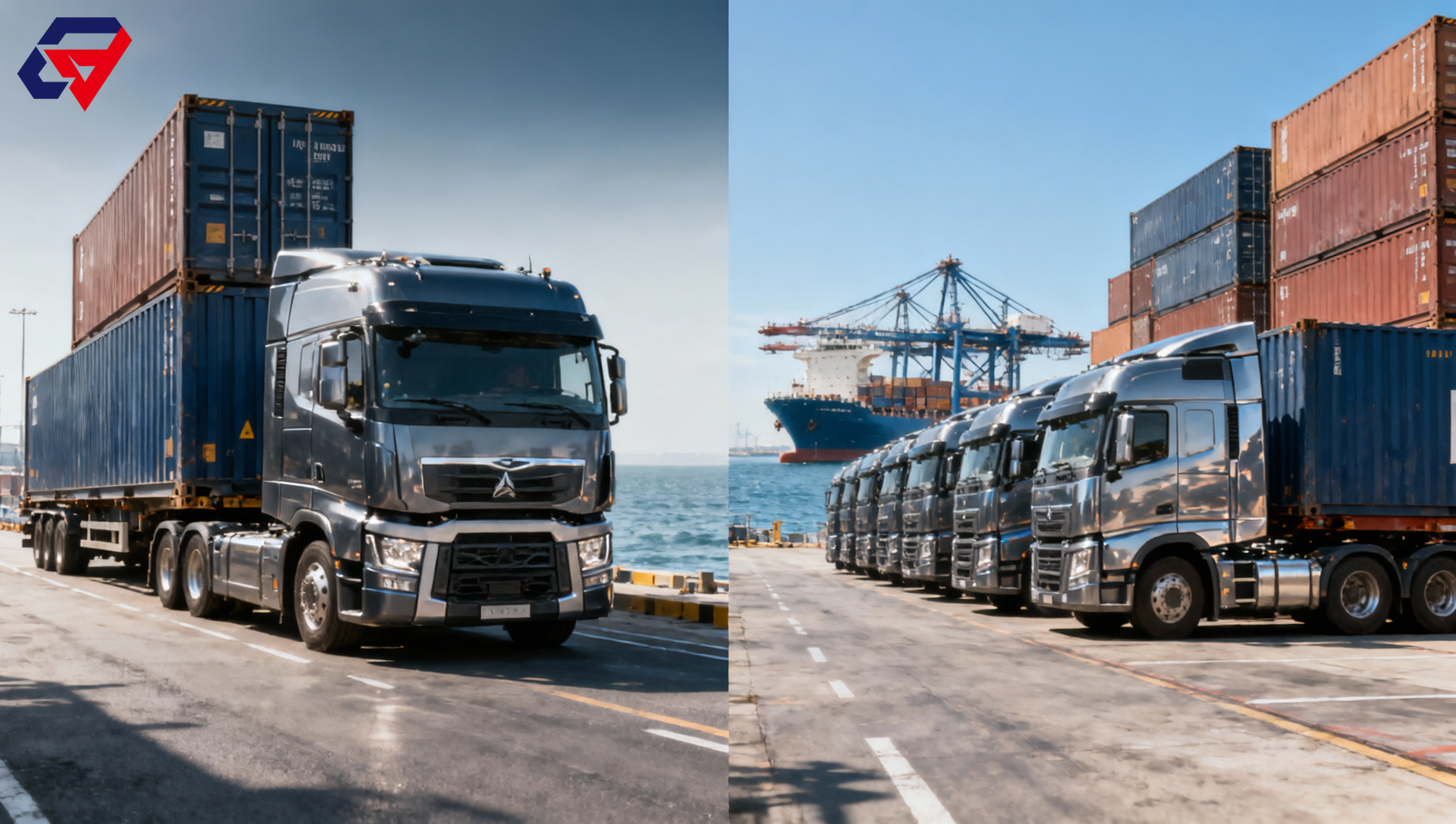
The timing of the underlying disruption is not clearly specified in the source material, but the latest logistics update already signals a concrete change in trade execution conditions for heavy-duty truck exports. According to the information provided, rerouting on Asia-Europe lanes has sharply raised container shipping costs, while major Chinese heavy truck exporters have extended Q3 delivery lead times for some orders bound for the Middle East, Africa, and South America. For exporters, distributors, procurement teams, and supply chain service providers, this is worth close attention because it affects not only freight budgets but also delivery commitments, contract execution, and the practical handling of export orders.

What the latest logistics brief confirms
Maersk and Kuehne+Nagel jointly released the 2026 International Logistics Update for Medium and Heavy Trucks on 2026-06-28. Based on the information provided, continued attacks by Houthi forces have led Asia-Europe routes to divert around the Cape of Good Hope.
As a result, the average freight rate for a 40HQ container rose to $8,650, representing a 42% increase from May. The same source states that major Chinese heavy truck export companies have notified overseas distributors that Q3 delivery cycles for some orders shipped to markets in the Middle East, Africa, and South America will be extended by 2 to 4 weeks.
The provided summary also states that these exporters have started evaluating alternative logistics solutions. No further confirmed execution details, company names, or regulatory notices were provided in the input.
Where the pressure is likely to appear first
Export order management is becoming more sensitive to logistics execution
From an industry perspective, exporters are likely to feel the impact first because delivery timing and freight cost are directly tied to order performance. The immediate pressure is likely to appear in shipment scheduling, contract delivery windows, and coordination with overseas distributors. What deserves closer attention is whether existing export documentation, shipping terms, and order confirmation materials are aligned with longer transit times and potential route changes.
Overseas distributors may need to reassess inventory and receiving plans
Distributors that were informed of longer Q3 lead times may need to revisit inventory planning, customer delivery commitments, and local handover schedules. Analysis shows that the key issue is not only delay itself, but whether downstream receipt, storage, and market delivery arrangements still match the revised export timetable. Any business process linked to fixed arrival assumptions may require adjustment.
Procurement and supply chain service providers face a wider coordination burden
For procurement teams and supply chain service providers, the reported shift suggests greater attention to route planning, container booking arrangements, and the practical feasibility of alternative logistics options. Observably, this does not yet amount to a new formal trade rule in the legal sense, but it does function as an operational constraint that can alter how export shipments are organized and costed in practice.
What companies should monitor now
Review delivery clauses and scheduling assumptions
Analysis shows that companies involved in heavy truck exports should closely review whether current order documents, dispatch commitments, and distributor communications still reflect realistic lead times. Where Q3 deliveries are involved, the main concern is whether previous scheduling assumptions remain workable under longer transit cycles.
Track changes in logistics routing and supporting documents
What deserves closer attention is the documentation trail attached to any alternative logistics arrangement under evaluation. If routing, shipping sequence, or handover timing changes, exporters and logistics partners may need to ensure that commercial papers, shipment records, and customer-facing delivery documents remain internally consistent. The input does not provide detailed execution requirements, so this remains a monitoring point rather than a confirmed compliance outcome.
Recheck procurement and after-sales readiness for delayed arrivals
For manufacturers, distributors, and after-sales teams, extended delivery windows may affect procurement timing, parts planning, and service preparation tied to vehicle arrival schedules. Observably, businesses with obligations linked to installation, commissioning, or delivery acceptance should watch for knock-on timing changes, even though no formal revised market rules were provided in the source summary.
Watch for further execution signals rather than assume a settled pattern
It is more appropriate to understand this as an active execution signal than as a finalized long-term market reset. Companies should therefore keep tracking whether logistics assessments lead to stable alternative arrangements, revised delivery practices, or updated trade-facing requirements in contracts and tenders.
Why this reads as an execution signal, not a settled rule change
Analysis shows that the most meaningful aspect of this update is not a newly issued regulation or certification standard, but a real-world shift in trade operating conditions that can have rule-like effects on business execution. Higher freight rates, longer lead times, and route changes can all influence how exporters manage delivery obligations and how distributors interpret order timing.
At the same time, it is more appropriate to understand this as a developing operational signal rather than a fully settled framework. The provided information confirms cost escalation, delivery extensions, and evaluation of alternatives, but it does not confirm a standardized industry response, a formal regulatory mandate, or a completed new logistics model.
How the market may need to read this development
From an industry perspective, this development should be read as a practical warning that shipping disruption is now affecting export execution for heavy-duty trucks in visible ways. The confirmed facts are limited but material: transport costs have risen sharply, some Q3 delivery cycles have been extended, and alternative logistics options are under review.
A neutral reading is therefore more appropriate than a broad conclusion. This is not yet enough to define a permanent market rule, but it is sufficient to justify closer review of export planning, distributor coordination, procurement timing, and delivery-related compliance handling in affected trade flows.
Source basis and points that still require verification
This article is generated from the user-provided news title, event timing, and summary. The specific official source link was not provided in the input, so further verification remains necessary. For developments of this type, relevant source categories typically include official notices, regulator releases, customs or trade authority information, industry association updates, standard-setting documents, and reporting from established industry media.
Further observation is still needed on later execution details, including any more specific logistics arrangements, changes in contract or tender wording, shifts in documentation practice, market feedback from distributors, and how exporters ultimately implement the alternative logistics plans referenced in the provided summary.
NAVIGATION
Send Us A Message