


News
Explore what’s going on around the industry and get the latest from the world of heavy equipment and earth-moving.

On 2026-02-29, Foton disclosed that its heavy truck exports exceeded 6,100 units in January and February 2026, up about 70% year on year, while exports of new energy heavy trucks surged 87.8%. For the commercial vehicle sector and related export supply chains, the update matters because it highlights how certification, market-specific adaptation, and service capability are becoming more important in overseas expansion alongside product shipment volume.
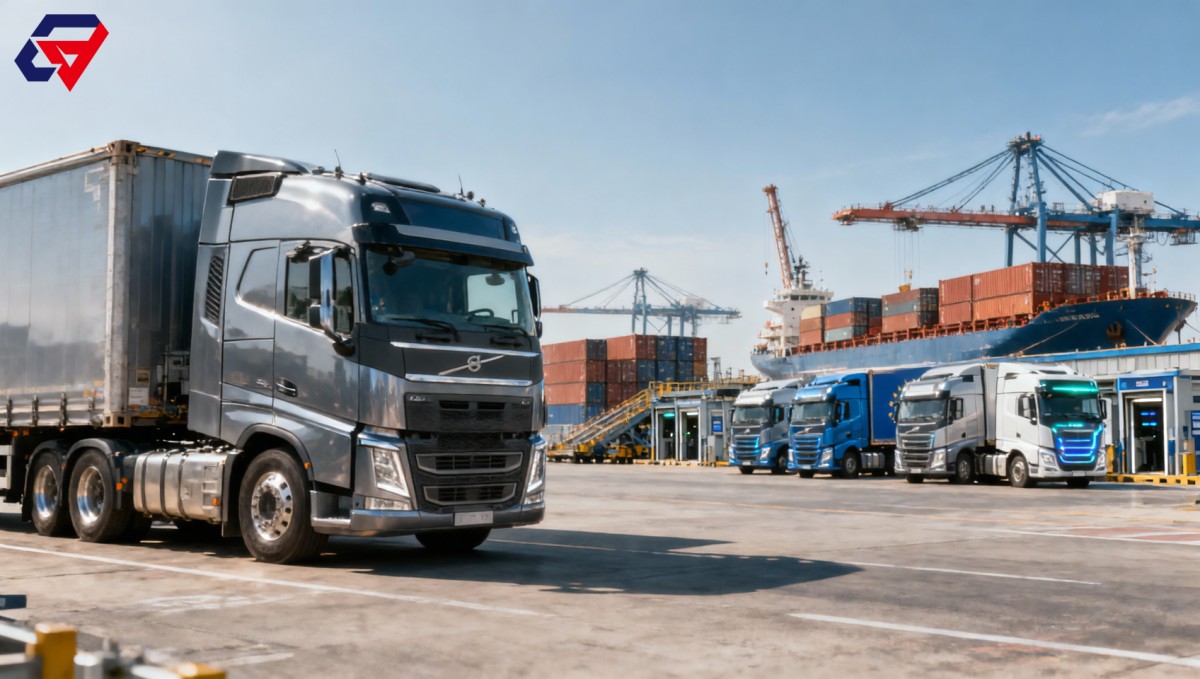
Image placement plan: 1 image is recommended before the main factual section to support scan-friendly reading and highlight the export and certification theme.
Verified developments from the latest disclosure
According to Foton's official disclosure, the company exported 6,100 heavy trucks in January and February 2026, representing year-on-year growth of about 70%.
During the same period, exports of its new energy heavy trucks increased by 87.8% year on year.
The company's BEACON platform for liquid hydrogen and battery-electric heavy trucks has obtained EU WVTA type approval.
Foton also stated that scenario-adapted deliveries based on this platform have been completed in Singapore, Brazil, and Spain.
The disclosed information indicates that the company's overseas approach includes not only vehicle exports, but also certification progress and market-specific deployment support.
What this means across the industry chain
Impact on exporting trading companies
Export-oriented trading companies may be affected because overseas customers increasingly look beyond shipment price and volume. In this case, certified platforms and completed local adaptation deliveries provide a more concrete basis for distributor evaluation. The impact is likely to appear in customer qualification review, model selection discussions, contract negotiation, and long-term channel planning. What deserves closer attention is whether future overseas orders place more weight on certification status, local operating fit, and after-sales coordination.
Implications for raw material purchasing companies
Companies involved in raw material purchasing may feel indirect pressure as vehicle exporters move toward a model that combines compliance, scenario fit, and service readiness. This can influence procurement timing, material traceability expectations, and supply consistency requirements for components linked to new energy heavy trucks. From an industry perspective, these buyers may need to pay closer attention to whether downstream manufacturers ask for more structured documentation and steadier supply support tied to export programs.
Pressure points for processing and manufacturing companies
Processing and manufacturing companies are affected because export growth in heavy trucks and new energy heavy trucks can raise expectations for platform consistency, technical documentation, and product validation readiness. The impact may show up in production planning, specification alignment, testing support, and document preparation for export-facing programs. Observably, manufacturers serving this segment may need to focus more on whether their products can support certified vehicle platforms and localized delivery requirements in different overseas use scenarios.
New demands for supply chain service providers
Supply chain service companies, including those supporting delivery coordination and after-sales systems, may face broader responsibilities. The reason is that overseas expansion is increasingly linked to service capability rather than shipment alone. The impact can appear in delivery coordination, spare-parts planning, technical file transfer, and post-delivery service support. What deserves closer attention is whether customers and distributors begin to require stronger collaboration frameworks for service network building and long-term operating support.
Key actions companies should consider now
Review certification and compliance readiness early
Because the BEACON platform has obtained EU WVTA type approval, certification status is becoming a visible competitive factor in export business. Companies connected to similar programs should examine whether their own products, supporting parts, and technical files are ready for compliance review processes associated with overseas market access.
Align technical specifications with real operating scenarios
The disclosed deliveries in Singapore, Brazil, and Spain suggest that market entry is increasingly linked to scenario-based adaptation rather than uniform export configurations. Companies should therefore pay closer attention to specification alignment, operating condition matching, and technical communication with overseas channel partners before delivery commitments are made.
Strengthen after-sales collaboration with distributors
The shift toward a combined model of compliance, scenario fit, and service means after-sales capability is becoming part of export risk control. Businesses should assess how warranty support, spare-parts preparation, service response processes, and quality traceability will be handled jointly with overseas distributors.
Reassess long-cycle cooperation risks in export projects
The information provided offers practical reference for overseas distributors evaluating technology suitability, joint after-sales system building, and long-term cooperation risk. Companies involved in export projects should use this kind of signal to revisit supplier qualification management, delivery planning, document completeness, and ongoing support obligations.
Industry observation: export competition is becoming more rule-based
Analysis shows that this development is better understood not only as a volume growth story, but also as a sign of changing export competition rules in the heavy truck sector. When type approval, localized deployment, and service support appear together in one disclosure, the message to the market is that compliance capability may increasingly shape commercial opportunity.
From an industry perspective, the more important shift may be from simple product export toward a more integrated overseas operating model. That does not automatically mean all manufacturers can replicate the same path, but it suggests that distributors and buyers may become more cautious in evaluating technical adaptability, service co-building capacity, and long-term execution risk.
Observably, this could raise the practical threshold for participation in overseas heavy truck programs, especially where buyers expect clearer documentation, stronger delivery coordination, and more durable post-sale support. It is more appropriate to understand this as an industry capability upgrade signal rather than a short-term sales headline alone.
Why this matters beyond the headline figures
The reported export growth, the sharp increase in new energy heavy truck exports, and the EU WVTA type approval attached to the BEACON platform together give the market a concrete reference point for how overseas expansion is evolving. The broader significance lies in the combination of certification, localized application, and service planning.
A rational conclusion is that market participants should watch not only export volume changes, but also how compliance execution, technical adaptation, and after-sales coordination increasingly influence partner selection and project continuity. The event does not by itself determine future market outcomes, but it does provide a useful signal for industry planning.
Source note and follow-up points
This article was generated based on the user-provided news title, event date, and event summary. For events of this kind, commonly relevant source types may include company disclosures, certification announcements, regulatory notices, tender documents, and industry feedback from distributors and service partners.
Specific official source links were not provided in the input and should be verified continuously.
Items that still require ongoing observation include detailed compliance implementation practices, how certification is applied in actual market entry processes, whether procurement and specification documents evolve in response to such developments, and how industry participants assess after-sales system building and long-term cooperation risk.
NAVIGATION
Send Us A Message