



News
Explore what’s going on around the industry and get the latest from the world of heavy equipment and earth-moving.
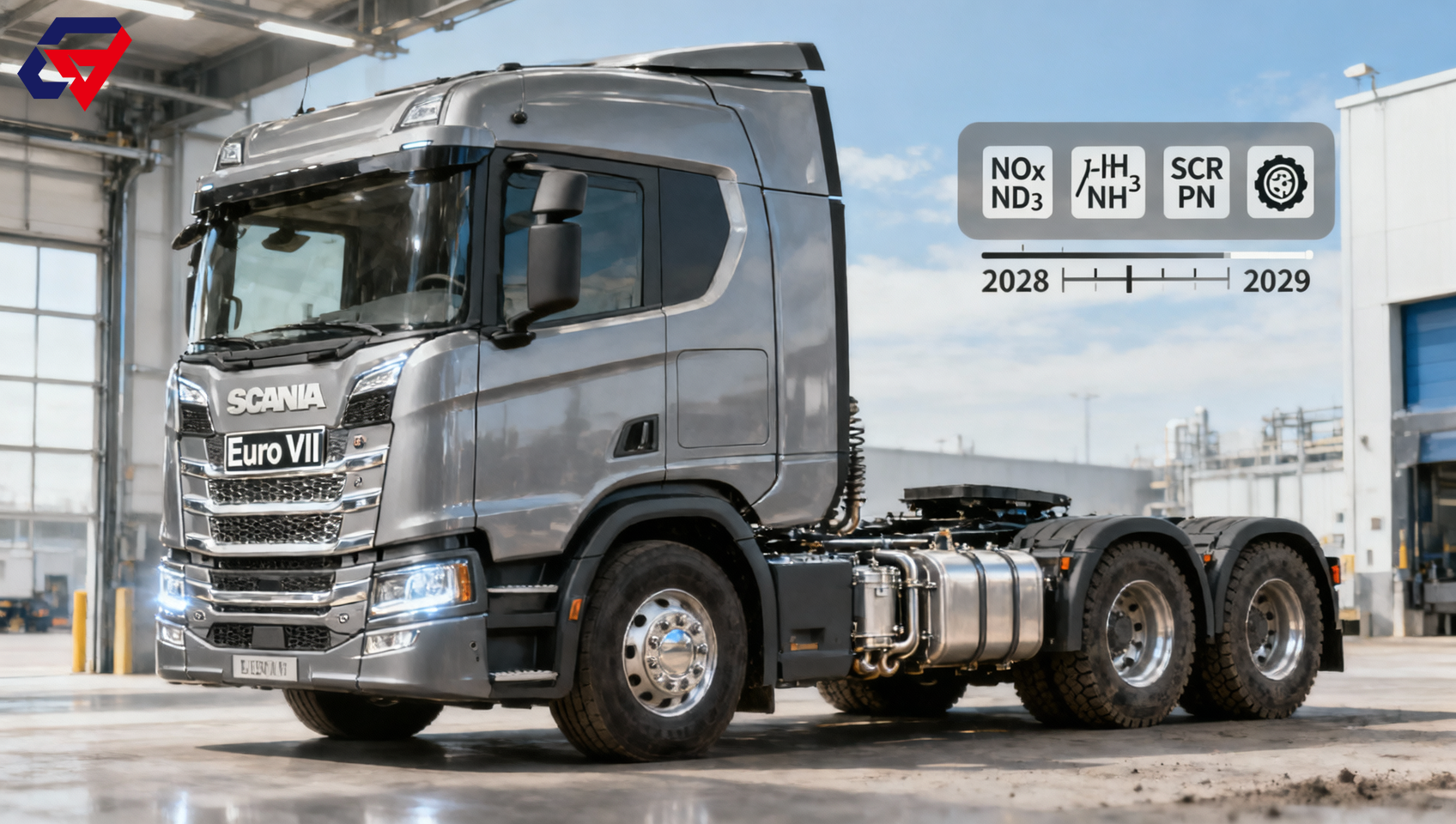
Scania’s Swiss subsidiary has launched pre-orders for Euro VII-compliant heavy-duty trucks, with the regulation set to become mandatory for new heavy vehicles in the EU on 29 May 2028 — and fully applicable to all newly registered vehicles by May 2029. This development directly impacts exporters of heavy-duty trucks, powertrain systems, and aftertreatment solutions from China to the EU, as well as suppliers across the associated supply chain.
Event Overview
Scania’s Swiss subsidiary has initiated pre-sales of heavy-duty trucks meeting the upcoming Euro VII emissions standard. The standard will enter into force for new type approvals of heavy vehicles on 29 May 2028, and apply to all new registrations from 29 May 2029. Euro VII introduces significantly stricter limits for nitrogen oxides (NOx), ammonia (NH3), particle number (PN), and — for the first time — includes regulatory requirements for tire wear particles and battery durability.
Industries Affected
Direct Exporters of Heavy-Duty Vehicles
Chinese manufacturers exporting heavy trucks to the EU must ensure full compliance before the 2028 deadline. Because type approval requires full testing and documentation, affected companies face a compressed 18–24 month window to complete certification, engineering validation, and production ramp-up — meaning vehicle platforms, engine calibrations, and exhaust aftertreatment systems may require redesign or revalidation.
Powertrain and Aftertreatment System Suppliers
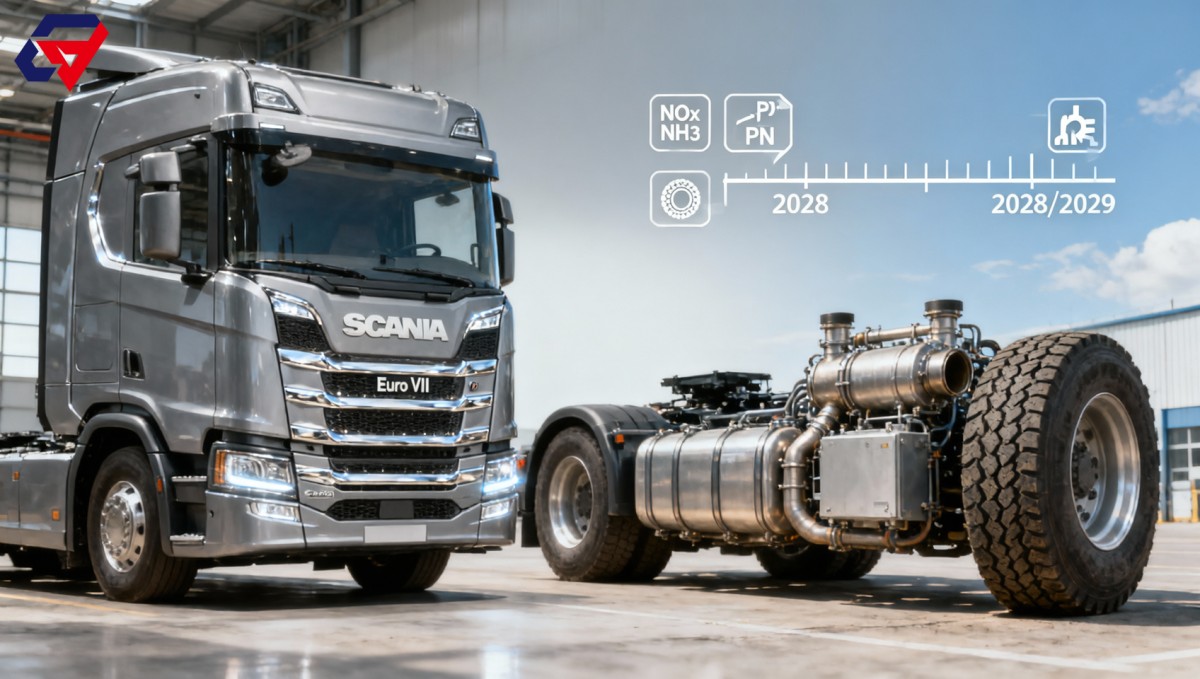
Suppliers of engines, SCR systems, DPFs, and electronic control units are impacted because Euro VII’s tighter NOx, NH3, and PN limits demand higher-efficiency catalyst formulations, improved urea dosing precision, and more robust thermal management. Certification timelines for component-level approvals align with vehicle-level deadlines, narrowing the window for integration testing and homologation support.
Tire and Battery Component Manufacturers
Euro VII marks the first EU emissions regulation to include provisions for non-exhaust emissions — specifically tire wear particles — and battery durability for hybrid and electric heavy-duty vehicles. While enforcement details remain pending, tire producers supplying OE fitments for EU-bound trucks, and battery module integrators serving truck OEMs, now face early-stage compliance planning requirements.
What Relevant Companies or Practitioners Should Focus On Now
Monitor official technical specifications and implementation guidance
The final Euro VII implementing acts — including test procedures for tire wear and battery aging — have not yet been published in full. Companies should track updates from the European Commission and UNECE WP.29, particularly regarding measurement methodology, conformity-of-production (CoP) rules, and transitional arrangements.
Prioritise certification readiness for high-volume export models
Given the 18–24 month lead time required for full type approval, exporters should identify which truck models account for the largest share of current EU-bound shipments — and initiate pre-homologation testing and documentation preparation without delay. Engine and aftertreatment configurations used across multiple models should be prioritised for early validation.
Distinguish between regulatory signal and enforceable obligation
The pre-order announcement reflects market anticipation, not legal enforcement. Euro VII is not yet in force; no vehicle sold before 29 May 2028 is subject to its requirements. Companies should avoid premature capital expenditure or design lock-in until final test protocols and conformity assessment rules are confirmed.
Initiate cross-supplier alignment on timeline-critical components
Because compliance depends on integrated system performance — e.g., engine + SCR + DPF + ECU — original equipment manufacturers should convene key Tier 1 suppliers now to jointly map certification dependencies, shared test resource needs, and documentation handover schedules — especially where component suppliers serve multiple OEMs competing for limited EU test facility capacity.
Editorial Perspective / Industry Observation
Observably, this pre-order launch signals growing industry confidence in the technical feasibility of Euro VII — but it does not indicate accelerated regulatory enforcement. The 2028/2029 dates remain fixed, and no formal amendment or early adoption mechanism has been proposed. Analysis shows that the move primarily serves as a commercial readiness indicator: OEMs are using pre-sales to secure order pipelines and allocate internal R&D bandwidth ahead of certification bottlenecks. From an industry perspective, the event is best understood not as a policy shift, but as an early warning of tightening operational timelines — one that highlights how regulatory lead times increasingly compress product development cycles for export-oriented manufacturers.
Conclusion
While Euro VII itself remains a future regulatory requirement — not yet active — its pre-order phase underscores a narrowing window for technical adaptation. For Chinese exporters and their suppliers, the current priority is not immediate redesign, but disciplined timeline mapping, selective pre-validation, and coordinated supplier engagement. This is less a sudden compliance shock and more a structured inflection point in long-term export strategy planning.
Information Sources
Main source: Public announcement by Scania Switzerland regarding Euro VII heavy-duty truck pre-orders, referencing the 29 May 2028 and 29 May 2029 implementation dates. Further technical details — including test protocols for tire wear and battery durability — remain under development and are subject to ongoing observation.
NAVIGATION
Send Us A Message