


News
Explore what’s going on around the industry and get the latest from the world of heavy equipment and earth-moving.
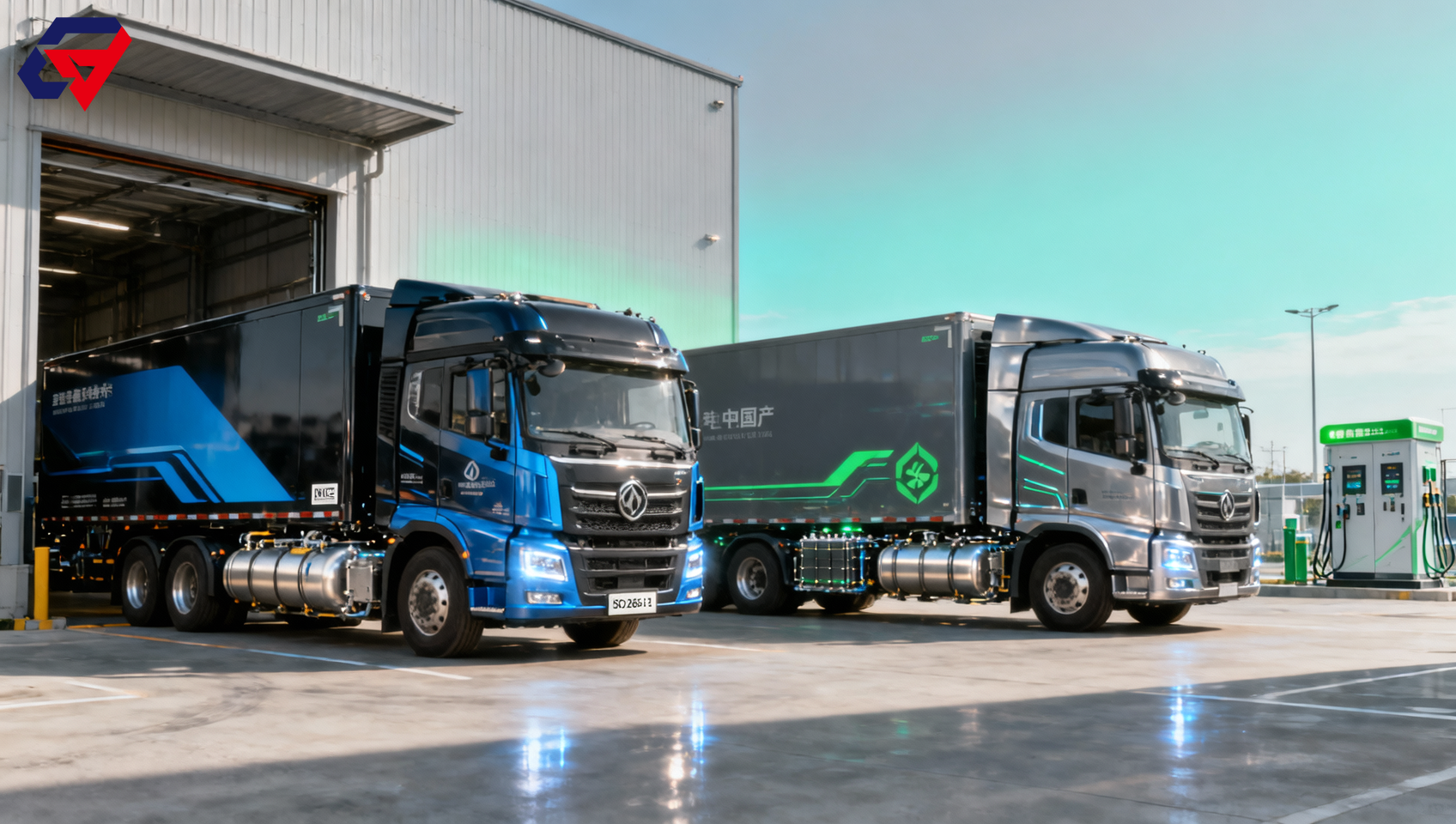
On May 9, 2026, the General Office of the CPC Central Committee and the General Office of the State Council jointly issued Opinions on Advancing Energy Conservation and Carbon Reduction at a Higher Level and Higher Quality, explicitly designating battery-electric and hydrogen-powered heavy-duty trucks as ‘National Strategic Green Equipment’. This marks the first time such vehicles have received this formal classification under top-level policy. The directive mandates accelerated alignment with international functional safety and low-carbon certification frameworks—including UN/ECE Regulation 134 and ISO 26262-12—making it highly relevant for export-oriented manufacturers, certification service providers, and logistics equipment integrators operating in or targeting EU, Middle East, and Southeast Asian markets.
Event Overview
On May 9, 2026, the General Office of the CPC Central Committee and the General Office of the State Council released the Opinions on Advancing Energy Conservation and Carbon Reduction at a Higher Level and Higher Quality. The document formally classifies electric and hydrogen-powered heavy-duty trucks as ‘National Strategic Green Equipment’ and instructs relevant departments to expedite technical harmonization with international standards including UN/ECE R134 and ISO 26262-12. No further implementation details, timelines, or supporting measures were published in the initial release.
Industries Affected by This Policy
Export-Oriented Vehicle Manufacturers
These enterprises are directly affected because the policy signals a coordinated national effort to reduce technical barriers for overseas market access. Impact manifests primarily in regulatory compliance pathways: alignment with UN/ECE R134 and ISO 26262-12 is now elevated from a commercial best practice to a nationally endorsed priority, potentially accelerating mutual recognition agreements with key import jurisdictions.
Certification & Testing Service Providers
Organizations offering conformity assessment services for automotive functional safety and carbon performance face increased demand for dual-capability testing (i.e., domestic GB standards plus UN/ECE and ISO requirements). The policy’s emphasis on ‘accelerated对接’ (alignment) implies growing need for accredited labs capable of issuing reports accepted by both Chinese authorities and foreign regulators.
Supply Chain Integrators for Powertrain Systems
Firms supplying battery systems, fuel cell stacks, or high-voltage control units to heavy-truck OEMs may experience upstream pressure to pre-validate components against ISO 26262-12 (for functional safety) and emerging lifecycle carbon accounting protocols referenced under UN/ECE R134. Component-level documentation traceability and test report portability become more operationally critical.
International Trade Compliance Officers
Professionals managing customs, technical file submissions, and type-approval workflows for heavy-duty vehicle exports must now treat UN/ECE R134 and ISO 26262-12 not as optional add-ons but as de facto baseline requirements for priority markets—especially where zero-emission commercial vehicle regulations are under active development (e.g., EU’s upcoming CO2 standards for heavy-duty vehicles, Saudi Arabia’s NEOM mobility framework, Thailand’s EV Master Plan 2037).
What Enterprises and Practitioners Should Focus On Now
Monitor official implementation guidance and standardization roadmaps
The current document is a policy opinion—not an enforcement regulation. Stakeholders should track announcements from MIIT, SAMR, and the Standardization Administration of China for concrete timelines, pilot programs, or revised GB standards referencing UN/ECE R134 or ISO 26262-12 clauses.
Identify priority export markets with active zero-emission vehicle rulemaking
Focus attention on jurisdictions where regulatory deadlines for zero-emission heavy-duty vehicle sales or registration are imminent—such as the EU’s phased-in CO2 targets (starting 2025–2030), UAE’s 2030 net-zero transport commitments, and Indonesia’s draft Low-Carbon Vehicle Regulation. These are most likely to benefit from accelerated mutual recognition enabled by the new policy.
Distinguish between policy intent and near-term operational readiness
While the policy sets a clear strategic direction, no mandatory certification transition date has been announced. Companies should avoid premature full-scale re-certification but instead conduct gap analyses between existing GB-compliant test reports and UN/ECE R134/ISO 26262-12 requirements—and prioritize documentation upgrades for high-priority export SKUs.
Prepare technical documentation and lab coordination for cross-border validation
Begin aligning internal test planning with internationally accepted formats (e.g., ISO/IEC 17025-accredited reports, ASAM OTX-compatible test logs). Initiate dialogue with labs already accredited for UN/ECE R134 or ISO 26262-12 to assess capacity, lead times, and reporting compatibility ahead of anticipated demand surges.
Editorial Perspective / Industry Observation
Observably, this policy functions primarily as a high-level coordination signal—not an immediate compliance trigger. Its significance lies in institutionalizing technical alignment as a cross-departmental priority, which lowers bureaucratic friction for future bilateral/multilateral recognition arrangements. Analysis shows that the designation of ‘National Strategic Green Equipment’ does not confer automatic subsidies or procurement advantages domestically; rather, it establishes a formal basis for prioritizing resources toward international standards convergence. From an industry perspective, the move reflects a shift from unilateral green technology deployment to synchronized global market integration—particularly for capital-intensive, safety-critical equipment like heavy-duty trucks. Continued monitoring is warranted, as actual impact will depend on follow-up technical guidelines, intergovernmental negotiations, and adoption pace by target markets’ regulatory bodies.
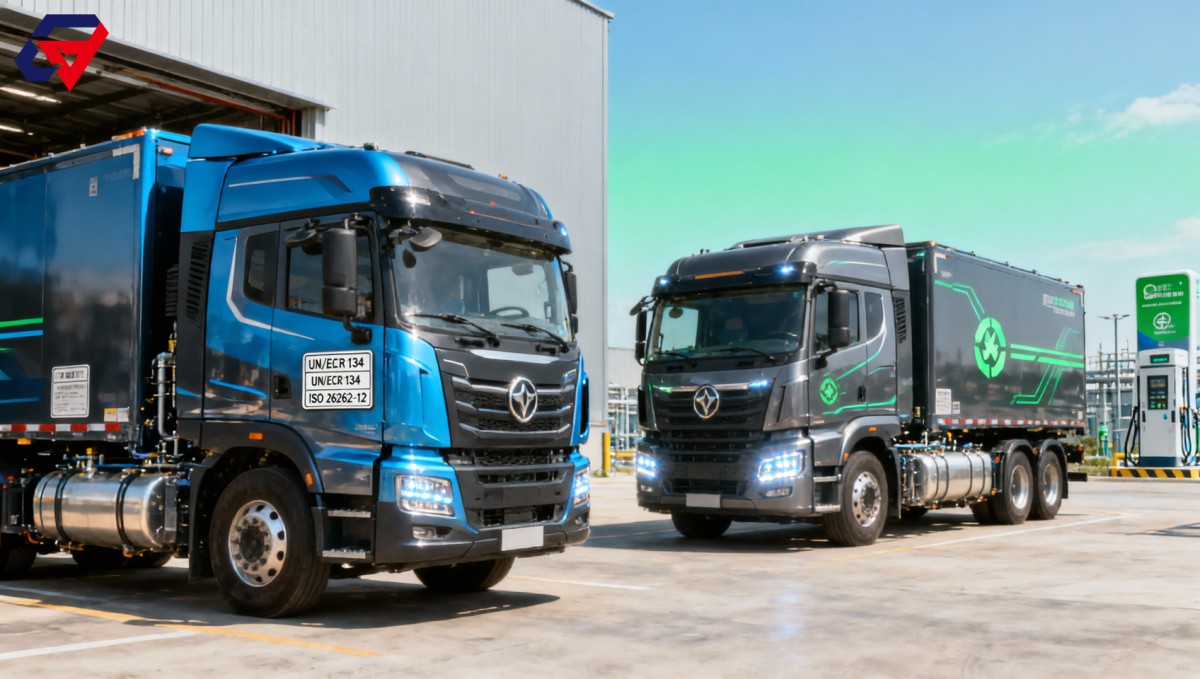
Conclusion: This policy does not introduce new legal obligations on its own, but it materially elevates the strategic importance of international certification alignment for electric and hydrogen heavy-duty trucks. It is better understood as a foundational enabler for export scalability—not an immediate compliance milestone. Stakeholders should treat it as a directional marker requiring proactive technical preparation, not a deadline-driven mandate.
Source: Joint Opinion issued by the General Office of the CPC Central Committee and the General Office of the State Council, dated May 9, 2026.
Note: Implementation timelines, detailed technical annexes, and intergovernmental negotiation outcomes remain pending and require ongoing observation.
NAVIGATION
Send Us A Message