



News
Explore what’s going on around the industry and get the latest from the world of heavy equipment and earth-moving.
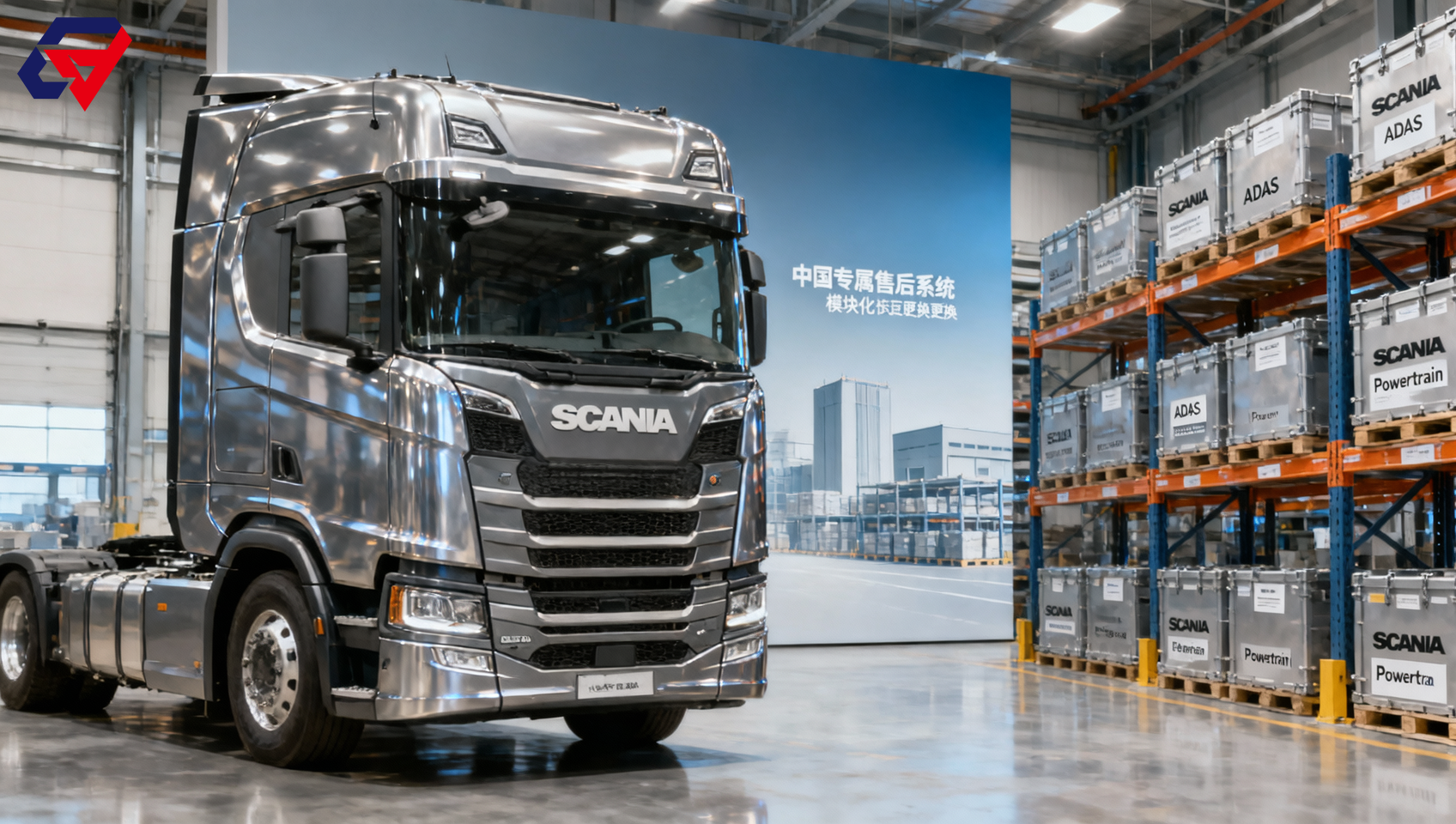
On April 22, 2026, Scania officially launched a dedicated, standalone after-sales service system in China for its NEXT ERA heavy-duty trucks — separate from traditional distribution channels. This development is especially relevant for international importers, distributors, and CKD/KD assembly partners operating in the Middle East, Latin America, and Southeast Asia, where localized service responsiveness and China-sourced component reliability directly affect total cost of ownership and fleet uptime.
Event Overview
On April 22, 2026, Scania activated a China-exclusive after-sales service system for the NEXT ERA heavy-duty truck platform. The system includes a China-based spare parts center with forward-deployed inventory and a three-tier service network covering mainland China. All parts undergo Scania’s global unified quality verification and support modular, rapid replacement. No additional rollout details, regional expansion timelines, or third-party integration plans have been publicly confirmed.
Industries Affected
Direct Trading Enterprises (Importers & Exporters)
Importers sourcing NEXT ERA trucks from China — particularly those supplying markets reliant on Chinese-built chassis or KD kits — face revised expectations around post-purchase support. The new system shifts service accountability from local dealers to a centralized, China-managed infrastructure, potentially altering warranty enforcement pathways and lead times for critical replacements.
KD/CKD Assembly Operators
Manufacturers conducting knock-down assembly in regions such as Saudi Arabia, Mexico, or Vietnam rely on consistent, timely access to authentic components. With Scania now validating and staging parts in China prior to export, assembly line continuity may improve — but only if regional distribution agreements explicitly align with this new service architecture.
Aftermarket Parts Distributors
Distributors previously supplying non-Scania-branded or parallel-market components for older-generation models may encounter intensified channel discipline. The modular design and global validation requirement raise barriers to entry for third-party alternatives, tightening OEM control over repair workflows and lifecycle service revenue streams.
Logistics & Technical Support Providers
Third-party logistics firms handling cross-border parts delivery, and technical training providers supporting dealer networks, must assess whether their current service scope covers Scania’s newly defined ‘zero-wait’ response standard — including diagnostics handover protocols, module-swapping certification, and real-time inventory visibility integration.
What Stakeholders Should Monitor and Act On
Track official service policy documentation for non-China markets
Scania has not yet published formal service terms applicable outside China. Importers and distributors should monitor updates to Scania’s Global Service Agreement templates, especially clauses covering parts origin, warranty activation triggers, and escalation paths for cross-border technical disputes.
Verify alignment between local dealer contracts and the new China-centric model
Existing service agreements signed before April 2026 may not reflect the operational reality of parts staging, module-level replacement workflows, or remote diagnostic dependencies. Contractual review — particularly around liability for downtime caused by parts availability gaps — is recommended ahead of next renewal cycles.
Distinguish between announced capability and actual deployment coverage
The launch confirms structural setup (parts center + three-tier network), but does not specify geographic reach within China or minimum stock levels per SKU. Stakeholders should treat ‘zero-wait’ as a target metric — not an immediate guarantee — and validate lead times for high-failure-rate modules (e.g., ADAS control units, powertrain electronics) through pilot orders.
Prepare for updated technical training and certification requirements
Modular replacement implies new diagnostic interfaces, torque specifications, and calibration procedures. Technical teams should anticipate mandatory recertification aligned with Scania’s updated NEXT ERA service manuals — likely requiring access to China-hosted digital platforms and remote validation tools.
Editorial Perspective / Industry Observation
Observably, this initiative signals Scania’s strategic pivot toward treating China not just as a manufacturing base, but as a service orchestration hub for emerging-market customers. Analysis shows it reflects broader OEM trends where after-sales infrastructure — rather than vehicle sales alone — becomes the decisive factor in winning long-term fleet contracts. However, the extent to which this model delivers tangible uptime improvements outside China remains unverified; its current value lies more in signaling commitment than in proven scalability. From an industry perspective, it is better understood as an infrastructure milestone — one that raises the bar for service responsiveness expectations across competing European and Asian heavy-truck brands.
This is not yet a fully operationalized global standard, but rather the first institutionalized step toward decoupling service delivery from traditional national dealership hierarchies.
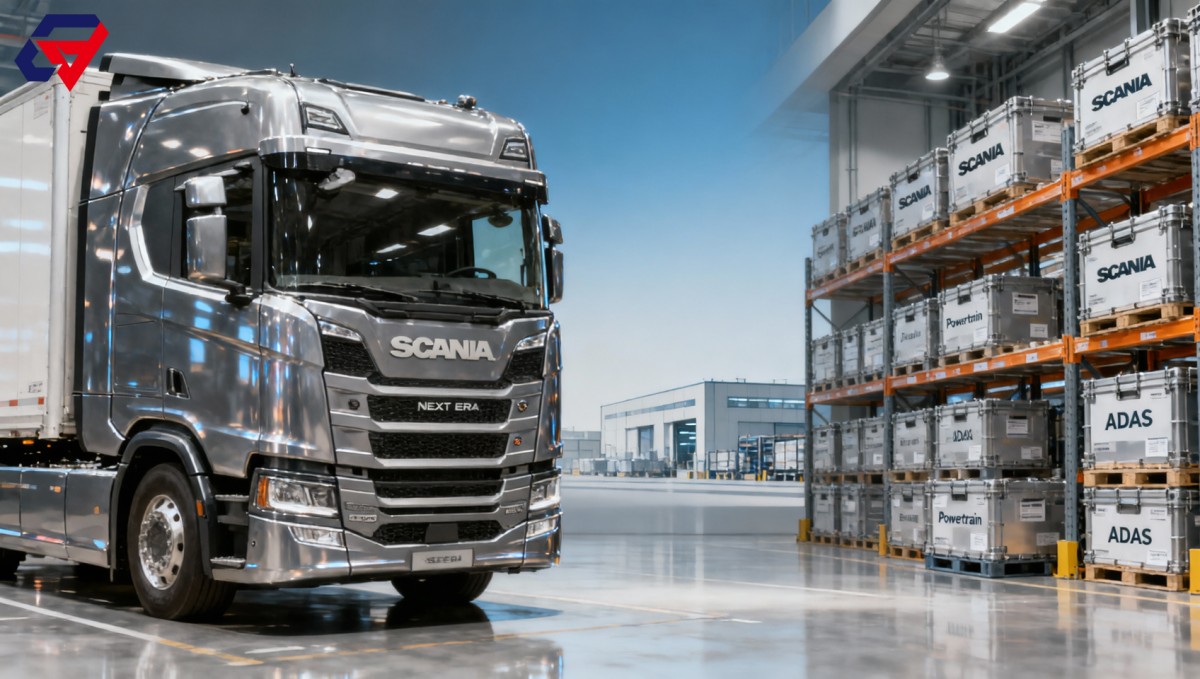
In summary, Scania’s NEXT ERA China after-sales launch redefines service accountability for internationally distributed heavy-duty trucks — shifting emphasis from localized dealer capacity to centralized, quality-verified component readiness. Its primary significance lies in recalibrating reliability expectations for customers dependent on Chinese-sourced vehicles and assemblies. For now, it is best interpreted as an infrastructure signal with conditional operational impact — one whose real-world efficacy will be measured not in announcement volume, but in verified mean time to repair (MTTR) reductions across target markets.
Source: Official Scania announcement dated April 22, 2026. No third-party verification or independent audit data has been released. Ongoing observation is warranted regarding rollout scope beyond mainland China and integration with existing regional service agreements.
NAVIGATION
Send Us A Message