



News
Explore what’s going on around the industry and get the latest from the world of heavy equipment and earth-moving.
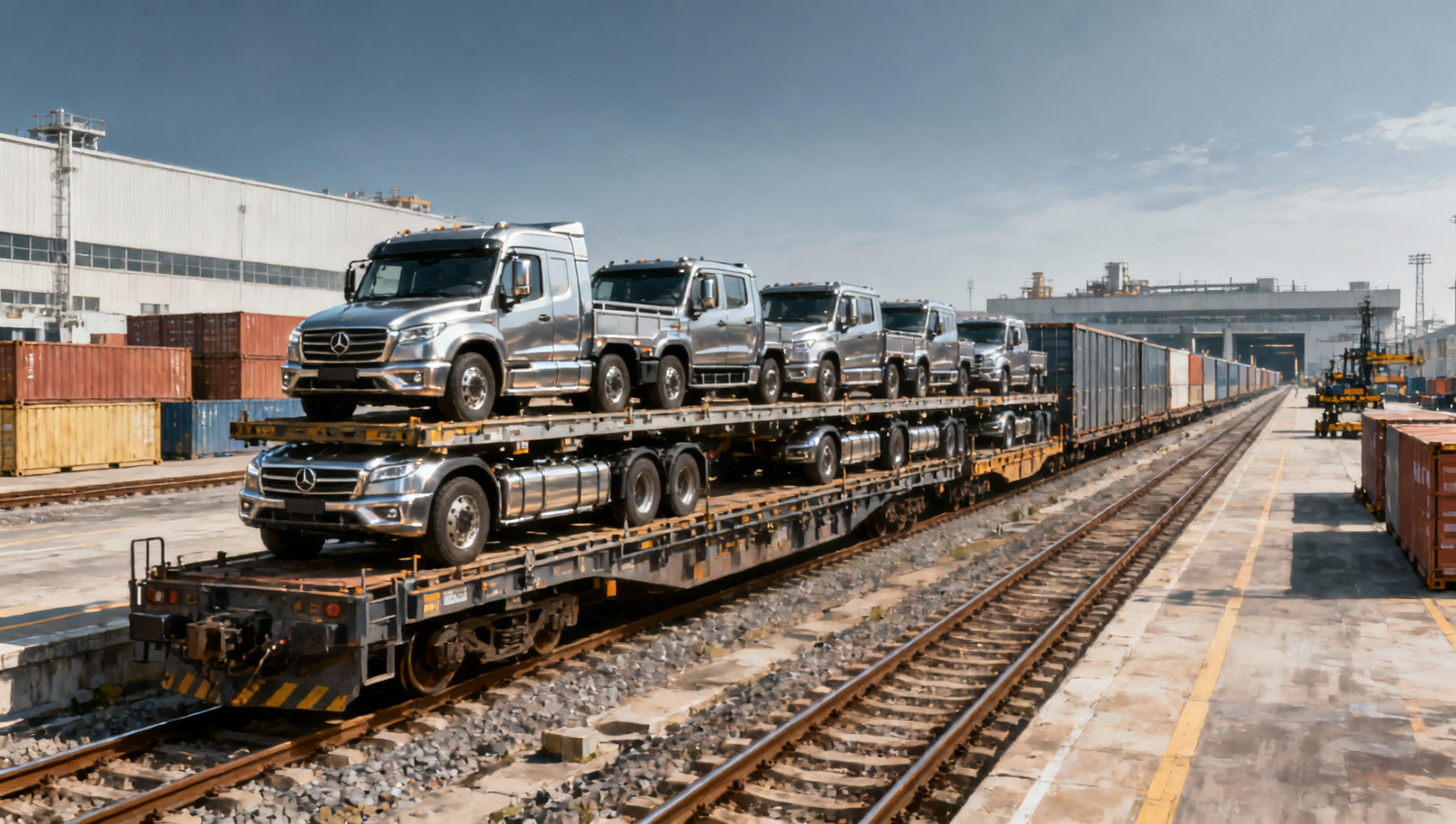
The timing of the development was not otherwise specified in the source material, but the disclosed update centers on a new China-Europe rail service for complete heavy truck shipments from Chongqing to Budapest. On July 19, 2026, China Railway Container Transport and Hungary's MÁV freight company launched the route, with the first train carrying 42 Chinese new energy heavy trucks. For vehicle exporters, Eastern European distributors, parts consolidators, and cross-border logistics providers, the industry relevance lies in two immediate changes at once: a shorter 18-day transit cycle and a spot rate that is 11% lower than the previous month.
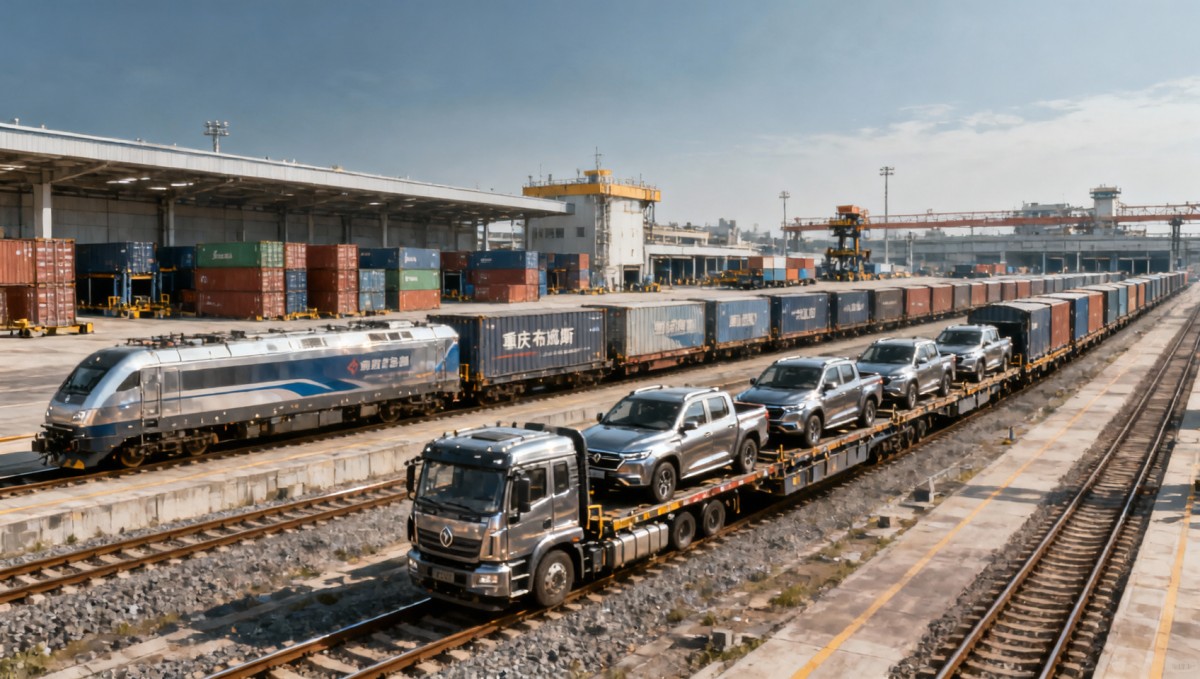
What Has Been Confirmed About the New Service
According to the provided information, the new dedicated train runs from Chongqing West Station to Budapest Central Freight Station and is designed for complete heavy truck transport. The inaugural departure was fully loaded with 42 Chinese new energy heavy trucks.
The route uses customized temperature-controlled carriages and a green customs-clearance channel. Total transit time is stated at 18 days, which is 32 days shorter than traditional sea freight based on the provided comparison. The current spot freight rate is also reported to be 11% lower than the previous month.
The service is described as suitable for bulk imports by distributors in Eastern Europe within the EU, as well as consolidated transport demand for after-sales parts.
Why Different Supply Chain Participants Will Watch This Route Closely
Vehicle exporters are looking at delivery rhythm, not only freight cost
From an industry perspective, complete heavy truck exporters may be affected because the route changes the balance between transit speed and transport cost for shipments into Eastern Europe. The main impact would be on export scheduling, customer delivery commitments, and inventory timing at destination markets. What deserves closer attention is whether this 18-day cycle becomes usable as a regular planning benchmark rather than a one-off launch metric.
Eastern European distributors may gain a new option for batch replenishment
Distributors serving Eastern European markets may see the route as relevant because it is explicitly positioned for bulk import demand. The business effect would likely appear in replenishment planning, warehousing cadence, and the timing of vehicle allocation to local sales channels. They should pay close attention to whether pricing and transit performance remain stable enough to support repeated procurement decisions.
After-sales parts operators may focus on consolidation efficiency
The provided information also points to demand for consolidated transport of after-sales parts. For parts distributors and service networks, the possible impact is less about headline vehicle transport and more about service continuity, spare-parts availability, and reduced waiting time for downstream maintenance needs. What deserves closer attention is how shipment consolidation will be organized in practice and whether service standards remain consistent across different cargo mixes.
Logistics service providers will be assessing operational reliability
Supply chain service providers may be affected because the route combines customized temperature-controlled equipment with a green customs-clearance channel. The operational impact would center on documentation flow, customs coordination, loading standards, and exception handling during cross-border transit. They should watch for any later clarification on booking rules, cargo eligibility, and execution requirements tied to this dedicated service.
Operational Questions Businesses Should Keep in View
Watch for follow-up clarification from the operating parties
Analysis shows that the launch itself is clear, but businesses still need to track whether the operators provide further details on service frequency, booking conditions, documentation requirements, and applicable cargo scope. Those factors will determine whether the route is best used for selected shipments or integrated into regular delivery planning.
Separate the launch signal from routine operating standards
What deserves closer attention is the difference between a newly announced line and a fully normalized transport product. A first departure carrying 42 vehicles confirms operational opening, but procurement teams and sales coordinators should avoid assuming that every later shipment will automatically match the same timing or commercial terms without further verification.
Recheck delivery promises made to downstream customers
For exporters, distributors, and parts operators, the practical issue is customer communication. If companies plan to use this route, delivery windows, inventory commitments, and after-sales support timelines should be reviewed against the confirmed 18-day claim and the current rate change, while keeping room for execution-side adjustments that may emerge after launch.
Prepare documentation and fulfillment coordination early
Observably, the route's value depends not only on rail transit itself but also on customs handling and shipment organization. Businesses involved in complete vehicle exports or parts consolidation should therefore focus on document readiness, supplier coordination, cargo matching, and internal response plans for any timing deviation, especially where customer contracts depend on precise handover dates.
How This Update Is Best Interpreted Right Now
Analysis shows that this development should be read first as a targeted logistics signal in the China-to-Eastern Europe heavy truck trade, rather than as proof of a broad market shift on its own. The combination of an 18-day transit time, a lower spot rate, and customs facilitation suggests that rail is being positioned as a more workable option for specific vehicle and parts flows.
At the same time, it is more appropriate to understand this as an operating development that still requires continued observation. The information provided confirms the route opening and its initial commercial advantages, but it does not by itself establish how durable those advantages will be across future shipments, wider cargo volumes, or changing monthly pricing conditions.
What the Market Can Reasonably Take From It
The industry meaning of this update is relatively clear: for complete heavy truck exports and related after-sales supply into Eastern Europe, transport decisions may no longer be framed only as a choice between slow sea freight and higher-cost alternatives. A dedicated rail option with shorter lead time and a lower near-term rate introduces a practical planning variable for exporters, distributors, and logistics coordinators.
Still, the most balanced reading is to treat this as an important route-level development with immediate operational relevance, not as a settled long-term outcome. Companies with exposure to EU Eastern European distribution, vehicle imports, or parts consolidation have reason to watch it closely, but they should make decisions based on verified execution performance as further information emerges.
Basis of This Report and What Still Needs Verification
This article is based on the user-provided news title, event timing, and event summary. The specific official source link was not provided in the input, so the details should continue to be checked against source materials typically used for this kind of industry development, such as official operator announcements, company statements, industry association updates, authoritative media reports, and related transport documentation.
Further verification should focus on any later official clarification regarding operating terms, repeat shipment conditions, documentation requirements, and whether the reported transit time and price change continue to apply beyond the initial launch stage.
NAVIGATION
Send Us A Message