



News
Explore what’s going on around the industry and get the latest from the world of heavy equipment and earth-moving.
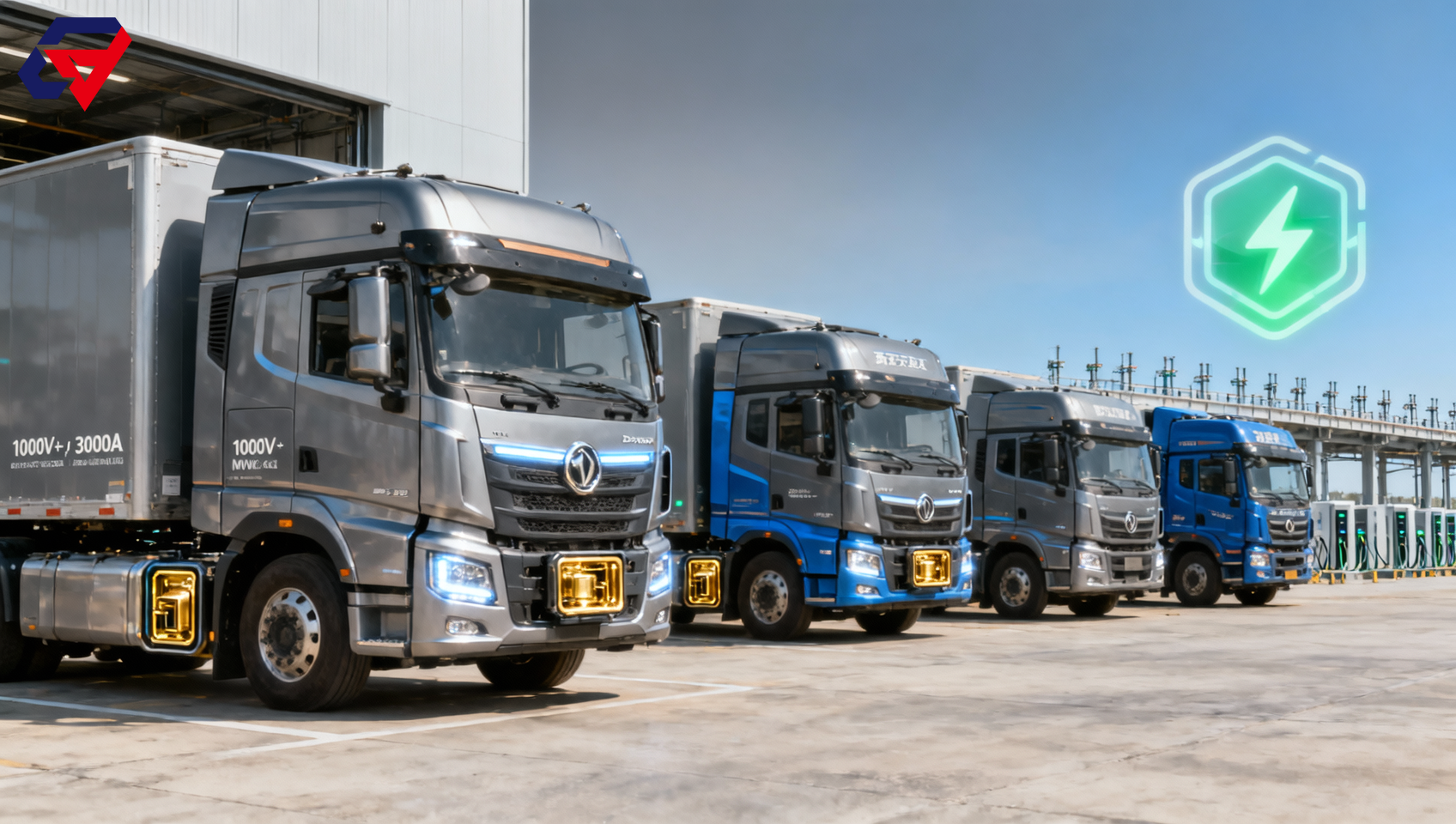
China’s domestic heavy-duty electric vehicle (EV) industry has accelerated mass delivery of megawatt (MW)-level ultra-fast charging trucks — a development with immediate implications for global zero-emission freight logistics, cross-border trade, and energy infrastructure partnerships. While the exact timing of initial deliveries remains unspecified, confirmed batch shipments began prior to May 18, 2026, marking a tangible shift from pilot validation to commercial deployment.
Event Overview
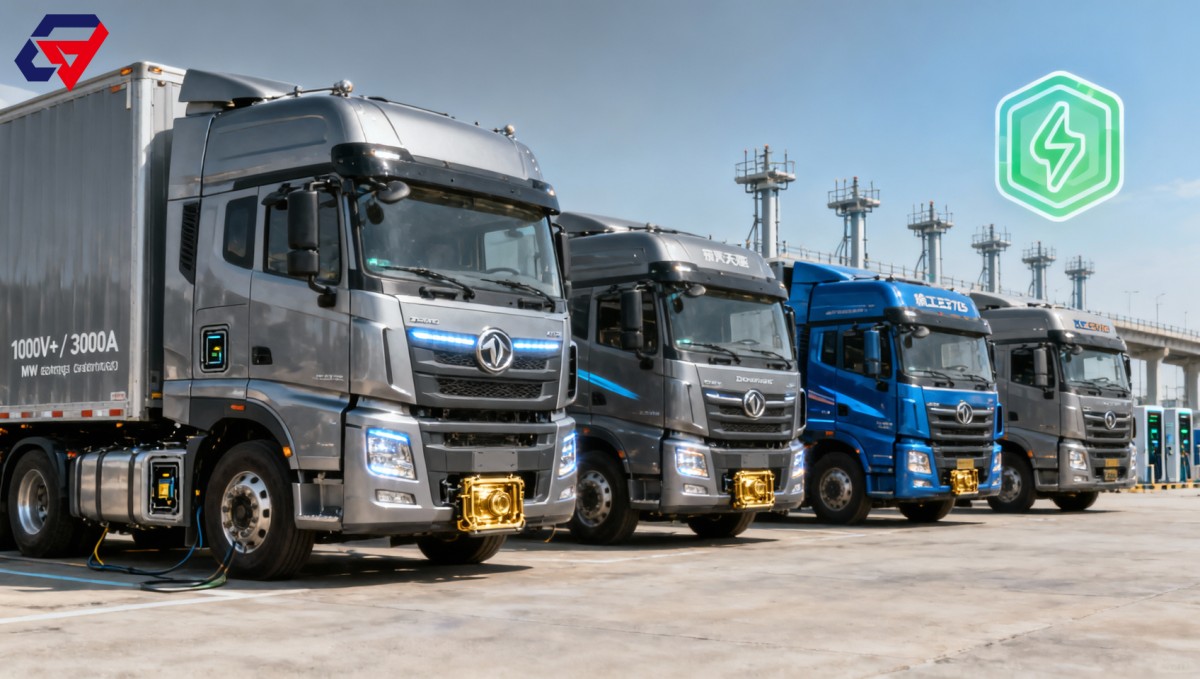
As of May 18, 2026, Dongfeng Tianlong KL, Liuzhou Weywin 5, and XCMG XG2-EX710S — all domestically developed MW-level ultra-fast charging heavy-duty EV trucks — have entered batch delivery phase. Real-world testing shows state-of-charge (SOC) recovery from 20% to 80% in 15–20 minutes. These vehicles are operationally aligned with EU AETR driving and rest regulations, as well as long-haul transport rhythms across the Middle East and Latin America.
Industries Affected
Direct Export & Trading Enterprises
These firms face heightened competitiveness pressure in overseas public tenders for zero-emission fleets — particularly in EU green corridor projects and GCC-based logistics consortia. The 15-minute recharge capability directly addresses previous objections around vehicle uptime and scheduling compliance, lowering bid risk and expanding eligibility for contracts requiring strict adherence to driver-hour rules.
Raw Material Procurement Enterprises
Suppliers of high-nickel cathode materials, silicon-dominant anodes, and liquid-cooled busbar components are experiencing revised demand forecasts. MW-level charging imposes stricter thermal and current-cycling requirements on battery cells and pack-level interconnects; procurement strategies must now prioritize suppliers certified to ISO 16750-3 (electrical load cycling) and IEC 62660-2 (battery performance under fast-charge stress).
Manufacturing Enterprises (OEMs & Tier 1 Suppliers)
Domestic OEMs and battery system integrators are reconfiguring production lines to accommodate higher-voltage (1,000 V+), higher-current (3,000 A peak) powertrain architectures. This includes recalibrating cell-to-pack (CTP) assembly tolerances, upgrading coolant flow control systems, and validating new contactor switching protocols — all while maintaining ASIL-D functional safety compliance.
Supply Chain Service Providers
Fleet management platform vendors, charging network operators, and cross-border certification agencies must adapt rapidly. For example, CE-marking bodies now require additional test reports on thermal runaway propagation under repeated 1 MW charge cycles; fleet telematics providers need updated SOC prediction models calibrated for ultra-fast charge profiles rather than conventional CC-CV curves.
Key Focus Areas & Recommended Actions
Align Product Certification Timelines with Regional Regulatory Windows
EU Type Approval under Regulation (EU) 2018/858 now explicitly references charging time compliance for vocational vehicles. Exporters should synchronize homologation submissions with upcoming national implementation deadlines — e.g., Germany’s 2026 Q3 deadline for mandatory depot charging infrastructure reporting.
Reassess TCO Models Using Real-World Uptime Data
Rather than relying on theoretical range-per-charge metrics, forward-looking TCO analyses must incorporate verified dwell-time reduction: a 15-minute recharge vs. 90-minute conventional DC charging translates into ~4.5 additional daily revenue hours per truck in trans-European haulage scenarios.
Engage Early with Local Grid Operators and Energy Partners
MW-level charging demands grid-side coordination — especially in emerging markets where transformer capacity and dynamic load balancing are not yet standardized. Proactive joint feasibility studies with regional utilities (e.g., Saudi SEC or Chile CDEC) can de-risk site-specific infrastructure co-investment proposals.
Editorial Insight / Industry Observation
Observably, this milestone is less about raw charging speed and more about operational harmonization: the 15–20 minute window was deliberately engineered to fit within existing regulatory rest periods — not to maximize physics-limited power transfer. Analysis shows that adoption traction will depend less on technical specs and more on whether OEMs can deliver integrated solutions (truck + charger + grid interface + fleet software) under unified contractual SLAs. Current more critical bottleneck lies in standardizing communication protocols between vehicle BMS and third-party chargers — a gap still unaddressed by ISO 15118-20 Annex D.
Conclusion
This delivery ramp signals a structural inflection point: Chinese EV heavy-truck manufacturers are transitioning from component exporters to systems integrators in global decarbonized freight ecosystems. Success will be measured not by unit volume alone, but by share of awarded zero-emission corridor infrastructure packages and embedded energy-service agreements — a shift demanding deeper localization, not just product adaptation.
Source Attribution
Official announcements from Dongfeng Commercial Vehicle Co., Ltd., Liuzhou Automobile Co., Ltd., and XCMG Heavy-Duty Truck Co., Ltd.; technical validation data published in the China Electric Vehicle Standardization Technical Committee Bulletin, Q1 2026. Note: Ongoing monitoring required for EU Commission’s forthcoming delegated act on heavy-duty EV charging interoperability (expected Q3 2026), and evolving national interpretations of AETR Article 8(2) regarding ‘effective rest’ during charging stops.
NAVIGATION
Send Us A Message