



News
Explore what’s going on around the industry and get the latest from the world of heavy equipment and earth-moving.
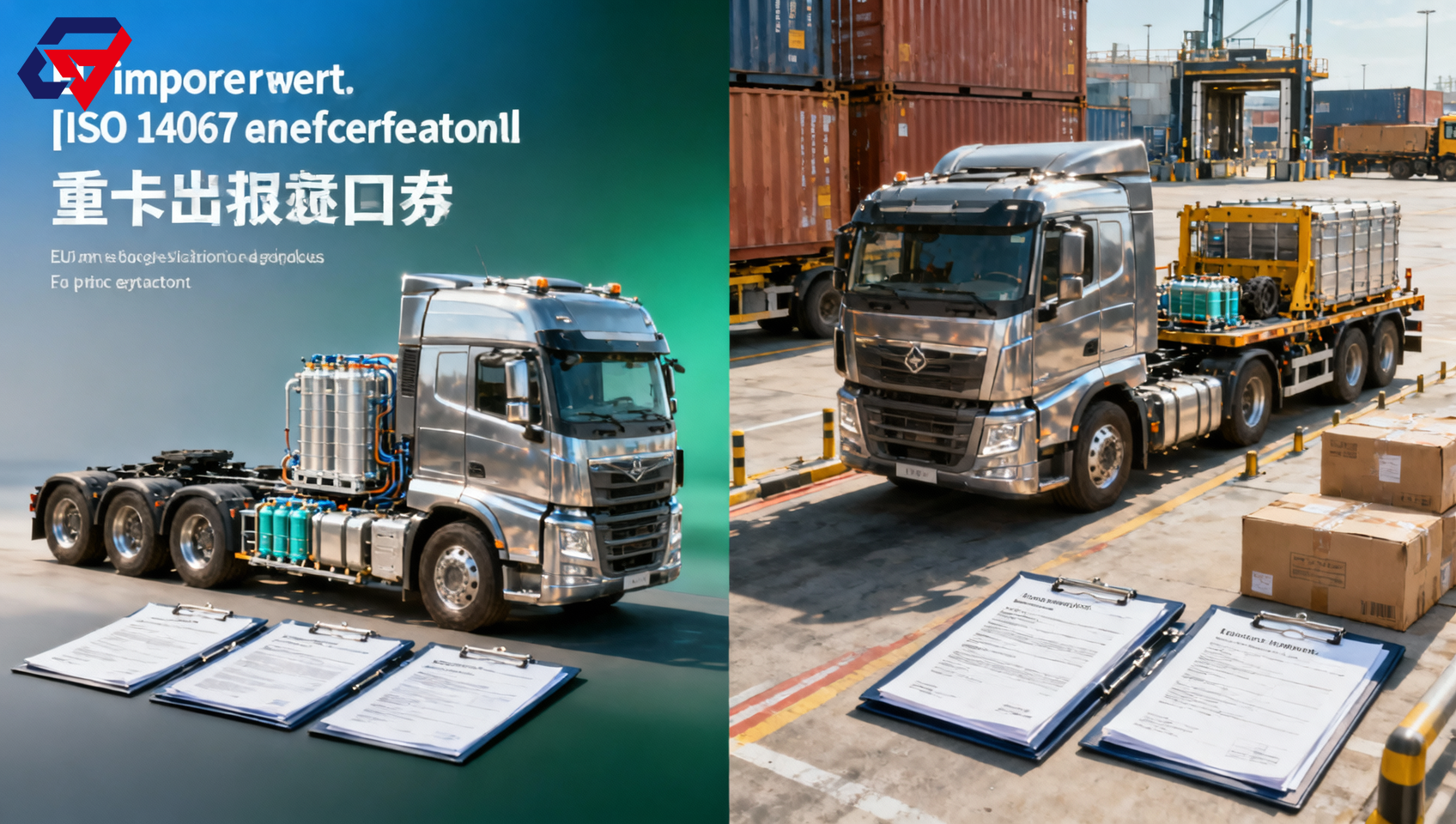
On June 26, 2026, a new EU customs requirement took effect for imported heavy commercial and engineering trucks: import declarations must be accompanied by a third-party verified carbon footprint report aligned with ISO 14067. For exporters, importers, certifiers, and supply chain operators handling complete vehicles or key subsystems, this is not just a documentation update. It directly affects customs timing, shipment readiness, and the trade flow of vehicles moving into the EU market, including routes that pass through third-country trading hubs before final entry.
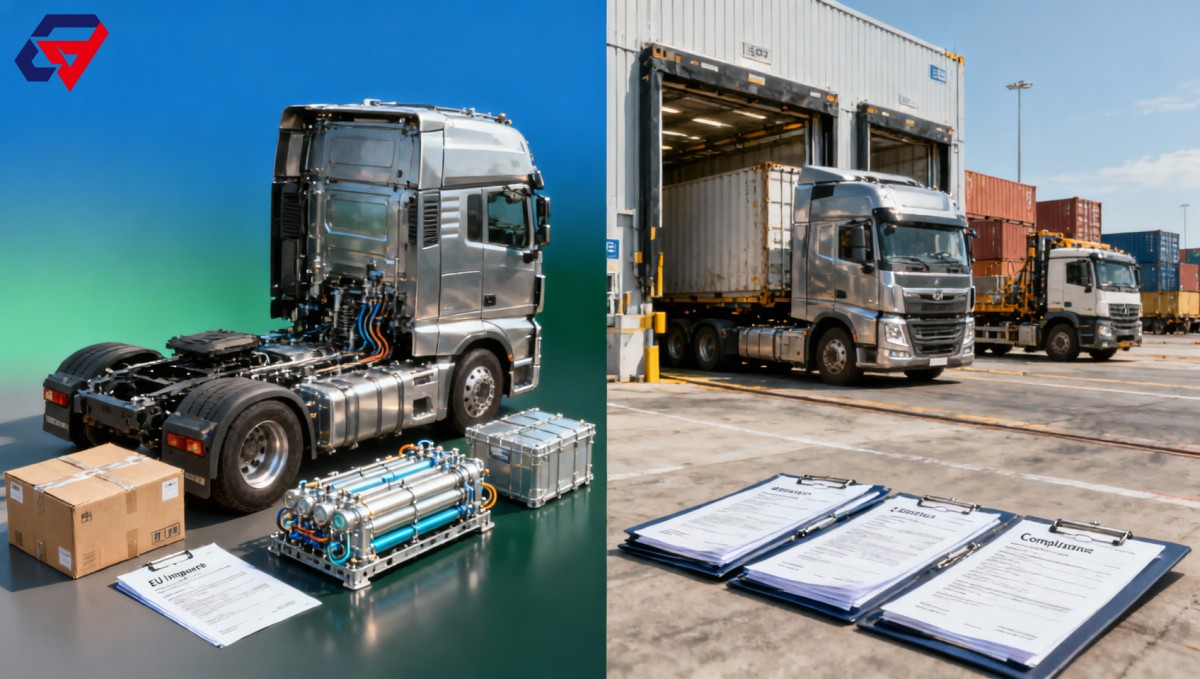
What the new customs filing now requires
The confirmed change is that, from June 26, 2026, EU customs began requiring mandatory carbon footprint disclosure for imported heavy commercial and engineering trucks. The filing must include a third-party verification report that complies with ISO 14067.
The requirement applies not only to the complete vehicle but also to key subsystems identified in the provided information, including drive axles, battery packs, and hydrogen fuel cell modules.
The provided summary also states that non-compliant documentation may lead to customs clearance delays or return of the shipment. For Chinese heavy truck exporters, certification must be completed 30 days before shipment. The stated impact extends to trade chains in Southeast Asia and Latin America that re-export into the EU market.
Where the pressure is likely to appear across the trade chain
Export shipment planning moves earlier
From an industry perspective, exporters are likely to feel the impact first in pre-shipment preparation. Because the report must accompany customs documents and certification must be completed before shipment, the practical pressure point shifts upstream from border handling to production release, export scheduling, and document readiness.
What deserves closer attention is whether internal export workflows treat the ISO 14067 report as a final shipping document requirement rather than a post-production compliance item. Delays at this stage could affect dispatch timing even before the cargo reaches customs.
Subsystem suppliers become part of the compliance path
Observably, the inclusion of drive axles, battery packs, and hydrogen fuel cell modules means that the compliance burden is not confined to vehicle assemblers. Suppliers linked to these named subsystems may face greater pressure to prepare traceable technical and verification materials that can support the final customs package.
The operational impact is likely to appear in supplier qualification, document handover, and coordination between component makers and vehicle exporters. Where documentation is incomplete or inconsistent, the issue may surface as an export bottleneck rather than a purely technical gap.
Trade and logistics intermediaries face documentation risk
For trading companies, customs brokers, and logistics coordinators, the main exposure is document integrity. Analysis shows that this rule changes the filing package, not just the product profile. That raises the importance of checking whether the required third-party verified report is available, aligned with the shipment scope, and ready at the time of customs declaration.
The summary also points to an effect on re-export chains through Southeast Asia and Latin America into Europe. In that context, intermediaries may need to pay closer attention to whether carbon footprint documentation travels consistently across multiple trade legs and remains usable at final EU entry.
What companies should watch in current execution
Treat the report as a shipment prerequisite
Analysis shows that companies involved in affected truck exports should review whether their order, production, and dispatch timelines leave enough time for third-party verification before shipment. The provided information indicates a 30-day pre-shipment certification window for Chinese heavy truck exporters, so the timing of document completion becomes a practical compliance issue.
Review document scope for complete vehicles and named subsystems
What deserves closer attention is the scope match between the goods being shipped and the documents being prepared. Because the rule covers both the complete truck and specific key subsystems, businesses should pay attention to whether filing materials clearly correspond to the actual export configuration and declared goods.
Watch contract, tender, and delivery language
Observably, a customs requirement of this kind can affect how parties describe compliance responsibilities in commercial documents. Companies should therefore monitor whether buyers, distributors, or project counterparties begin adding carbon footprint reporting language into purchase terms, delivery conditions, or technical document requests. This is a point to watch rather than a confirmed universal practice.
Track execution signals rather than assume uniform enforcement details
The provided information confirms the rule change and its immediate compliance consequence, but it does not provide detailed enforcement procedures beyond the requirement itself. For that reason, companies should keep watching how the requirement is reflected in customs practice, certification expectations, and transaction documentation, instead of assuming that every operational detail is already settled.
Why this reads as an execution signal
Analysis shows that this development is more than a general policy direction. It is more appropriate to understand this as a live execution signal because the requirement is tied to customs filing, identifies the applicable standard as ISO 14067, names covered subsystem categories, and links non-compliance to direct trade consequences such as clearance delay or return.
At the same time, it is not yet a basis for broad conclusions beyond the provided facts. Observably, the part that still requires continued attention is how market participants translate the rule into working document standards, supplier coordination, and transaction controls across export and re-export chains.
How the market is likely to frame this change for now
At this stage, the event is best understood as a concrete compliance requirement with immediate trade relevance rather than as a distant policy trend. The core significance is that carbon footprint reporting, when tied to customs release, becomes a shipment condition for affected heavy truck exports and related subsystems.
A neutral reading is that the rule raises the compliance threshold for market access into the EU for the products described, while leaving room for further observation on detailed implementation, market response, and document practice. That is the practical lens businesses should use now.
Basis of this article and what still needs verification
This article is generated from the user-provided news title, event date, and event summary. For events of this kind, relevant source types would typically include official notices, regulator releases, customs or trade authority information, industry association updates, standards organization documents, and reporting by authoritative media.
No specific official source link was provided in the input, so the underlying official publication path still needs to be verified on an ongoing basis. Continued attention should focus on any later clarification of implementation details, certification interpretation, customs handling practice, changes in tender or transaction documents, industry feedback, and how affected companies execute the requirement in live shipments.
NAVIGATION
Send Us A Message