



News
Explore what’s going on around the industry and get the latest from the world of heavy equipment and earth-moving.

On July 26, 2026, updated market data pointed to a sharper logistics constraint for heavy truck trade on the Asia-Europe route: the normalization of Red Sea diversions has pushed up FOB shipping costs from major Chinese ports and extended booking confirmation timelines. For exporters, overseas distributors, procurement teams, and supply chain service providers, the issue is no longer limited to freight pricing alone; it now affects delivery scheduling, inventory planning, and the practical execution of trade terms during the peak stocking period.
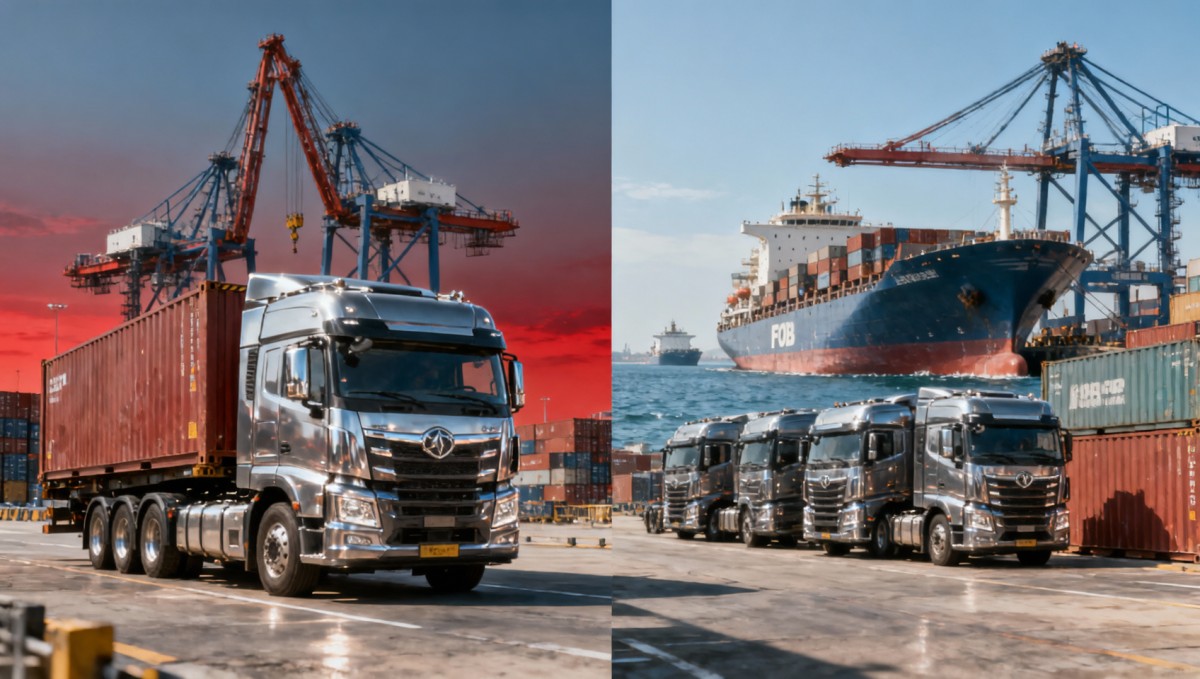
What the latest route data confirms
According to joint data from Alphaliner and the Shanghai Shipping Exchange, in July 2026 the spot freight rate for 40ft HQ containers dedicated to heavy trucks from major Chinese ports including Qingdao, Tianjin, and Guangzhou to Rotterdam and Hamburg reached $5,280. The figure was up 18.3% month on month and marked a 2026 high.
The same information shows that, as Red Sea rerouting becomes routine, carriers have generally extended slot confirmation cycles to 14 days. Part of the order flow has also seen delivery windows pushed back by three to four weeks, affecting overseas distributor inventory planning and the timing of peak-season stock preparation.
Where the pressure is likely to appear in the trade chain
Export execution is becoming more timing-sensitive
From an industry perspective, exporters of heavy trucks and related cargo are likely to feel the impact first because FOB arrangements are closely tied to shipment timing and handover discipline at port. The immediate pressure points are booking coordination, delivery window control, and shipment document readiness. What deserves closer attention is whether internal export documentation, packing schedules, and port delivery arrangements can still match a longer carrier confirmation cycle without creating avoidable handover risk.
Overseas channel planning faces tighter inventory discipline
Distributors and channel operators may be affected through delayed replenishment rather than through freight procurement alone. When delivery windows move back by three to four weeks, stock planning for seasonal sales becomes less predictable. Analysis shows that the practical issue here is not a new formal rule, but an execution change in shipping conditions that can alter ordering rhythm, inbound scheduling, and warehouse replenishment assumptions.
Procurement and supply chain service teams need to reassess lead-time assumptions
For procurement functions and logistics service providers, the change is likely to show up in order confirmation, transport coordination, and delivery commitments. The extension of booking confirmation to 14 days means that previously used planning buffers may no longer be sufficient. In operational terms, teams should pay closer attention to trade documents, shipment milestones, and delivery promises linked to FOB execution, especially where downstream contracts or tender documents are sensitive to delivery timing.
Practical points companies should watch now
Review whether current trade documentation still matches actual shipping conditions
Analysis shows that where freight costs and booking cycles have shifted, companies should closely review whether shipment schedules, commercial documents, and delivery clauses still reflect the realities of current route execution. This is particularly relevant for transactions where timing assumptions were set before the latest rise in rates and longer booking confirmation periods became visible.
Recheck delivery commitments tied to seasonal stocking windows
Observably, the reported three-to-four-week delay risk makes delivery commitments more exposed during peak inventory preparation. Companies should therefore monitor whether customer-facing delivery windows, distributor replenishment plans, and after-sales parts support schedules still align with current shipping lead times. The input information does not confirm a uniform execution outcome across all shipments, so this should be treated as a point for active monitoring rather than a settled market condition.
Track how procurement and tender requirements respond
What deserves closer attention is whether buyers, distributors, or project-based purchasers begin to adjust procurement timing, document requirements, or shipment-related conditions in response to higher FOB transport costs and slower slot confirmation. The current information does not establish any new mandatory compliance rule, but it does signal that execution-side requirements may tighten where delivery certainty is commercially important.
Maintain closer coordination across sales, logistics, and compliance teams
From an industry perspective, this is a coordination issue as much as a freight issue. Companies involved in export, distribution, and service support should continue checking whether internal compliance review, shipment paperwork, and delivery communication are aligned with the longer operational cycle now indicated by the route data.
How this signal is best interpreted at this stage
Analysis shows that this development is better understood as an execution signal in trade and logistics conditions rather than as a newly issued formal regulation. The reported increase in freight rates, the longer booking confirmation cycle, and the delayed delivery windows indicate that route disruption has begun to influence how existing trade arrangements are carried out in practice.
At the same time, it is more appropriate to understand this as a condition that still requires observation. The input confirms market movement and operational delay, but it does not establish a new codified policy, a revised certification requirement, or a published regulatory standard. For that reason, the industry should watch how buyers, carriers, and channel partners translate these conditions into purchasing terms, lead-time expectations, and document control requirements.
Why the market should keep this on its watchlist
The significance of this update lies in the fact that freight volatility is now affecting the practical reliability of FOB execution for heavy truck shipments on the Asia-Europe route. The core issue is not only cost inflation, but the widening gap between planned delivery assumptions and actual booking and transit arrangements.
At present, it is more appropriate to read this as a landed market execution change with possible downstream effects on procurement, delivery planning, and trade coordination, while still reserving judgment on whether it will evolve into broader contractual or compliance adjustments. Continued observation is warranted.
Basis of this article and what still needs verification
This article is generated on the basis of the user-provided news title, event date, and event summary. For developments of this kind, relevant source categories typically include official notices, regulator releases, customs or trade authority information, industry association updates, standard-setting documents, and reporting by authoritative media or market data institutions.
No specific official source link was provided in the input, so the underlying official reference path still requires further verification. Observably, the market should continue to watch for any later clarification in execution guidance, buyer requirements, tender document changes, industry feedback, and company-level implementation responses related to freight, delivery scheduling, and trade performance.
NAVIGATION
Send Us A Message